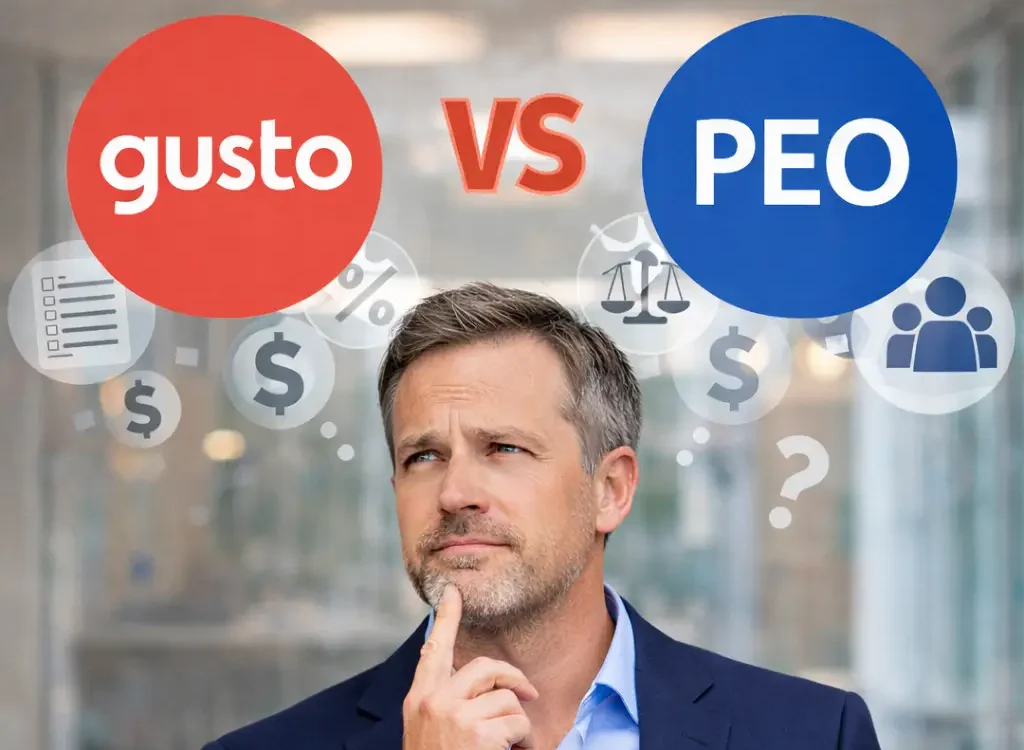
Navigating the complex landscape of human resources and payroll can be a daunting task for any business, regardless of its size or sector. Companies frequently find themselves at a crossroads when evaluating solutions designed to streamline these critical functions. Two prominent players in this arena are Professional Employer Organizations (PEOs) and Gusto, a cloud-based payroll and HR platform. While both aim to simplify HR, their approaches, scopes, and target audiences differ significantly. Understanding these distinctions is paramount for businesses to make an informed decision that aligns with their specific needs and strategic objectives.
A Professional Employer Organization operates on a co-employment model, a fundamental concept that sets it apart from traditional HR software. In this arrangement, the PEO becomes the “employer of record” for tax purposes and certain other responsibilities, while the client company retains control over the day-to-day management of its employees. This shared responsibility is akin to a partnership where the PEO acts as a seasoned navigator, guiding the ship through the turbulent waters of HR compliance and benefits administration, while the business owner remains the captain, determining the course and managing the crew.
The Co-Employment Relationship
Under the co-employment agreement, the PEO typically assumes responsibility for a wide array of administrative tasks. These commonly include payroll processing, tax filing, workers’ compensation administration, and the provision of employee benefits. The client company, on the other hand, retains its core functions: managing its employees’ work duties, setting compensation, and fostering its organizational culture. This division of labor allows the business to offload significant administrative burdens while maintaining operational control.
Comprehensive Service Offerings
One of the most compelling aspects of a PEO is its comprehensive suite of services. PEOs are essentially a one-stop shop for HR, offering a breadth of expertise that extends beyond mere payroll.
Payroll and Tax Administration
PEOs meticulously handle all aspects of payroll processing, from calculating wages and withholdings to issuing paychecks or direct deposits. They also take on the responsibility for filing all federal, state, and local payroll taxes, ensuring compliance and mitigating the risk of penalties. This eliminates a significant administrative headache for businesses, freeing up valuable time and resources.
Employee Benefits Administration
Access to a robust benefits package is often a significant draw for employees. PEOs, by aggregating the employees of multiple client companies, can leverage their collective buying power to secure PPO-level health insurance plans, dental, vision, life, and disability insurance at more competitive rates than individual small businesses might obtain. They also manage the administration of these benefits, including enrollment, claims processing, and compliance with regulations such as ERISA and COBRA. This can be a game-changer for attracting and retaining top talent.
Workers’ Compensation and Risk Management
Navigating workers’ compensation can be complex and costly. PEOs manage all aspects of workers’ compensation, including policy procurement, claims management, and audits. Furthermore, they often provide risk management services, assisting clients in developing safety programs, conducting workplace safety training, and ensuring compliance with OSHA regulations. This proactive approach helps reduce workplace accidents and associated costs.
HR Compliance and Legal Guidance
Staying abreast of ever-evolving labor laws and regulations is a formidable challenge for businesses. PEOs act as a shield, protecting clients from potential compliance pitfalls. They provide expert guidance on issues such as FMLA, ADA, EEO, and state-specific mandates. Many PEOs also offer access to HR professionals who can provide advice on employee relations, disciplinary actions, and terminations, thus reducing legal exposure.
When comparing PEO services like PEO and Gusto, it’s essential to consider various factors such as pricing, features, and customer support. For those interested in exploring more about PEO options available in specific regions, a helpful resource is the article on Nebraska PEO companies, which provides insights into local providers and their offerings. You can read more about it here: Nebraska PEO Companies.
Gusto’s Cloud-Based Solution
Gusto, in stark contrast to the PEO model, operates as a technology-driven, cloud-based platform primarily focused on payroll, benefits, and HR administration. It empowers businesses to manage these functions themselves through an intuitive and user-friendly interface. Gusto is less about a co-employment partnership and more about providing a powerful toolbox that enables businesses to build and manage their own HR infrastructure effectively.
Streamlined Payroll Processing
Gusto’s core offering revolves around simplified payroll. The platform automates calculations for wages, deductions, and taxes, allowing businesses to run payroll in minutes. It also handles direct deposits, generates pay stubs, and automatically files federal, state, and local payroll taxes. This automation significantly reduces the time and effort traditionally associated with payroll management.
Tax Filing Automation
A key advantage of Gusto is its automated tax filing. The platform calculates, files, and pays all necessary payroll taxes on behalf of the business. This eliminates the need for manual calculations or concerns about missed deadlines, providing a significant layer of security and convenience.
Employee Self-Service Portals
Gusto offers secure employee self-service portals where staff can access their pay stubs, W-2s, and other important documents. They can also update their personal information, directly enroll in benefits, and manage their time-off requests. This empowers employees and reduces administrative inquiries for employers.
Integrated HR Features
While Gusto started primarily as a payroll platform, it has expanded its offerings to include a robust set of HR features, making it a comprehensive solution for many small to mid-sized businesses.
Onboarding and Offboarding Tools
Gusto streamlines the onboarding process with features like electronic new hire paperwork, offer letter templates, and integrated e-signing capabilities. This creates a seamless experience for new employees and reduces administrative burden. Similarly, it assists with offboarding by managing final paychecks, COBRA paperwork, and other necessary documentation.
Time and Attendance Tracking
The platform includes tools for tracking employee work hours, managing time-off requests, and integrating with payroll for accurate compensation. This eliminates the need for separate time tracking systems and simplifies overall workforce management.
Benefits Administration (Brokerage Model)
Unlike PEOs which provide benefits, Gusto typically acts as a broker for benefits. It integrates with various insurance providers, allowing businesses to shop for and administer health insurance, dental, vision, 401(k) plans, and more directly through the platform. While Gusto doesn’t assume the legal responsibility of providing these benefits, it simplifies the administrative aspects of offering them.
Key Differentiators: PEO vs. Gusto

The fundamental differences between PEOs and Gusto lie in their operational models, the scope of their services, and the level of responsibility they assume. Understanding these distinctions is crucial for businesses evaluating which path to take.
Co-Employment vs. Software-as-a-Service (SaaS)
This is the bedrock difference. A PEO involves a co-employment relationship, where the PEO shares employer responsibilities. Gusto, conversely, is a Software-as-a-Service (SaaS) platform. You are the sole employer, and Gusto provides the tools and automation to manage your HR functions. This distinction is paramount when considering legal liabilities and administrative burdens. A PEO acts as an extension of your own HR department, often with legal implications, whereas Gusto is a powerful software tool.
Comprehensive Service vs. Empowered Self-Service
PEOs offer a concierge-level, comprehensive service where they handle a vast majority of HR tasks. They are your outsourced HR department, a safety net catching many of the complexities and risks. Gusto, however, empowers businesses to manage their own HR. It provides the automation and intuitive interface to simplify tasks, but the ultimate responsibility and execution of these tasks remain with the business. It’s like the difference between hiring an expert chef to prepare your meals versus being given a state-of-the-art kitchen and cookbook to cook them yourself.
Cost Structure and Value Proposition
The cost structures of PEOs and Gusto also diverge significantly.
PEO Cost Model
PEOs typically charge a fee based on a percentage of the client’s total payroll or a per-employee per-month (PEPM) fee. While this can seem more expensive upfront, it often includes the cost of benefits, workers’ compensation, and comprehensive HR support. The value proposition of a PEO often includes access to better benefits, reduced administrative burden, and mitigation of compliance risks, which can lead to significant long-term savings and peace of mind.
Gusto Cost Model
Gusto operates on a more predictable subscription model, typically a base monthly fee coupled with a per-employee per-month charge. This cost covers the use of the platform and its features. Benefits administration, if chosen through Gusto, will have additional costs associated with the premiums themselves, not Gusto’s platform fee. The perceived value of Gusto lies in its affordability for many small businesses, its user-friendliness, and its ability to automate time-consuming tasks.
Target Audience and Business Size
Their ideal customer profiles also vary, reflecting their differing capabilities and pricing.
PEO for Growth and Complexity
PEOs are often a strong fit for established small to medium-sized businesses (SMBs) that are experiencing rapid growth, have complex HR needs, or operate in industries with high compliance risks. Businesses with 10 to 100+ employees often find PEOs particularly beneficial, as they can scale quickly without needing to build out a large internal HR department. They are especially useful for companies looking to offer competitive benefits to attract talent but lack the negotiating power of larger enterprises.
Gusto for Simplicity and Scalability
Gusto is exceptionally well-suited for startups, very small businesses, and growing SMBs that value efficiency and prefer a more hands-on approach to their HR. Businesses with 1 to 50 employees often find Gusto’s platform to be an ideal blend of robust features and affordability. It’s a scalable solution that allows businesses to manage their HR as they grow without incurring the higher, more comprehensive costs of a PEO until their needs dictate a deeper level of HR partnership.
Making the Right Choice for Your Business

The decision between a PEO and Gusto is not a one-size-fits-all proposition. It requires careful consideration of a business’s current stage, its strategic goals, risk tolerance, and internal capabilities. Think of it as choosing between navigating the open sea with a seasoned captain who handles all the ship’s mechanics (PEO) or being given a state-of-the-art vessel with powerful automated systems to helm yourself (Gusto). Both can reach the destination, but the journey and the responsibilities differ.
Assess Your Current HR Needs and Infrastructure
Begin by taking stock of your current HR landscape. Do you have dedicated HR staff? How much time is spent on payroll and benefits administration? Are you confident in your compliance efforts?
Internal HR Expertise
If your business lacks internal HR expertise or is stretched thin managing administrative tasks, a PEO can provide much-needed support and guidance. If you have some HR knowledge or are willing to learn the platform, Gusto can be a highly effective tool.
Compliance Concerns
Businesses operating in heavily regulated industries or those concerned about staying compliant with federal and state labor laws may find the protective embrace of a PEO invaluable. PEOs are experts in compliance and often assume a degree of liability, offering a strong shield. Gusto provides tools and resources to help businesses remain compliant, but the ultimate responsibility falls on the business itself.
Evaluate Your Budget and Long-Term Costs
Consider not just the sticker price, but the total cost of ownership and the value received.
Cost-Benefit Analysis
While PEOs may appear more expensive on a per-employee basis, factor in the hidden costs of managing HR in-house: time spent on payroll, legal fees for compliance issues, the cost of separate benefits brokers, and the administrative burden of workers’ comp. For many businesses, the comprehensive nature of a PEO can result in efficiency gains and risk reduction that offset the higher direct costs. Gusto offers clear, transparent pricing, making it easy to budget for, but remember that the administrative time for benefits and more complex HR issues may still fall to your team.
Scalability of Solutions
Consider how each solution will scale with your business. A PEO can grow with you, continuously providing comprehensive support. Gusto also scales well in terms of employee count and feature upgrades, allowing you to add more sophisticated HR functionalities as your business evolves.
Consider Your Company Culture and Control Preferences
Finally, reflect on your desired level of control over HR functions and how each model aligns with your company culture.
Control Over HR Processes
If maintaining granular control over every HR process is critical, Gusto offers that autonomy. You are in the driver’s seat, directly managing your HR information. If you prefer to delegate administrative burdens to experts and focus on core business operations, a PEO provides that hands-off approach.
Employee Experience
Both PEOs and Gusto aim to enhance the employee experience through streamlined processes and accessible benefits. Gusto’s employee self-service portal is often highly praised for its ease of use. PEOs, by providing a broader range of high-quality benefits, can also significantly improve employee satisfaction and retention.
In conclusion, the decision between a PEO and Gusto is a strategic one, not merely a transactional one. It requires a deep understanding of your business’s unique circumstances, challenges, and aspirations. A PEO offers a co-employment partnership, acting as a comprehensive, outsourced HR department that handles significant administrative burden and risk. Gusto provides a powerful, user-friendly SaaS platform that empowers businesses to efficiently manage their own payroll, benefits, and HR. By carefully weighing the distinct advantages of each, businesses can confidently choose the solution that best supports their financial health, operational efficiency, and overall strategic growth.
Ready to find the right PEO? Book a call with us
FAQs
What is the main difference between a PEO and Gusto?
A PEO (Professional Employer Organization) provides comprehensive HR outsourcing services by becoming a co-employer of your staff, handling payroll, benefits, compliance, and risk management. Gusto is primarily a payroll and HR software platform designed for small to medium businesses to manage payroll, benefits, and HR tasks without co-employment.
Can Gusto be considered a PEO?
No, Gusto is not a PEO. While Gusto offers payroll, benefits administration, and HR tools, it does not enter into a co-employment relationship with your employees, which is a defining characteristic of a PEO.
Which businesses benefit more from using a PEO compared to Gusto?
Businesses that want comprehensive HR outsourcing, including risk management, compliance assistance, and access to large group benefits, often benefit more from a PEO. Smaller businesses or startups looking for user-friendly payroll and HR software without co-employment typically prefer Gusto.
Does using a PEO or Gusto affect employee benefits?
Yes. PEOs often provide access to better or more affordable employee benefits by pooling employees from multiple companies. Gusto offers benefits administration but typically relies on the employer’s existing benefit plans or offers options suitable for small businesses.
How do pricing models differ between PEOs and Gusto?
PEOs usually charge a percentage of total payroll or a per-employee monthly fee that covers a broad range of HR services. Gusto charges a base monthly fee plus a per-employee fee, primarily for payroll and HR software services, often making it more cost-effective for smaller companies with simpler needs.