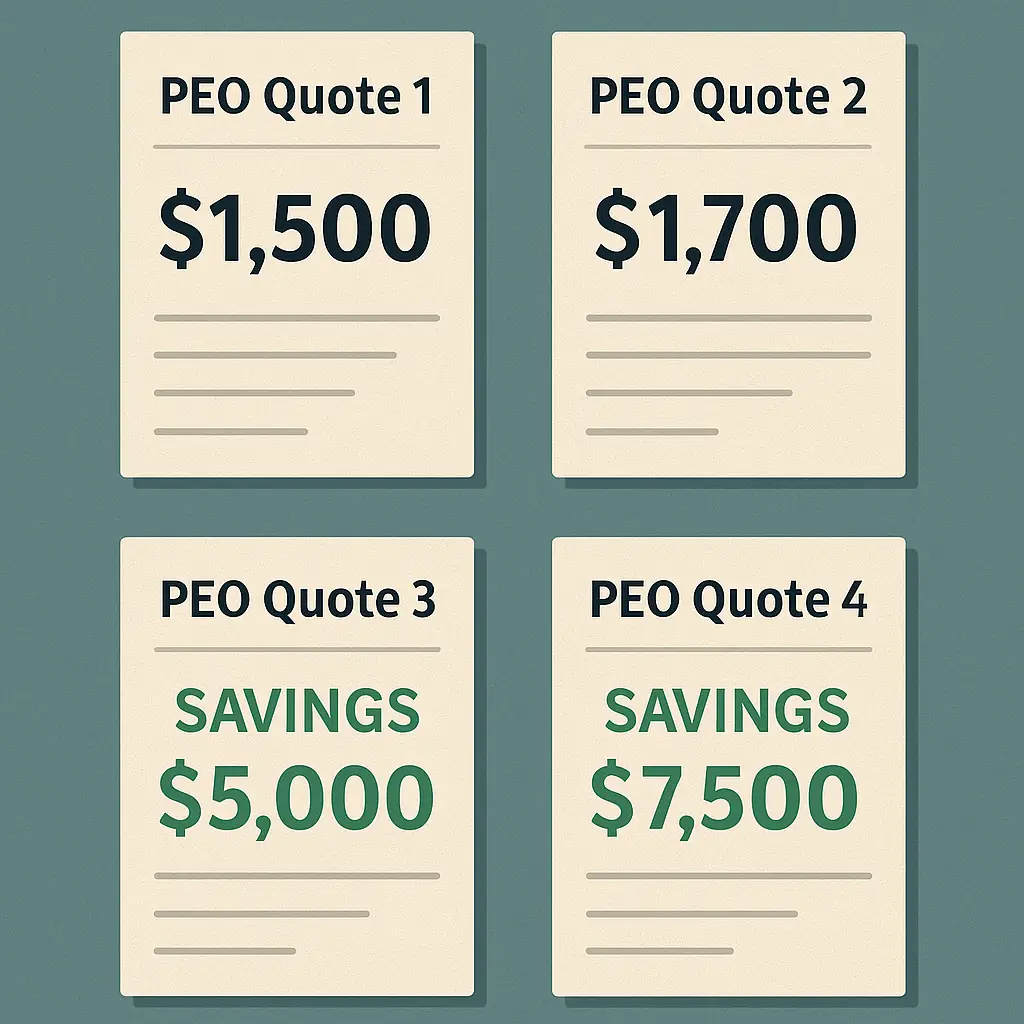
PEO Workers Comp

The intricacies of managing a workforce extend far beyond the core business operations. For many organizations, the administrative burden associated with payroll and human resources can become a significant drain on resources and a source of potential compliance risks. This is precisely where a Professional Employer Organization (PEO) can emerge as a strategic partner, offering a comprehensive solution for these critical functions. Understanding the multifaceted benefits of PEO payroll, its mechanisms, and its potential impact on a business’s trajectory is crucial for informed decision-making.

A Professional Employer Organization operates on a co-employment model. In this arrangement, the client company enters into a contractual agreement with the PEO, effectively sharing employer responsibilities. The client company retains control over day-to-day management and operational aspects, while the PEO assumes responsibility for specific HR functions, including payroll, benefits administration, compliance, and workers’ compensation. This division of labor allows each entity to focus on its areas of expertise, akin to two gears meshing perfectly to drive a single machine.

The Dynamics of Co-Employment

The co-employment relationship is distinct from traditional outsourcing. While outsourcing typically involves a vendor taking over a specific task, co-employment implies a deeper, shared responsibility. The PEO becomes the “employer of record” for tax and insurance purposes, handling all associated liabilities and filings. This legal distinction is fundamental to understanding the benefits that accrue to the client company. The client, however, remains the “worksite employer,” maintaining direct control over employee supervision, job duties, and company culture. This duality ensures a balance of administrative relief and operational autonomy.

Services Offered by PEOs

The scope of services offered by PEOs can vary, but generally encompass a broad spectrum of HR functions. At its core, the most prominent offering is payroll processing, but this often includes much more than simply cutting checks.

  • Payroll Processing: This involves calculating wages, deducting taxes and benefits contributions, generating pay stubs, and ensuring timely direct deposits or check distribution.
  • Tax Compliance: PEOs handle all payroll tax filings, including federal, state, and local taxes, and often act as the primary contact for tax authorities. They navigate the labyrinthine world of tax codes, ensuring accuracy and adherence.
  • Benefits Administration: PEOs typically offer access to a robust suite of employee benefits, including health insurance, dental, vision, life insurance, and retirement plans. They manage enrollments, deductions, and claims.
  • Workers’ Compensation: PEOs procure and administer workers’ compensation insurance, handling claims management and ensuring compliance with state regulations.
  • HR Compliance: This includes ensuring adherence to a plethora of employment laws and regulations, such as those related to minimum wage, overtime, FMLA, ADA, and EEO. They act as a shield against potential legal pitfalls.

For businesses looking to streamline their payroll processes while aligning their workforce with strategic goals, exploring the benefits of Professional Employer Organizations (PEOs) can be invaluable. A related article that delves into this topic is “Strategic HR Planning with PEOs: Aligning People and Business Goals,” which discusses how PEOs can enhance HR functions and support organizational objectives. You can read more about it by following this link: Strategic HR Planning with PEOs.

Streamlining Payroll and HR Operations

One of the most immediate and tangible benefits of partnering with a PEO is the substantial streamlining of payroll and HR operations. For many businesses, particularly small and medium-sized enterprises (SMEs), these tasks consume a disproportionate amount of time and resources, diverting focus from core revenue-generating activities.

Reducing Administrative Burden

Imagine the daily battle against a rising tide of paperwork, forms, and compliance updates. A PEO acts as a powerful levee, stemming this tide. By offloading the meticulous and often repetitive tasks associated with payroll calculation, tax withholding, and benefits enrollment, companies can significantly reduce their administrative workload. This frees up internal staff, allowing them to concentrate on strategic initiatives rather than transactional processes. Consider the hours saved each pay period that could be reallocated to product development, sales, or customer service.

Enhancing Accuracy and Efficiency

Payroll processing is an area where even small errors can have significant financial and legal repercussions. Incorrect withholdings, missed deadlines, or miscalculations can lead to penalties, disgruntled employees, and damage to a company’s reputation. PEOs, specializing in these functions, bring a high level of expertise and technology to the table. Their advanced payroll systems and dedicated specialists ensure accuracy and efficiency, minimizing the risk of costly mistakes. This precision acts as a finely tuned clock, ensuring every tick is perfectly aligned.

Access to Advanced Technology

Many PEOs leverage sophisticated HR information systems (HRIS) and payroll software that would be cost-prohibitive for individual SMEs to acquire and maintain. These systems offer features such as employee self-service portals, online timekeeping, and integrated benefits management. Access to such technology can significantly enhance the employee experience, reduce manual data entry, and provide valuable HR analytics. It’s like upgrading from a manual ledger to a powerful supercomputer for your HR needs.

Mitigating Compliance Risks

The landscape of employment law is in constant flux, a turbulent sea that can capsize unprepared businesses. From federal regulations to state and local ordinances, maintaining compliance is a complex and demanding endeavor. Failure to adhere to these regulations can result in substantial fines, legal challenges, and reputational damage.

Navigating Regulatory Complexity

The sheer volume and complexity of employment laws can be overwhelming for any business owner. Laws such as the Fair Labor Standards Act (FLSA), the Affordable Care Act (ACA), the Americans with Disabilities Act (ADA), and myriad state-specific regulations require constant vigilance. PEOs employ teams of legal and HR experts whose sole purpose is to stay abreast of these changes. They act as your seasoned navigators, guiding your ship through treacherous legal waters. This expertise ensures that your payroll practices, HR policies, and benefits offerings are always in full compliance, minimizing the risk of costly penalties or lawsuits.

Reducing Exposure to Penalties and Fines

Non-compliance can manifest in various forms, from misclassifying employees as independent contractors to failing to provide mandatory leave. Each misstep carries financial penalties, which can escalate rapidly. By assuming responsibility for compliance, PEOs significantly reduce a client company’s exposure to such risks. They handle all necessary filings, maintain accurate records, and advise on best practices, acting as a robust firewall against regulatory infractions.

Expertise in Workers’ Compensation

Workers’ compensation is another critical area where compliance and administration can be particularly challenging. PEOs not only manage the insurance policies but also handle claims administration, often bringing down overall workers’ compensation costs through better claims management and risk mitigation strategies. Their experience in this area can be invaluable, especially for businesses in industries with higher risk profiles.

Enhancing Employee Benefits and Retention

Attracting and retaining top talent is a perpetual challenge for businesses of all sizes. A robust and competitive benefits package is often a cornerstone of a successful recruitment and retention strategy. However, for smaller organizations, offering comprehensive benefits can be financially unfeasible.

Access to Premium Benefits Packages

This is where the PEO’s collective buying power becomes a game-changer. By pooling the employees of all its client companies, a PEO can negotiate much more favorable rates for health insurance, dental plans, retirement plans, and other benefits than an individual small business could achieve on its own. This allows SMEs to offer their employees benefits packages comparable to those of much larger corporations, leveling the playing field in the talent war. This aggregated purchasing power acts as a powerful magnet, attracting and retaining valuable employees.

Improved Employee Morale and Satisfaction

A good benefits package signals to employees that their employer cares about their well-being. Access to quality health insurance, retirement savings options, and other perks can significantly boost employee morale, reduce stress, and foster a sense of loyalty. When employees feel valued and supported, they are more likely to be engaged, productive, and committed to the organization’s success. This translates directly into a more stable and dedicated workforce.

Streamlined Benefits Administration

Beyond simply offering benefits, PEOs also take on the administrative burden of managing them. This includes enrollment, deductions, claims processing, and communicating benefits information to employees. This alleviates a significant workload for internal HR staff and ensures that employees have clear and consistent access to information about their benefits.

When considering the benefits of PEO payroll services, it’s essential to understand how these organizations structure their billing for services. For a deeper insight into this topic, you can explore a related article that discusses the various billing methods used by PEOs. This information can help businesses make informed decisions about partnering with a PEO for their payroll needs. To learn more, visit the article on how PEOs bill for services.

Cost Savings and ROI


When internal staff are freed from administrative tasks, they can dedicate more time and energy to core business activities – those that directly contribute to revenue generation and strategic growth. This improved focus and productivity translate into tangible economic benefits. Consider the opportunity cost of employees spending hours on payroll every two weeks when they could be engaging with customers or developing new products. A PEO allows you to reallocate this valuable human capital strategically.

When considering the benefits of using a Professional Employer Organization (PEO) for payroll management, it’s essential to understand the distinctions between part-time and full-time employees. A related article that delves into this topic is available at Part-Time vs Full-Time Employees, which outlines how these classifications can impact payroll processes and overall business operations. By exploring these differences, businesses can make more informed decisions about their workforce and payroll strategies.

Strategic Business Growth and Scalability

For businesses aiming for growth, a PEO can become an invaluable strategic partner, providing a scalable and supportive infrastructure.

Scalability and Flexibility

As a business grows, its HR needs also expand. Hiring new employees, moving into new states, and navigating evolving legal requirements can be challenging. PEOs offer the flexibility to scale HR services up or down as needed, without the overhead of building an internal HR department from scratch. This allows businesses to adapt quickly to changing market conditions and growth trajectories, akin to having an expandable HR department that grows with your business.

Entry into New Markets

Expanding into new geographic locations often means grappling with a completely new set of state and local employment laws, tax regulations, and benefits requirements. A PEO with multi-state experience can seamlessly manage these complexities, allowing a business to enter new markets with confidence and reduced administrative hurdles. They provide the local expertise, even if you are thousands of miles away.

Focus on Core Competencies

Ultimately, the most profound benefit of a PEO is the ability it grants business leaders to concentrate on their core competencies – innovation, product development, sales, and customer service. By offloading the operational complexities of HR and payroll, a PEO allows the leadership team to steer the company with a clearer vision and undivided attention. This focus can be the differentiator between stagnation and significant growth.

In conclusion, the decision to engage with a PEO is a strategic one, offering a compelling array of benefits that extend far beyond simple payroll processing. From streamlining operations and mitigating compliance risks to enhancing employee benefits and fostering strategic growth, a PEO can serve as a vital partner in navigating the challenging currents of modern business. By understanding the intricate workings of this model, businesses can unlock their full potential and focus on what truly matters: building and expanding their enterprise. The PEO, in essence, becomes the sturdy bedrock upon which a thriving business can be confidently built.

Ready to find the right PEO? Book a call with us

FAQs


What is PEO payroll?

PEO payroll refers to the payroll services provided by a Professional Employer Organization (PEO). A PEO manages employee payroll, tax withholdings, benefits administration, and compliance on behalf of client companies.

How does a PEO handle payroll processing?

A PEO processes payroll by collecting employee work hours, calculating wages, withholding taxes, and issuing paychecks or direct deposits. They also file payroll taxes and ensure compliance with federal, state, and local regulations.

What are the benefits of using PEO payroll services?

Using PEO payroll services can save time, reduce administrative burdens, improve compliance with tax laws, and provide access to better employee benefits. It also helps small and medium businesses manage payroll efficiently.

Is the employer or the PEO responsible for payroll taxes?

When using a PEO, the PEO typically becomes the employer of record for tax purposes and is responsible for payroll tax filings and payments. However, the client company remains responsible for employee management and worksite decisions.

Can PEO payroll services be customized for different business needs?

Yes, PEO payroll services are often customizable to fit the specific needs of a business, including payroll schedules, benefit plans, and reporting requirements. Many PEOs offer scalable solutions for businesses of various sizes and industries.
Navigating the complex landscape of human resources and payroll can be a daunting task for any business, regardless of its size or sector. Companies frequently find themselves at a crossroads when evaluating solutions designed to streamline these critical functions. Two prominent players in this arena are Professional Employer Organizations (PEOs) and Gusto, a cloud-based payroll and HR platform. While both aim to simplify HR, their approaches, scopes, and target audiences differ significantly. Understanding these distinctions is paramount for businesses to make an informed decision that aligns with their specific needs and strategic objectives.

A Professional Employer Organization operates on a co-employment model, a fundamental concept that sets it apart from traditional HR software. In this arrangement, the PEO becomes the “employer of record” for tax purposes and certain other responsibilities, while the client company retains control over the day-to-day management of its employees. This shared responsibility is akin to a partnership where the PEO acts as a seasoned navigator, guiding the ship through the turbulent waters of HR compliance and benefits administration, while the business owner remains the captain, determining the course and managing the crew.

The Co-Employment Relationship

Under the co-employment agreement, the PEO typically assumes responsibility for a wide array of administrative tasks. These commonly include payroll processing, tax filing, workers’ compensation administration, and the provision of employee benefits. The client company, on the other hand, retains its core functions: managing its employees’ work duties, setting compensation, and fostering its organizational culture. This division of labor allows the business to offload significant administrative burdens while maintaining operational control.

Comprehensive Service Offerings

One of the most compelling aspects of a PEO is its comprehensive suite of services. PEOs are essentially a one-stop shop for HR, offering a breadth of expertise that extends beyond mere payroll.

Payroll and Tax Administration

PEOs meticulously handle all aspects of payroll processing, from calculating wages and withholdings to issuing paychecks or direct deposits. They also take on the responsibility for filing all federal, state, and local payroll taxes, ensuring compliance and mitigating the risk of penalties. This eliminates a significant administrative headache for businesses, freeing up valuable time and resources.

Employee Benefits Administration

Access to a robust benefits package is often a significant draw for employees. PEOs, by aggregating the employees of multiple client companies, can leverage their collective buying power to secure PPO-level health insurance plans, dental, vision, life, and disability insurance at more competitive rates than individual small businesses might obtain. They also manage the administration of these benefits, including enrollment, claims processing, and compliance with regulations such as ERISA and COBRA. This can be a game-changer for attracting and retaining top talent.

Workers’ Compensation and Risk Management

Navigating workers’ compensation can be complex and costly. PEOs manage all aspects of workers’ compensation, including policy procurement, claims management, and audits. Furthermore, they often provide risk management services, assisting clients in developing safety programs, conducting workplace safety training, and ensuring compliance with OSHA regulations. This proactive approach helps reduce workplace accidents and associated costs.

HR Compliance and Legal Guidance

Staying abreast of ever-evolving labor laws and regulations is a formidable challenge for businesses. PEOs act as a shield, protecting clients from potential compliance pitfalls. They provide expert guidance on issues such as FMLA, ADA, EEO, and state-specific mandates. Many PEOs also offer access to HR professionals who can provide advice on employee relations, disciplinary actions, and terminations, thus reducing legal exposure.

When comparing PEO services like PEO and Gusto, it’s essential to consider various factors such as pricing, features, and customer support. For those interested in exploring more about PEO options available in specific regions, a helpful resource is the article on Nebraska PEO companies, which provides insights into local providers and their offerings. You can read more about it here: Nebraska PEO Companies.

Gusto’s Cloud-Based Solution

Gusto, in stark contrast to the PEO model, operates as a technology-driven, cloud-based platform primarily focused on payroll, benefits, and HR administration. It empowers businesses to manage these functions themselves through an intuitive and user-friendly interface. Gusto is less about a co-employment partnership and more about providing a powerful toolbox that enables businesses to build and manage their own HR infrastructure effectively.

Streamlined Payroll Processing

Gusto’s core offering revolves around simplified payroll. The platform automates calculations for wages, deductions, and taxes, allowing businesses to run payroll in minutes. It also handles direct deposits, generates pay stubs, and automatically files federal, state, and local payroll taxes. This automation significantly reduces the time and effort traditionally associated with payroll management.

Tax Filing Automation

A key advantage of Gusto is its automated tax filing. The platform calculates, files, and pays all necessary payroll taxes on behalf of the business. This eliminates the need for manual calculations or concerns about missed deadlines, providing a significant layer of security and convenience.

Employee Self-Service Portals

Gusto offers secure employee self-service portals where staff can access their pay stubs, W-2s, and other important documents. They can also update their personal information, directly enroll in benefits, and manage their time-off requests. This empowers employees and reduces administrative inquiries for employers.

Integrated HR Features

While Gusto started primarily as a payroll platform, it has expanded its offerings to include a robust set of HR features, making it a comprehensive solution for many small to mid-sized businesses.

Onboarding and Offboarding Tools

Gusto streamlines the onboarding process with features like electronic new hire paperwork, offer letter templates, and integrated e-signing capabilities. This creates a seamless experience for new employees and reduces administrative burden. Similarly, it assists with offboarding by managing final paychecks, COBRA paperwork, and other necessary documentation.

Time and Attendance Tracking

The platform includes tools for tracking employee work hours, managing time-off requests, and integrating with payroll for accurate compensation. This eliminates the need for separate time tracking systems and simplifies overall workforce management.

Benefits Administration (Brokerage Model)

Unlike PEOs which provide benefits, Gusto typically acts as a broker for benefits. It integrates with various insurance providers, allowing businesses to shop for and administer health insurance, dental, vision, 401(k) plans, and more directly through the platform. While Gusto doesn’t assume the legal responsibility of providing these benefits, it simplifies the administrative aspects of offering them.

Key Differentiators: PEO vs. Gusto

The fundamental differences between PEOs and Gusto lie in their operational models, the scope of their services, and the level of responsibility they assume. Understanding these distinctions is crucial for businesses evaluating which path to take.

Co-Employment vs. Software-as-a-Service (SaaS)

This is the bedrock difference. A PEO involves a co-employment relationship, where the PEO shares employer responsibilities. Gusto, conversely, is a Software-as-a-Service (SaaS) platform. You are the sole employer, and Gusto provides the tools and automation to manage your HR functions. This distinction is paramount when considering legal liabilities and administrative burdens. A PEO acts as an extension of your own HR department, often with legal implications, whereas Gusto is a powerful software tool.

Comprehensive Service vs. Empowered Self-Service

PEOs offer a concierge-level, comprehensive service where they handle a vast majority of HR tasks. They are your outsourced HR department, a safety net catching many of the complexities and risks. Gusto, however, empowers businesses to manage their own HR. It provides the automation and intuitive interface to simplify tasks, but the ultimate responsibility and execution of these tasks remain with the business. It’s like the difference between hiring an expert chef to prepare your meals versus being given a state-of-the-art kitchen and cookbook to cook them yourself.

Cost Structure and Value Proposition

The cost structures of PEOs and Gusto also diverge significantly.

PEO Cost Model

PEOs typically charge a fee based on a percentage of the client’s total payroll or a per-employee per-month (PEPM) fee. While this can seem more expensive upfront, it often includes the cost of benefits, workers’ compensation, and comprehensive HR support. The value proposition of a PEO often includes access to better benefits, reduced administrative burden, and mitigation of compliance risks, which can lead to significant long-term savings and peace of mind.

Gusto Cost Model

Gusto operates on a more predictable subscription model, typically a base monthly fee coupled with a per-employee per-month charge. This cost covers the use of the platform and its features. Benefits administration, if chosen through Gusto, will have additional costs associated with the premiums themselves, not Gusto’s platform fee. The perceived value of Gusto lies in its affordability for many small businesses, its user-friendliness, and its ability to automate time-consuming tasks.

Target Audience and Business Size

Their ideal customer profiles also vary, reflecting their differing capabilities and pricing.

PEO for Growth and Complexity

PEOs are often a strong fit for established small to medium-sized businesses (SMBs) that are experiencing rapid growth, have complex HR needs, or operate in industries with high compliance risks. Businesses with 10 to 100+ employees often find PEOs particularly beneficial, as they can scale quickly without needing to build out a large internal HR department. They are especially useful for companies looking to offer competitive benefits to attract talent but lack the negotiating power of larger enterprises.

Gusto for Simplicity and Scalability

Gusto is exceptionally well-suited for startups, very small businesses, and growing SMBs that value efficiency and prefer a more hands-on approach to their HR. Businesses with 1 to 50 employees often find Gusto’s platform to be an ideal blend of robust features and affordability. It’s a scalable solution that allows businesses to manage their HR as they grow without incurring the higher, more comprehensive costs of a PEO until their needs dictate a deeper level of HR partnership.

Making the Right Choice for Your Business

The decision between a PEO and Gusto is not a one-size-fits-all proposition. It requires careful consideration of a business’s current stage, its strategic goals, risk tolerance, and internal capabilities. Think of it as choosing between navigating the open sea with a seasoned captain who handles all the ship’s mechanics (PEO) or being given a state-of-the-art vessel with powerful automated systems to helm yourself (Gusto). Both can reach the destination, but the journey and the responsibilities differ.

Assess Your Current HR Needs and Infrastructure

Begin by taking stock of your current HR landscape. Do you have dedicated HR staff? How much time is spent on payroll and benefits administration? Are you confident in your compliance efforts?

Internal HR Expertise

If your business lacks internal HR expertise or is stretched thin managing administrative tasks, a PEO can provide much-needed support and guidance. If you have some HR knowledge or are willing to learn the platform, Gusto can be a highly effective tool.

Compliance Concerns

Businesses operating in heavily regulated industries or those concerned about staying compliant with federal and state labor laws may find the protective embrace of a PEO invaluable. PEOs are experts in compliance and often assume a degree of liability, offering a strong shield. Gusto provides tools and resources to help businesses remain compliant, but the ultimate responsibility falls on the business itself.

Evaluate Your Budget and Long-Term Costs

Consider not just the sticker price, but the total cost of ownership and the value received.

Cost-Benefit Analysis

While PEOs may appear more expensive on a per-employee basis, factor in the hidden costs of managing HR in-house: time spent on payroll, legal fees for compliance issues, the cost of separate benefits brokers, and the administrative burden of workers’ comp. For many businesses, the comprehensive nature of a PEO can result in efficiency gains and risk reduction that offset the higher direct costs. Gusto offers clear, transparent pricing, making it easy to budget for, but remember that the administrative time for benefits and more complex HR issues may still fall to your team.

Scalability of Solutions

Consider how each solution will scale with your business. A PEO can grow with you, continuously providing comprehensive support. Gusto also scales well in terms of employee count and feature upgrades, allowing you to add more sophisticated HR functionalities as your business evolves.

Consider Your Company Culture and Control Preferences

Finally, reflect on your desired level of control over HR functions and how each model aligns with your company culture.

Control Over HR Processes

If maintaining granular control over every HR process is critical, Gusto offers that autonomy. You are in the driver’s seat, directly managing your HR information. If you prefer to delegate administrative burdens to experts and focus on core business operations, a PEO provides that hands-off approach.

Employee Experience

Both PEOs and Gusto aim to enhance the employee experience through streamlined processes and accessible benefits. Gusto’s employee self-service portal is often highly praised for its ease of use. PEOs, by providing a broader range of high-quality benefits, can also significantly improve employee satisfaction and retention.

In conclusion, the decision between a PEO and Gusto is a strategic one, not merely a transactional one. It requires a deep understanding of your business’s unique circumstances, challenges, and aspirations. A PEO offers a co-employment partnership, acting as a comprehensive, outsourced HR department that handles significant administrative burden and risk. Gusto provides a powerful, user-friendly SaaS platform that empowers businesses to efficiently manage their own payroll, benefits, and HR. By carefully weighing the distinct advantages of each, businesses can confidently choose the solution that best supports their financial health, operational efficiency, and overall strategic growth.

Ready to find the right PEO? Book a call with us

FAQs


What is the main difference between a PEO and Gusto?

A PEO (Professional Employer Organization) provides comprehensive HR outsourcing services by becoming a co-employer of your staff, handling payroll, benefits, compliance, and risk management. Gusto is primarily a payroll and HR software platform designed for small to medium businesses to manage payroll, benefits, and HR tasks without co-employment.

Can Gusto be considered a PEO?

No, Gusto is not a PEO. While Gusto offers payroll, benefits administration, and HR tools, it does not enter into a co-employment relationship with your employees, which is a defining characteristic of a PEO.

Which businesses benefit more from using a PEO compared to Gusto?

Businesses that want comprehensive HR outsourcing, including risk management, compliance assistance, and access to large group benefits, often benefit more from a PEO. Smaller businesses or startups looking for user-friendly payroll and HR software without co-employment typically prefer Gusto.

Does using a PEO or Gusto affect employee benefits?

Yes. PEOs often provide access to better or more affordable employee benefits by pooling employees from multiple companies. Gusto offers benefits administration but typically relies on the employer’s existing benefit plans or offers options suitable for small businesses.

How do pricing models differ between PEOs and Gusto?

PEOs usually charge a percentage of total payroll or a per-employee monthly fee that covers a broad range of HR services. Gusto charges a base monthly fee plus a per-employee fee, primarily for payroll and HR software services, often making it more cost-effective for smaller companies with simpler needs.


Navigating the complexities of business ownership often involves significant decision-making, and one such critical crossroads for many business leaders is the question: “Do I really need a PEO?” This article aims to provide a factual, detailed examination of Professional Employer Organizations (PEOs) and their potential role in [your business]. Rather than offering platitudes, this exploration will dissect the functionalities of PEOs, their associated costs and benefits, and the crucial indicators that suggest their integration might be a strategic imperative.

At its heart, a PEO acts as a co-employer, sharing certain employer-related responsibilities with your business. This relationship is established through a co-employment agreement, a legal framework that distributes the employer burden. It is vital to grasp this co-employment model, as it underpins all the services a PEO provides. When a PEO and a client business enter into such an agreement, the PEO becomes the employer of record for tax purposes, handling payroll, tax filings, and often the administration of employee benefits. Your business, however, retains the day-to-day management of your employees, directing their work, determining their roles, and making hiring and firing decisions. This division of labor is not simply a semantic distinction; it carries tangible legal and administrative implications, offering a potential pathway to streamline operations and mitigate risks.

The Mechanics of Co-Employment

The co-employment relationship is akin to a partnership where responsibilities are clearly delineated. The PEO assumes the primary legal responsibility for the employees concerning areas like workers’ compensation insurance, unemployment insurance administration, and compliance with various labor laws. This does not mean your business relinquishes all control; rather, it signifies a shared commitment to managing the employee lifecycle effectively. The PEO’s expertise in these complex regulatory landscapes can be a significant advantage, especially for businesses attempting to navigate the labyrinth of federal, state, and local employment laws. Think of it as bringing in a seasoned navigator to chart a course through waters your own crew might find treacherous.

Services Typically Offered by PEOs

PEOs offer a comprehensive suite of services designed to alleviate the administrative burden on businesses. These typically include:

Payroll Processing and Tax Administration

This is often the most immediate and tangible benefit a PEO provides. They handle all aspects of payroll, from calculating wages and deductions to ensuring timely payments and managing tax remittances. This includes federal, state, and local income taxes, as well as Social Security and Medicare contributions. The PEO will file all necessary tax forms and ensure compliance with IRS regulations. For businesses that have struggled with payroll errors or the intricacies of tax filings, this service can be a game-changer, freeing up valuable time and reducing the risk of costly penalties. It’s like having an accountant on speed dial, but one who also cuts the checks.

Benefits Administration

One of the most significant advantages of partnering with a PEO is access to more robust and cost-effective employee benefits. PEOs leverage their scale to negotiate group rates on health insurance, dental insurance, vision insurance, life insurance, and retirement plans (such as 401(k)s). This allows small and medium-sized businesses to offer benefits comparable to those found in larger corporations, which can be crucial for attracting and retaining top talent. The PEO manages enrollment, claims processing, and compliance with ERISA (Employee Retirement Income Security Act) regulations, further simplifying the benefits landscape for your business.

Human Resources Support and Compliance

PEOs provide expert guidance on a wide range of HR matters. This can include assistance with employee handbooks, policy development, disciplinary procedures, and termination processes. They also play a crucial role in ensuring compliance with complex labor laws such as the Fair Labor Standards Act (FLSA), the Family and Medical Leave Act (FMLA), and the Americans with Disabilities Act (ADA). This support acts as a proactive shield, helping to prevent costly lawsuits and regulatory penalties. Imagine having a seasoned HR lawyer and administrator available on demand.

Workers’ Compensation and Risk Management

PEOs typically provide workers’ compensation insurance, often as a pay-as-you-go program. This means you pay premiums based on your actual payroll, rather than a large upfront deposit. They also assist with claims management, helping to reduce workplace injuries and manage claims effectively. Their expertise in risk management can help your business identify potential hazards and implement strategies to mitigate them, fostering a safer work environment. This can be particularly attractive for businesses in industries with higher inherent risks.

Talent Acquisition and Onboarding

Some PEOs also offer assistance with recruiting and onboarding new employees. This can include help with job postings, candidate screening, and the creation of efficient onboarding processes. While not always a core offering, it can be an integrated part of their HR services, aiming to streamline the entire employee lifecycle from recruitment to retirement.

If you’re contemplating whether a Professional Employer Organization (PEO) is the right choice for your business, you might find it helpful to read a related article that delves into the benefits of HR outsourcing. This article outlines various aspects of HR management and how outsourcing can streamline operations and improve efficiency. For more insights, check out this informative piece on HR outsourcing at HR Outsourcing for Your Biz.

When Might a PEO Be a Strategic Necessity?

The decision to engage a PEO is not a universal one. It hinges on specific business needs, growth stages, and the current operational capacity of your internal team. Understanding these triggers can help you determine if a PEO is more than just an option, but a strategic necessity.

Rapid Growth and Scaling Challenges

For businesses experiencing rapid growth, the administrative demands associated with managing an expanding workforce can become overwhelming. Hiring new employees, processing payroll for a larger team, and ensuring compliance with ever-evolving regulations can stretch internal resources thin. A PEO can step in to shoulder much of this administrative burden, allowing leadership to focus on strategic growth initiatives rather than getting bogged down in paperwork. Without this support, rapid growth can sometimes feel like trying to steer a ship through a storm with a skeleton crew – possible, but fraught with peril.

Strain on Internal HR and Administrative Staff

As your workforce expands, your existing HR and administrative personnel, if any, can become overburdened. They may lack the specialized knowledge or the sheer time required to manage increasingly complex payroll, benefits, and compliance responsibilities. A PEO can effectively augment your internal team, providing the necessary expertise and capacity to handle these critical functions. This prevents burnout and ensures these essential tasks are performed accurately and efficiently.

Inability to Offer Competitive Benefits

Small and medium-sized businesses often struggle to offer benefits packages that are competitive with larger corporations. This can hinder your ability to attract and retain top talent. A PEO, by pooling employees from multiple client companies, can procure benefits at significantly lower rates than an individual business could. This levels the playing field, allowing you to offer attractive health insurance, retirement plans, and other perks that can differentiate you in the labor market. It’s about accessing the buying power of a crowd to get deals an individual can only dream of.

Compliance Complexities and Risk Mitigation

The landscape of employment law is a dense thicket, and navigating it without expert guidance can lead to significant pitfalls. For businesses operating in multiple states or industries with specific regulatory requirements, maintaining compliance can be a constant challenge. A PEO’s expertise in this area can be invaluable in preventing costly legal battles and regulatory fines.

Operating in Multiple States

If your business employs individuals in different states, you are subject to varying labor laws, tax regulations, and workers’ compensation requirements. Managing this multijurisdictional complexity can be a significant administrative headache. A PEO has established systems and expertise to handle these diverse compliance needs efficiently. They act as your localized guide in each distinct territory.

Industries with High Risk or Strict Regulations

Certain industries, such as construction, manufacturing, or healthcare, inherently carry higher risks of workplace injuries or are subject to stringent industry-specific regulations. PEOs often have specialized knowledge and insurance programs tailored to these sectors, helping businesses manage their risk profiles and ensure adherence to all applicable laws.

Desire to Reduce HR and Payroll Errors

Payroll errors and compliance mistakes can be incredibly costly, not only in terms of financial penalties but also in damage to employee morale and your business’s reputation. A PEO brings established processes, advanced technology, and experienced professionals to ensure accuracy and compliance in these critical areas, acting as a powerful error-prevention mechanism.

Focusing on Core Business Competencies

The primary reason many businesses outsource non-core functions is to dedicate more time and resources to what they do best. For a business owner, a significant portion of their day can be consumed by administrative tasks that do not directly contribute to their product or service. A PEO liberates this time.

Limiting Time Spent on Administrative Tasks

When administrative burdens consume a disproportionate amount of a business owner’s or executive team’s time, it detracts from revenue-generating activities. Engaging a PEO allows leadership to refocus their energy on strategy, innovation, product development, sales, and customer service – the very activities that drive business success. It’s like hiring a skilled mechanic to keep your car running so you can focus on your road trip.

Improving Bottom-Line Performance Through Efficiency

By streamlining payroll, benefits, and HR processes, PEOs can lead to greater operational efficiency. Reduced errors, optimized benefits costs, and mitigated compliance risks all contribute to a healthier bottom line. This efficiency gain can be a subtle but significant driver of profitability.

When Might a PEO Not Be the Right Fit?

While PEOs offer substantial benefits, they are not a panacea for all business challenges. There are specific circumstances where the costs and co-employment model may outweigh the advantages.

Small, Stable, and Highly Compliant Businesses

If your business is small, has a stable workforce, and already has robust internal HR and payroll systems in place, the added cost of a PEO might not be justified. If you are deeply knowledgeable about all relevant employment laws and meticulously manage your compliance, a PEO might introduce an unnecessary layer of overhead without a commensurate return. In such cases, your existing efficient machinery might be all you need.

Established Internal Expertise and Infrastructure

Businesses with dedicated, knowledgeable HR departments and sophisticated payroll systems may already possess the capabilities that a PEO offers. If your internal team is well-equipped to handle benefits administration, compliance, and payroll accurately and efficiently, the value proposition of a PEO diminishes.

Limited Need for Benefits Enhancement or Cost Savings

If your current benefits package is already competitive and cost-effective, and you have no immediate plans to scale your workforce significantly, the primary driver for engaging a PEO – access to better and cheaper benefits – might be less compelling.

Preference for Complete Control Over Employment-Related Tasks

The co-employment model, by its nature, involves sharing employer responsibilities. Some business owners prioritize maintaining absolute, sole control over all aspects of their employee management, from payroll to HR policies. If this level of autonomy is paramount and the sharing of responsibilities is a non-starter, a PEO may not be ideal.

Concerns About the Co-Employment Relationship

The co-employment model, while legally defined, can be a point of apprehension for some business owners. The idea of sharing employer status, even with clear delineations, can be a sensitive issue. Understanding the legal and practical implications of this relationship is crucial before proceeding.

Desire for Direct Relationship with All Vendors

Some businesses prefer to manage their relationships directly with individual vendors, such as insurance providers, payroll processors, and benefits administrators. A PEO acts as an intermediary, consolidating these relationships. If a direct vendor relationship is a core preference, a PEO might not align with this operational philosophy.

Evaluating PEO Costs and ROI

The decision to engage a PEO ultimately comes down to a cost-benefit analysis. Understanding the pricing structures and calculating the potential return on investment (ROI) is essential for making an informed decision.

Common PEO Pricing Models

PEOs typically charge a fee based on a percentage of your total gross payroll or a per-employee, per-month (PEPM) fee. Understanding these models is key to anticipating costs.

Percentage of Payroll Model

In this model, the PEO charges a percentage of your company’s total gross payroll. This percentage can vary widely depending on the services included and the size of your business. This is a straightforward way to understand the cost, as it scales directly with your payroll expenses.

Per-Employee, Per-Month (PEPM) Model

This model involves a fixed fee per employee for each month of service. This can offer more predictable budgeting, especially if your payroll fluctuates significantly but your employee count remains relatively stable.

Calculating the Return on Investment (ROI)

To determine if a PEO is a wise investment, you need to quantify the benefits against the costs. This involves looking beyond just the fees.

Quantifiable Benefits

Tangible benefits include potential savings on benefits premiums, reduced workers’ compensation insurance costs, and the avoidance of fines and penalties due to compliance errors.

Intangible Benefits

Less tangible, but equally important, benefits include the time saved by leadership and administrative staff, increased employee retention due to better benefits, and peace of mind from reduced compliance risks. Imagine reclaiming hours or days that were once lost to administrative tasks; that is regained productivity.

Comparing PEO Costs to In-House Costs

It is crucial to compare the total cost of engaging a PEO with the projected costs of maintaining these functions in-house. This includes salaries for HR and payroll staff, software subscriptions, insurance premiums, and the potential cost of mistakes. When you tally up all the hidden costs of internal management, the PEO’s fee might appear much more reasonable.

If you’re considering whether a Professional Employer Organization (PEO) is the right choice for your business, you might find it helpful to explore additional resources that discuss the benefits and drawbacks of using a PEO. One such article that provides valuable insights is available at this link. It outlines various factors to consider when deciding if a PEO aligns with your company’s needs, helping you make a more informed decision.

The Final Decision: A Personalized Assessment


MetricDescriptionTypical Value/RangeRelevance to PEO Decision
Number of EmployeesSize of the workforce in the company1-100+Smaller companies often benefit more from PEO services
HR Administrative TimeHours per week spent on HR tasks5-20 hoursHigh HR time may justify outsourcing to a PEO
Employee Turnover RatePercentage of employees leaving annually10%-30%High turnover may indicate need for better HR management
Compliance Risk LevelRisk of non-compliance with labor laws and regulationsLow, Medium, HighHigher risk favors using a PEO for compliance support
HR BudgetAnnual budget allocated to HR functionsVaries widelyLimited budget may make PEO cost-effective
Benefits Offering ComplexityNumber and complexity of employee benefits providedBasic to ComprehensiveComplex benefits packages can be easier to manage via PEO
Payroll Processing FrequencyHow often payroll is processedWeekly, Biweekly, MonthlyFrequent payroll may increase administrative burden
Employee Satisfaction ScoreAverage rating of employee satisfaction (scale 1-10)VariesLow scores may indicate HR issues a PEO can help address

The question “Do I really need a PEO?” is not one that can be answered with a simple yes or no. It requires a thorough, personalized assessment of your business’s unique circumstances, goals, and operational capacity.

Assessing Your Business’s Specific Needs

Begin by taking a critical inventory of your current HR, payroll, and benefits administration processes. Identify pain points, inefficiencies, and areas of compliance risk. Is your existing system a well-oiled machine, or is it sputtering and in need of a tune-up?

Evaluating Your Existing Resources and Expertise

Honestly assess the capabilities and bandwidth of your internal team. Do they possess the specialized knowledge required to navigate the complexities of employment law and benefits administration? Are they adequately staffed to handle the demands of your current and projected workforce?

Considering Your Growth Trajectory

If your business is on an upward trajectory, anticipating future needs is as important as addressing current ones. A PEO can be a proactive solution that scales with your growth, rather than a reactive measure implemented after you’re already overwhelmed.

The PEO as a Strategic Partner

Ultimately, a PEO should be viewed not merely as a vendor, but as a strategic partner. Their integration with your business should align with your overarching goals and contribute to your long-term success. The right PEO can be a powerful lever for growth, efficiency, and risk mitigation, transforming administrative burdens into opportunities for focused innovation and strategic advancement.


FAQs


What is a PEO?

A PEO, or Professional Employer Organization, is a company that provides comprehensive HR services to businesses, including payroll, benefits administration, compliance assistance, and risk management. They enter into a co-employment relationship with the client company, sharing certain employer responsibilities.

How can a PEO benefit my business?

A PEO can help streamline HR functions, reduce administrative burdens, improve employee benefits offerings, ensure compliance with labor laws, and potentially lower costs through economies of scale. This allows business owners to focus more on core operations.

Are there specific types of businesses that should consider using a PEO?

PEOs are often beneficial for small to mid-sized businesses that lack extensive internal HR resources or want to improve their HR capabilities without hiring additional staff. Companies experiencing rapid growth or facing complex compliance requirements may also find PEOs helpful.

What are the potential drawbacks of using a PEO?

Some drawbacks include loss of direct control over certain HR functions, potential costs associated with PEO services, and the need to carefully review contracts to understand responsibilities and liabilities. Not all PEOs offer the same level of service or expertise.

How do I determine if I really need a PEO?

Evaluate your current HR challenges, administrative workload, compliance risks, and employee needs. Consider whether outsourcing HR functions would save time, reduce risks, or improve benefits. Consulting with HR professionals or peers can also help in making an informed decision.

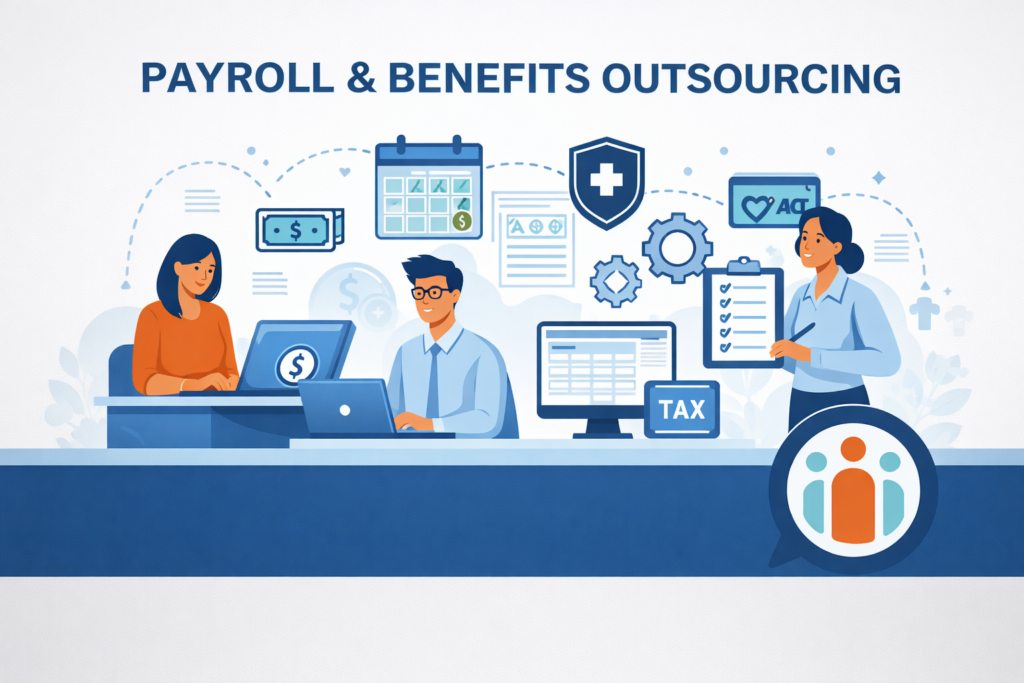
Managing payroll and employee benefits is one of the most time-consuming and high-risk responsibilities for any business. Errors in payroll processing, missed tax filings, or poorly managed benefits can quickly lead to compliance issues, employee dissatisfaction, and unnecessary costs. That’s why more organizations are turning to payroll and benefits outsourcing as a strategic solution.

By outsourcing these critical HR functions, businesses can reduce administrative burden, improve accuracy, and free up internal teams to focus on growth. In this blog, we’ll break down what payroll and benefits outsourcing is, how it works, its advantages, and how to decide if it’s the right move for your company.


What Is Payroll and Benefits Outsourcing?

Payroll and benefits outsourcing involves partnering with a third-party provider to manage payroll processing, tax filings, and employee benefits administration on your behalf. Instead of handling everything internally, businesses delegate these complex tasks to specialists who have the systems, expertise, and compliance knowledge to manage them efficiently.

Outsourcing can cover:

  • Payroll calculations, direct deposits, and tax withholdings

  • Payroll tax filing and reporting

  • Benefits enrollment and administration

  • Health, retirement, and voluntary benefit management

  • Ongoing compliance support

This approach is commonly used by small and mid-sized businesses but is also increasingly adopted by growing and multi-state organizations.


Why Businesses Choose Payroll and Benefits Outsourcing

Many companies initially manage payroll and benefits in-house. Over time, complexity grows—more employees, more regulations, and more benefit options. Outsourcing becomes appealing for several reasons.

First, it significantly reduces administrative workload. Payroll and benefits require recurring attention every pay period, month, and year. Outsourcing shifts that responsibility to a dedicated team.

Second, it helps improve compliance and accuracy. Payroll errors and benefit mismanagement can be costly. Outsourcing providers use standardized processes and compliance expertise to reduce risk.

Third, outsourcing often improves employee experience. Employees benefit from timely pay, clearer benefits communication, and self-service access to payroll and benefits information.


Key Benefits of Payroll and Benefits Outsourcing

Payroll and benefits outsourcing delivers both operational and strategic advantages.Payroll and benefits outsourcing blog footer with company logo representing HR, payroll, and employee benefits support

  • Time savings: Internal teams spend less time on repetitive administrative tasks.

  • Cost efficiency: Outsourcing can be more affordable than maintaining in-house payroll staff and systems.

  • Compliance support: Providers stay current on changing tax laws and benefit regulations.

  • Scalability: Outsourced solutions grow with your business without requiring additional hires.

  • Better benefits access: Some outsourcing models allow access to broader or more competitive benefit options.

Together, these benefits allow business leaders to focus on strategy, customers, and revenue instead of HR paperwork.


Payroll and Benefits Outsourcing vs. In-House Management

Choosing between outsourcing and in-house management depends on your business size, complexity, and goals.

With in-house payroll and benefits, businesses retain full control but must invest in staff, software, training, and compliance monitoring. As regulations evolve, the risk and workload increase.

With payroll and benefits outsourcing, businesses trade some direct control for efficiency, expertise, and reduced risk. For many growing companies, the consistency and support gained from outsourcing outweigh the loss of hands-on management.


Who Should Consider Payroll and Benefits Outsourcing?

Payroll and benefits outsourcing is especially valuable for:

  • Small businesses without dedicated HR teams

  • Growing companies adding employees or locations

  • Businesses operating in multiple states

  • Organizations struggling with payroll errors or compliance concerns

  • Employers looking to improve benefits administration without adding overhead

If payroll and benefits tasks are pulling leadership away from core operations, outsourcing is often a strong next step.


How to Choose the Right Payroll and Benefits Outsourcing Partner

Not all providers offer the same level of service. When evaluating options, consider the following:

  • Service scope: Ensure payroll, tax filing, and benefits administration are fully covered.

  • Technology: Look for user-friendly systems with employee self-service access.

  • Compliance support: Confirm how the provider manages tax and benefits regulations.

  • Transparency: Understand pricing, contract terms, and exit options.

  • Scalability: Make sure the solution can grow with your business.

Taking the time to evaluate these factors helps ensure a long-term, successful outsourcing partnership.


Is Payroll and Benefits Outsourcing Worth It?

For many businesses, the answer is yes. Payroll and benefits outsourcing offers a practical way to reduce risk, save time, and improve efficiency without sacrificing quality. While it may not be the right fit for every organization, companies experiencing growth or administrative strain often see immediate value.

The key is choosing a partner that aligns with your business needs and provides clear, reliable support.


Conclusion

Payroll and benefits outsourcing is more than a cost-saving tactic—it’s a strategic decision that can improve compliance, employee satisfaction, and operational efficiency. By delegating these complex responsibilities to experts, businesses can focus on what matters most: growth, innovation, and serving their customers.

If you’re exploring options like a PEO for hiring in multiple states, comparing PEO vs buying health insurance on the open market, or learning how to use a PEO for benefits administration, it helps to start with a clear understanding of what a PEO (Professional Employer Organization) actually is.

A PEO is a third‑party organization that enters into a co‑employment arrangement with your business. Under that structure, the PEO takes on certain administrative, payroll tax, benefits, compliance and HR tasks. The business retains control over operational decisions, hiring/firing, strategy and company culture.

This model enables businesses—especially small and medium sized—to access services and benefits typically reserved for much larger companies: such as group health insurance at more competitive rates, risk management support, multi‑state payroll filings, compliance with employment laws, and more.

When these core services are understood, the next step is to see how they apply to key scenarios: multi‑state hiring, benefit administration, and the health insurance decision.


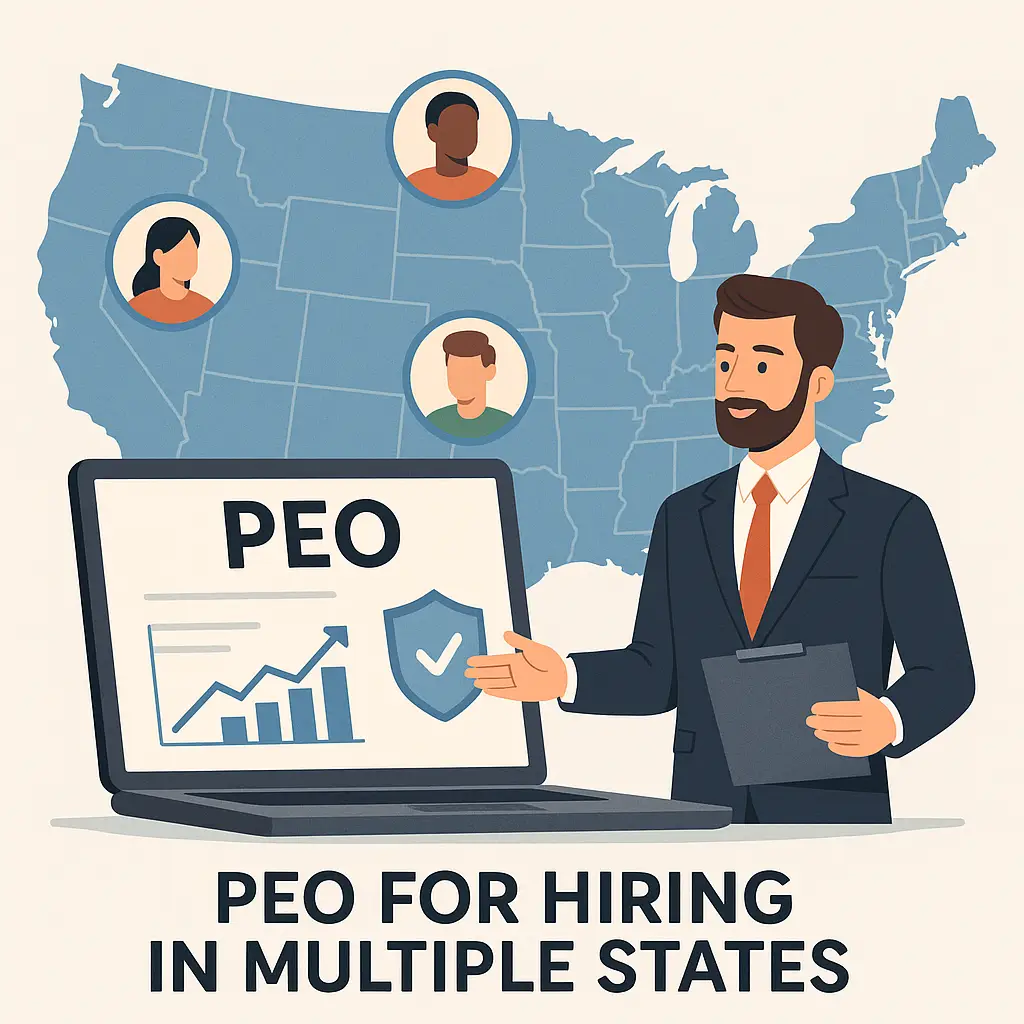
PEO for Hiring in Multiple States

Hiring employees in more than one state introduces layers of complexity: state payroll taxes, unemployment insurance, workers’ compensation mandates, local labor laws, benefit variations, and more. This is where using a PEO for hiring in multiple states becomes especially advantageous.

When a PEO operates across state lines, they handle many of the administrative burdens:

  • Filing payroll taxes in each state where the employee resides

  • Registering and managing unemployment insurance (SUTA) in each state

  • Ensuring workers’ compensation coverage meets local requirements

  • Keeping up‑to‑date with each state’s labor laws and wage‑and‑hour regulations

  • Coordinating benefits eligibility and carriers across state jurisdictions

By leveraging a PEO, your business can scale with less risk and fewer surprises.

One practical example: your company hires a sales associate in Florida, a developer in Texas, and a remote manager in New York. Rather than your internal HR team researching each state’s requirements and setting up separate systems, a PEO that spans all three states means you have one partner managing the regulatory burden, allowing you to focus on talent, growth and performance rather than paperwork.


Why Multi‑State Hiring Is So Challenging

Multi‑state hiring isn’t just “more work”—the risks and costs escalate quickly:

  • Each state has its own tax thresholds, unemployment insurance rules, payroll reporting deadlines and forms. Mis‑filing can result in audits and penalties.

  • Workers’ compensation requirements varies by state in coverage, premium calculations and claims processes.

  • Labor laws—such as minimum wage, overtime, meal break rules, rest break rules—differ across states. Failing to comply opens you up to wage‑and‑hour claims.

  • Benefits eligibility and mandatory offerings may vary; for example, some states have additional leave laws or insurance mandates.

  • Scaling operations so you have consistent policies and processes across states becomes difficult without centralized infrastructure.

Because of these variables, many growing companies find that handling multi‑state hiring on their own becomes an administrative drain and risk exposure. That’s precisely when a multi‑state capable PEO becomes a strategic asset.


How a PEO Makes Multi‑State Hiring Easier

A well‑chosen PEO with multi‑state capabilities will:

Business owner reviewing PEO for hiring in multiple states and benefits administration

  • Provide a unified payroll and HR platform for all employees, regardless of state.
  • Handle state registrations, unemployment and workers’ comp filings on your behalf.

  • Offer compliance guidance specific to each state.

  • Enable consistent onboarding processes across states.

  • Provide access to benefits plans that cover employees in multiple states, reducing fragmentation.

  • Scale with your business without needing separate vendors in every state.

By selecting a PEO that already operates and is accredited in multiple states, the hassle of building your own local HR operations significantly diminishes. It basically gives you one HR “hub” rather than multiple disconnected spokes.


What to Look For in a Multi‑State PEO Partner

When choosing a PEO for multi‑state hiring, pay attention to:

  • State footprint: Are they licensed or registered in all states where you operate or intend to operate?

  • Payroll and tax filing capacity: Do they file federal, state and local payroll taxes for remote employees?

  • Benefits coverage: Do they offer benefits plans that span multiple states (or carrier networks that work nationwide)?

  • Compliance support: Do they monitor and support each state’s unique regulations (leave laws, wage laws, etc)?

  • Transitions and scalability: Can they support your growth into additional states without new vendor onboarding each time?

  • Technology & platform: Is there a unified HRIS/portal for your employees in different states?

  • References & accreditation: Are they accredited by industry bodies (like ESAC or IRS‑certified) and do they have client references for multi‑state support?

If a PEO meets these criteria, you’ll be better positioned for smooth multi‑state employment operations.


PEO vs Buying Health Insurance on the Open Market

One of the most significant decisions you’ll face is whether to work with a PEO (and gain access via the PEO’s group purchasing power) versus buying health insurance directly from the open market (via brokers or carrier direct). Let’s compare.

PEO‑Based Health Insurance

When you partner with a PEO, you often gain access to group health plans that the PEO negotiates for its pooled clients. These plans may provide better rates, broader carrier access, and administrative support. According to industry sources:

  • PEOs give small and medium businesses access to “Fortune‑500‑level benefits at affordable cost.”

  • They can simplify benefit administration and compliance, reducing HR burden.

  • Because the PEO handles payroll, benefits enrollment, COBRA, reporting and more, you get a more integrated solution.

Open‑Market Health Insurance

If you buy health insurance on the open market:

  • You are essentially negotiating or buying as your own entity; you may have less bargaining leverage if you’re a small business.

  • You may still need to handle administration, payroll deductions, ACA reporting, COBRA, etc.

  • You might get a specific plan tailored to your business, but the administrative burden, compliance risk and cost could be higher.

Which is better?

If you’re a smaller business looking for efficiency, risk reduction and better benefits, the PEO route often wins. However, in some cases (e.g., you have a very large employee count, highly specialized benefits needs, or you want full control) open‑market insurance may be appropriate.

One firm put it simply: “Partnering with a PEO to provide employee healthcare benefits might offer significant advantages to small and medium‑sized businesses over the traditional open market.”


The Benefit of PEO‑Sourced Health Insurance

When you choose the PEO route for benefits, you typically gain:

  • Access to stronger carrier networks and better plan design options (due to pooled purchasing).

  • An integrated HR/benefits platform (enrollment, payroll deduction, COBRA, electronic records).

  • Less administrative burden: the PEO handles many back‑office tasks.

  • Better compliance support: ACA tracking, state benefit mandates, reporting.

  • Potential cost savings: in some cases the aggregated purchasing power helps drive lower premiums or better package options.

This integrated and streamlined approach helps you focus less on benefits logistics and more on attracting and retaining talent.


Key Considerations When Buying Insurance on the Open Market

If you’re leaning open market, keep in mind:

  • You’ll bear the administrative burden: you may have separate vendors for payroll, benefits enrollment, COBRA, compliance.

  • You may lack the bargaining leverage that a PEO pool offers.

  • You might face higher premiums or less favorable plan design because you’re negotiating as a smaller group.

  • You must ensure your HR systems support enrollment, deductions, reporting, compliance.

  • If you operate in multiple states, the complexity multiplies (state mandates, tax credit eligibility, etc).

Therefore, while open market has its place, many companies choose PEOs for the simplification and value they bring.


How to Use a PEO for Benefits Administration

Now, let’s zoom in on exactly how to use a PEO for benefits administration—a critical piece of the overall HR‑services puzzle.

Step 1: Select the PEO With Strong Benefits Capabilities

Start by ensuring the PEO offers robust benefits administration services: carriers, plan types, tech platform, employee portal, open enrollment support.

Step 2: Define Your Benefits Strategy

Work with the PEO to define your plan offerings, cost‑sharing structure, eligibility criteria, and enrollment schedule. The PEO’s team can help benchmark and design competitive offerings.

Step 3: Data & System Setup

Provide employee data (names, dependents, addresses, hire dates) to the PEO’s system. The PEO will integrate with payroll, deductions, carrier enrollment, and user access.

Step 4: Enrollment Launch

The PEO administers enrollment windows, sends employee communications, supports self‑service portals, and handles carrier feeds. They often take care of open enrollment process entirely.

Step 5: Ongoing Administration

After enrollment, the PEO processes monthly deductions, new hires, terminations, qualifying events, dependents, COBRA, and carrier reconciliation.

Step 6: Compliance & Reporting

The PEO tracks ACA reporting, state benefit mandates, audit readiness, plan changes, and supports you with documentation and notices.

Step 7: Performance Review & Renewal

Each renewal period, the PEO assists with carrier negotiation, benchmarking, and plan redesign if needed. They help present options to you and your employees.

By following these steps under a PEO partnership, you achieve streamlined, professional benefits administration without adding major internal burden.


Advantages of Benefits Administration Through a PEO

Using a PEO for benefits administration brings you:

  • Lower administrative overhead (fewer vendors, fewer systems)

  • Better employee experience (self‑service portal, consistent interface)

  • Enhanced compliance support (ACA, COBRA, state mandates)

  • Access to stronger benefits (due to pooled buying power)

  • Scalability as you grow across states or add employees

  • Integrated payroll, HR, benefits ecosystems—fewer errors and less duplication


Common Mistakes in Benefits Administration and How a PEO Helps

Typical mistakes include:

  • Using disparate systems for payroll and benefits, leading to errors in deductions or eligibility

  • Choosing benefits without benchmarking or understanding true employee needs

  • Missing critical deadlines (enrollment windows, carrier filings, ACA reporting)

  • Underestimating the complexity of qualifying event handling and terminations

  • Failing to manage multi‑state benefit mandates or variations

A capable PEO mitigates these risks by offering unified systems, compliance oversight, dedicated benefits administration teams, and multi‑state experience.


Integrating Multi‑State Hiring and Benefits Administration with a PEO

When you’re using a PEO for hiring in multiple states and leveraging benefits administration via the same PEO, the integration benefits become exponential:

  • One vendor manages onboarding, payroll taxes, state filings and benefits plan eligibility across states.

  • You enjoy standardized processes regardless of employee location.

  • Data flows seamlessly between payroll, HR and benefits systems—reducing manual reconciliation.

  • Employee experience is consistent no matter where they work.

  • Compliance burden is centralized, not fragmented state by state.

This unified approach is particularly powerful for companies scaling into new states or supporting remote teams across jurisdictions.


How Platforms Like PEO Marketplace Streamline the Process

Selecting the right PEO is itself a critical step. This is where platforms such as PEO Marketplace come into play. We help you compare multiple PEO providers side by side, simplifying metrics like services offered, multi‑state capabilities, benefits administration strength, pricing and accreditation. We enable businesses to “compare multiple providers side by side … avoiding being locked into just one choice.”

By using such a platform you can:

  • Submit your business profile once and receive quotes from multiple PEOs

  • Compare apples‑to‑apples: cost, service, benefits, multi‑state support

  • Filter providers by state presence, accreditation, technology, benefits strength

  • Speed up decision‑making and avoid the time‑sink of contacting each vendor individually

In short, when you’re evaluating PEO for hiring in multiple states, and focusing on how to use a PEO for benefits administration, leveraging a comparison marketplace platform helps you get clarity and confidence.


Cost and Value: Evaluating PEO Fees vs DIY HR + Insurance

When making decisions, you’ll want to understand both cost and value:

  • PEOs typically charge a fee—often a flat per‑employee per‑month rate or a percentage of payroll.

  • While there’s a cost, the value arises from savings in time, risk, benefits bargaining, multi‑state compliance, and elimination of multiple vendors.

  • Buying health insurance on the open market may appear cheaper but often accumulates cost via admin burden, less favorable rates, and risk exposure.

  • The best approach is calculating your internal HR time, vendor fees, risk‑exposure cost, benefits costs, and comparing that to what a PEO offers.

This evaluation ensures you’re choosing not just based on cost but overall value.


Ensuring Compliance Across States and Benefit Laws

Across multiple states and benefits administration, compliance risks linger:

  • State wage laws, leave laws, workers’ compensation, unemployment insurance—each state varies.

  • Benefit mandates, carrier requirements, ACA rules, COBRA—all need monitoring.

  • Harsh penalties exist for mis‑filings, non‑compliance, benefit errors.

A PEO with multi‑state capacity helps centralize these compliance functions so you’re less exposed. And when you use a marketplace platform to vet PEOs, you can easily filter for compliance‑capable providers.


Technology, Data, and Reporting in a PEO Relationship

Modern PEOs offer strong technology platforms: HRIS, employee portals, benefits dashboards, reporting tools, analytics. When you’re managing hiring across states and benefits admin, this tech matters. Look for:

  • Unified dashboards for all employees regardless of state

  • Self‑service for employees (benefits enrollment, pay stubs, attendance)

  • Integrated payroll/benefits/HR data to reduce duplication

  • Multi‑state tax and compliance reporting modules

  • Analytics dashboards for turnover, cost per employee, benefits participation, etc.

This feature set ensures you get not just service but insight.


Onboarding New Employees Across States via a PEO

Efficient onboarding is critical when you have multi‑state hiring. With a PEO:

  • You get one onboarding process that works regardless of state.

  • The PEO handles state‑specific paperwork (tax forms, SUTA registration, workers’ comp coverage).

  • Benefits eligibility and enrollment are streamlined via the portal.

  • Payroll deductions, eligibility, and launch happen without juggling separate vendors.

That means you hire faster and onboard smoother.


Open Enrollment Made Simple with a PEO

Every year, open enrollment for benefits can be an administrative headache. But when you’re using a PEO:

  • The PEO manages communications, self‑service portals, carrier feeds, deductions changes, and compliance documentation.

  • Because benefits are already integrated with payroll and HR, the process is smoother.

  • Even for multi‑state employees, the PEO ensures consistent experience and appropriate eligibility across jurisdictions.


When You Might Choose Open‑Market Insurance Instead of a PEO

While PEOs offer many advantages, there are cases where an open‑market insurance path may be appropriate:

  • You have a large, established HR team and negotiate benefits directly at scale.

  • You want full control over benefit design and select carriers individually.

  • Your business is highly specialized with unique benefit needs open‑market carriers must tailor.

  • Your employee base is localized in one state and complexities of multi‑state hiring or benefits are minimal.

In those cases, open‑market insurance might make sense—but you still likely benefit from comparing quotes via a PEO or PEO‑Marketplace style approach.


Scaling Up: Using a PEO During Growth or Acquisition

If your business is expanding into new states, acquiring another company, or rapidly growing headcount, a PEO becomes a strategic partner:

  • You can onboard new states quickly.

  • You can integrate acquired employees without building localized HR teams.

  • Your benefits admin scales seamlessly.

  • You get consistent policies and vendor oversight across units.

Evaluating PEOs now and using a marketplace to select the right one ensures you’re ready for future growth.


Exit Strategy: Transitioning Out of a PEO or Changing Benefit Models

Every business should plan for what happens if you change model:

  • What happens when you leave the PEO? How will your payroll, benefits, and compliance transition?

  • Are there termination fees? What about benefit carrier changes and COBRA?

  • If you shift from PEO‑sourced insurance to open‑market, how do you maintain employee continuity?

  • A good PEO vendor will provide exit support and a transition plan.


Real‑World Example of a Business Using a PEO for Multi‑State Hiring and Benefits

Consider a technology firm headquartered in Florida that expanded to hire remote developers in Texas, sales staff in California and operations in New York. They used a PEO that had presence in all four states.

  • The PEO managed all state tax filings, workers’ compensation, unemployment registrations and benefits eligibility uniformly.

  • The PEO’s benefits plan offered network access across all these states and bundled health insurance at better rates than the company could negotiate alone.

  • When comparing insurance open market vs PEO‑based plan, the PEO route resulted in lower per‑employee insurance cost and far less administrative time.

  • During open enrollment, the PEO’s portal handled deductions, eligibility, self‑service and carrier feeds seamlessly.

  • The company also used a PEO Marketplace‑style platform to evaluate three PEO providers, comparing multi‑state capability, benefits administration strength and cost before selecting the vendor.

This illustrates how integrating hiring in multiple states plus benefits administration under one PEO can yield significant operational and financial benefits.


Questions to Ask Potential PEOs

When evaluating PEOs (especially for multi‑state hiring and benefits administration), ask:

  • In how many states are you licensed/registered?

  • Do you handle payroll tax filings, SUTA, workers’ comp in each state?

  • Is your benefits plan national or multi‑state? Do employees in remote states receive the same carrier networks?

  • How do you handle open enrollment, benefits admin, deductible changes, qualifying events?

  • What technology platform do you provide? Is there self‑service for employees?

  • What is your fee model and how does it scale as we grow in states or employees?

  • What happens if we exit? How is transition managed?

  • Are you accredited (ESAC, IRS certified) and can you provide references with multi‑state clients?

  • How do you compare vs open‑market insurance? What value do you bring?

  • How do you help us hire and onboard employees in new states quickly?

These questions will help you discern whether the PEO is fit for your multi‑state and benefits needs.


Summary and Next Steps

To recap: using a PEO for hiring in multiple states, evaluating PEO vs buying health insurance on the open market, and learning how to use a PEO for benefits administration are three inter‑linked strategies that can transform how your business manages HR, growth, compliance and talent.

If you’re expanding into new states, a PEO centralizes your hiring infrastructure. If you’re evaluating benefits, a PEO often offers higher quality at better cost than the open market. And if you want simplified, integrated benefits administration, the PEO model gives you one vendor, one platform, one unified system.

Don’t navigate this alone. Use a comparison platform like PEO Marketplace to gather multiple quotes, compare side by side, and select a partner aligned with your strategic needs. Then define your hiring blueprint, benefits strategy, technology stack and success metrics together with your chosen PEO.

The path ahead is clear: choose wisely, scale confidently, and let the right PEO support your growth, compliance and workforce success.

When you’re running a business, every dollar counts. So does every decision. That’s especially true when it comes to outsourcing your HR needs to a Professional Employer Organization (PEO). But here’s the kicker—choosing the right PEO isn’t just about picking a name you recognize. It’s about understanding the services, comparing prices, and ultimately getting a quote from multiple PEOs to ensure you’re making the smartest move.

Getting a quote from multiple PEOs means you’re actively comparing the service scope, pricing models, and value-added features from several providers to find what best suits your business. This isn’t a one-size-fits-all situation. PEOs vary widely in costs, capabilities, compliance support, and employee benefit options.

By requesting quotes from several providers, you’re arming yourself with knowledge. Not just about price, but also about what services you truly need—and which providers can deliver them without bloating your budget. It’s no longer just smart business. It’s essential strategy.

So, how do you start? You ask. You compare. You negotiate. And this blog is here to help you do all of that and more—efficiently, confidently, and without feeling overwhelmed. Let’s dive in.

Understanding PEO Services

When you decide to get a quote from multiple PEOs, it helps to start with the basics: What exactly is a PEO and how might one support your business? A PEO—short for professional employer organization—is a partner that handles many of the employment‑related administrative duties for your company.

These services often include payroll and tax filings, employee benefits, risk and compliance management, workers’ compensation, HR support, and so on. Essentially, the PEO enters into a co‑employment relationship: your employees are still doing the work for you, but the PEO handles many behind‑the‑scenes details.

Why does this matter? Because when you are able to offload time‑consuming, regulatory‑heavy tasks, you free up your team to focus on what matters most: growth, customer service, innovation. It’s a shift from “fire‑fighting HR issues” to “strategic workforce management.”

In my own experience working with small businesses, I’ve seen how a PEO can change things: one client reduced their payroll administrative hours by nearly 60 % once the PEO took over benefits enrollment, payroll tax filings, and compliance training. As a result, the internal HR team could pivot to recruiting and training instead of paperwork.

So understanding this service model is the first step. And once you have that clarity, it becomes far more meaningful when you truly compare quotes from multiple providers—because you know what you’re comparing.


Why Businesses Choose PEOs

When business owners explore the idea to get a quote from multiple PEOs, they’re often responding to pain points: rising HR costs, shifting regulatory demands, and the need to attract and retain talent. According to industry data, businesses that use a PEO grow faster, have lower turnover, and are less likely to go out of business.

Some of the key advantages include:

  • Cost efficiencies: By joining with a PEO, a smaller business can access group‑benefit rates that would otherwise be out of reach.

  • Compliance protection: Regulations change rapidly. PEOs bring expertise and systems that help companies stay ahead.

  • Time savings and focus: When payroll, benefits, and risk are handled elsewhere, you can devote more resources to core operations.

  • Improved employee experience: A good PEO gives your staff access to higher‑level benefits and services, boosting morale and retention.

In short, businesses choose PEOs not just to outsource tasks—they choose them to enable growth, stability, and agility.


What “Get a Quote from Multiple PEOs” Really Means

The phrase “get a quote from multiple PEOs” may sound straightforward, but it carries more weight than simply filling out a form. It means you are intentionally collecting offers from two or

Illustration of four PEO quote documents on a teal background, labeled "PEO Quote 1" through "PEO Quote 4." The first two show prices of $1,500 and $1,700, while the last two highlight savings of $5,000 and $7,500 in bold green text

more PEO providers, comparing them side by side, and making an informed decision rather than accepting the first available offer.

Practically speaking, this means:

  1. Define your business needs upfront: How many employees? What benefits do you currently offer or want to offer? What compliance risks are you facing?

  2. Reach out to multiple PEOs with the same scope so you can compare apples to apples.

  3. Request standardized proposals: Ask each provider to deliver details on fees, services included, any add‑ons, and key performance metrics.

  4. Compare side‑by‑side: Look at price, service breadth, technology, reporting, transition process, and contract terms.

  5. Use tools to streamline the process (more on this later) so you aren’t reinventing the wheel every time you contact a new vendor.

When you adopt that mindset—of actively comparing multiple offers—you reduce risk, improve transparency, and strengthen your negotiating position. Asking “What will this cost me and what exactly am I getting?” becomes a strategic move, not just a checkbox.


How to Identify the Right PEO for Your Business

Getting the right PEO is about more than cost. If you’re going to get a quote from multiple PEOs, you should determine which features and provider characteristics truly matter for your business. Here are key factors to evaluate:

Business size & industry fit

A PEO that excels with small‑business retail may struggle with a manufacturing firm of 200 employees. Ensure the provider has experience in your industry and with your size.

Service scope and depth

What exactly is included in the quote? Does it include payroll tax filing, benefits administration, compliance oversight, workers’ comp, HR consulting? The broader the scope (if high‑quality), the greater the value—but also the higher the cost.

Technology and user experience

Your staff and your employees will experience the PEO’s technology daily—self‑service portals, mobile access, dashboards. A clunky system can impact adoption and satisfaction.

Reputation and accreditation

Check if the PEO is accredited (for example, through National Association of Professional Employer Organizations or other industry credentials). Accreditation offers extra peace of mind.

Pricing transparency

Look for transparent fee structures, no hidden costs, clear descriptions of what’s included, and how additional services will be priced.

Transition process and support

Switching to a PEO (or between PEOs) can be disruptive if not handled well. Good providers will walk you through the on‑boarding process and provide clear timelines.

Contract terms and flexibility

Look at the contract length, termination clause, service level agreements (SLAs), and how future growth is handled.

By applying these filters consistently across the quotes you gather, you’ll be better equipped to choose the right fit—not just the cheapest option.


The Benefits of Comparing Multiple PEO Quotes

Why go through extra work to get a quote from multiple PEOs instead of just picking one? The reasons are compelling:

  • Better pricing: When providers know they’re in competition, you often receive more favorable terms, incentives, or clearer scope.

  • Clearer benchmarks: Having several quotes lets you spot outliers—either unusually low pricing (which may come with hidden trade‑offs) or unusually high pricing (which may be over‑spec’d for your needs).

  • Opportunity to negotiate: One quote may highlight a feature you didn’t realize you needed; another may show how a small tweak could reduce costs.

  • Strategic confidence: When you compare multiple providers, you’re making a choice from options rather than settling by default. That builds trust in the decision.

  • Broader service discovery: Different PEOs may offer different strengths (for example, better technology, stronger benefits packages, better compliance support). Comparing lets you spot which strength matters most to you.

In my consulting practice, I’ve seen companies reduce their PEO cost by 20‑30 % simply by using a structured comparison process. In those cases, the cheapest wasn’t always best—but the best overall value became clear only when multiple quotes were placed side‑by‑side.


Top Features to Look for in a PEO Quote

When you request a quote, be sure it includes all the key components you’ll need to assess.

Here’s a checklist:

FeatureWhy It Matters
Service fee / cost per employeeGives you the base cost and lets you compare.
Payroll processing detailsEnsures they cover tax filings, direct deposit, and integrations.
Employee benefits packageAccess to health, dental, vision, retirement—impacting retention.
Compliance & risk servicesHelps avoid fines, audits, and regulatory surprises.
Workers’ compensation programMatters especially in higher‑risk industries (construction, etc.)
Technology / self‑service accessImpacts user experience for employees and HR staff.
SLAs / performance guaranteesGives you accountability and benchmarks.
On‑boarding / transition planEnsures smooth shift into the new relationship.
Contract terms (length, termination, exit costs)You want flexibility and to avoid lock‑in surprises.
Hidden costs and extra fees(e.g., implementation fees, add‑ons) These can erode value.

When you verify that each quote has these components, you’ll be better situated to compare “apples to apples” rather than being misled by the lowest headline price.


Common Mistakes When Requesting PEO Quotes

Even with good intention, it’s easy to make mistakes when asking to get a quote from multiple PEOs. Here are typical pitfalls:

  • Requesting inconsistent scopes: If each provider gets a different definition of services, the comparisons won’t be valid.

  • Focusing only on cost: Choosing solely by lowest price may sacrifice service quality, technology, or future flexibility.

  • Neglecting transition planning: Forgetting to ask how the provider will onboard your company can lead to disruption.

  • Underestimating hidden fees: Implementation costs, add‑ons, or termination penalties may not be immediately obvious.

  • Ignoring technology and user experience: A low cost is less useful if the employees hate the portal or the data is hard to access.

  • Overlooking contract terms: Long commitments or difficult exit clauses can trap you in a poor arrangement.

  • Failing to benchmark internally: Not having a baseline for your HR cost and performance makes it harder to judge the value.

By being aware of these mistakes ahead of time, you’re more likely to navigate the quote process wisely and avoid regrets later.


PEO Pricing Models Explained

Understanding how PEO pricing works is key to getting meaningful quotes when you get a quote from multiple PEOs. Here are common pricing models:

  • Fixed fee per employee per month: You pay a set fee per employee each month, covering defined services.

  • Percentage of payroll: Some PEOs charge a percentage of your total payroll. Larger payrolls can mean higher fees unless well negotiated.

  • Tiered pricing: Fees vary by number of employees or service levels (basic vs. premium).

  • Add‑on pricing: Core services have one fee; additional services like international payroll, 401(k) management, or HR analytics may cost extra.

  • Bundled service models: Some PEOs bundle services like benefits, compliance, safety into a single package, while others break them out.

When you compare quotes from multiple providers, ensure you understand what model the quote is using, and how growth (more employees) or changes in payroll will impact the cost in future years.


How to Evaluate a PEO Proposal

Once you’ve collected proposals, how do you evaluate them effectively? Here are steps to follow:

  1. Standardize the comparison: Create a table listing each provider and key metrics (fee, services, tech, SLAs, contract length, exit costs).

  2. Score each provider by criteria such as service breadth, cost transparency, technology, references, fit with your industry.

  3. Check for red flags: Unclear fees, unrealistic promises, lack of references, or poor tech.

  4. Look for value beyond cost: Maybe one provider has higher fees but stronger benefits or a smoother transition—which could be worth the premium.

  5. Calculate ROI: Estimate what you’ll save in HR hours, reduced turnover, better benefits, risk mitigation.

  6. Negotiate: Use the proposal you like as leverage—show the other providers what you want and ask them to match or improve.

  7. Plan for future growth: Make sure the provider can scale with you, both in services and cost structure.

When you use this evaluation process after you go to get a quote from multiple PEOs, you will be in a much stronger position to choose the right provider—not just the cheapest.


PEO Comparison Tools & Platforms

Here’s where the process gets smarter and more efficient. Instead of manually contacting each PEO and juggling multiple spreadsheets, you can use a dedicated platform to streamline everything. This is where PEO Marketplace comes into play.

PEO Marketplace is a hub designed to help small and medium‑sized businesses collect and compare multiple PEO quotes in one place. Because using PEO Marketplace means you submit your profile once, and you receive multiple customized quotes from vetted providers rather than contacting each individually, upon which you directly engage with each of your selected PEOs inside of a dedicated in app messaging platform so nothing falls through the cracks.

Benefits of using PEO Marketplace:

  • Time‑saving and efficient: One submission triggers quotes from several selected providers.

  • Transparent side‑by‑side comparison: You get standardized proposals broken down so you can easily see the differences.

  • Vetted providers: The marketplace filters for credible PEOs, helping you avoid low‑quality options.

  • Guided selection: Our platform includes a smart search to help pinpoint the exact PEOs that best fit your needs.

  • Better decision‑making: By focusing on apples‑to‑apples comparisons, you can make a more informed selection based on cost, service, and fit.

If you’re serious about getting a quote from multiple PEOs—and doing so without chaos—leveraging PEO Marketplace is a smart move.


Questions to Ask When Getting a PEO Quote

Before you commit to a proposal, make sure you ask some key questions of each provider. When you’re comparing several, these questions help you dig beneath the surface:

  • What exactly is included in your standard fee?

  • How do you handle payroll taxes and filings in all states where we operate?

  • What benefits are offered and how do our employees qualify?

  • Who is the employer of record, and how does co‑employment work in this case?

  • What’s your process for onboarding and transitioning a company like ours?

  • How do you manage workers’ compensation and safety training?

  • What technology will we use, and who is responsible for employee support?

  • What are the contract terms—length, renewal, termination fees?

  • Can you provide references from companies similar to ours?

  • How will you help us comply with changing labor and employment laws?

  • What happens if we grow from X to Y employees—does pricing change?

By asking these when you go to get a quote from multiple PEOs, you’ll be better prepared and less likely to encounter surprises.


Real‑World Case Studies: PEO Cost Comparisons

Consider this scenario: A mid‑sized manufacturing company with 75 employees wanted to improve its benefits offering and reduce the administrative burden on its in‑house HR team. They requested quotes from three PEOs—Provider A, Provider B, and Provider C.

  • Provider A offered the lowest fee but required the company to keep its existing benefits plan and limited HR support.

  • Provider B offered a mid‑tier fee, stronger benefits package, and better technology.

  • Provider C was the most expensive but included full HR consulting, talent management, and a dedicated account manager.

Upon evaluation, the company chose Provider B because the value (better benefits + smooth transition) outweighed the slightly higher cost compared to Provider A. Over the first year they reduced employee turnover by 8 %, increased overall employee satisfaction, and freed up their HR team to focus on process improvements.

This example underscores: when you get a quote from multiple PEOs, you don’t just focus on the bottom line—you focus on strategic value.


When to Avoid the Cheapest PEO Option

It might be tempting to pick the lowest‑priced quote when you’ve gone to get a quote from multiple PEOs. But lowest cost isn’t always best. Here’s why you should proceed cautiously:

  • The lowest cost may come with minimal services, outdated technology, limited benefits, or weak support.

  • Hidden fees or unclear scope may emerge later and raise your true cost.

  • A provider with weak experience in your industry or growth stage may become a liability in compliance or scalability.

  • Poor onboarding or inadequate tech support can create disruption, which can cost more in lost productivity.

In essence, choose value over price. A slightly higher fee that brings stronger support, better benefits, and smoother execution may offer a much higher return.


PEOs for Small vs. Large Businesses

The process to get a quote from multiple PEOs will differ depending on your company size. Here are considerations by business size:

Small businesses (say 10‑50 employees)

  • You may prioritize basic services: payroll, benefits, compliance.

  • Look for flexibility and cost‑effectiveness.

  • A marketplace solution can help you quickly gather quotes and compare without heavy overhead.

Medium to large businesses (50‑250+ employees)

  • You might need more advanced HR services: talent management, analytics, multi‑state compliance, international expansions.

  • Pricing will vary more dramatically; premium services matter.

  • The contract terms, scalability, and integration with your tech stack become mission‑critical.

Regardless of size, the goal remains the same: by comparing multiple quotes, you find the PEO that aligns with your current and future needs.


PEO Compliance and Legal Support

One of the most compelling reasons to partner with a PEO is compliance support. When you get a quote from multiple PEOs, you should assess how each provider handles risks and legal obligations. Key items to check:

  • Are they up to date with federal and state labor laws?

  • Do they have dedicated compliance specialists?

  • What liability protections do they offer (e.g., employment practices liability insurance)?

  • How do they handle audits, safety inspections, and workers’ comp claims?

  • What happens if there’s a wage‑and‑hour violation or OSHA issue?

Given the increasing complexity of employment law, this dimension can’t be ignored. A good PEO will help you sleep easier at night.


Bundled Services and Add‑ons to Consider

When you request quotes during the process to get a quote from multiple PEOs, you’ll probably see various “add‑ons” offerings. These might include:

  • Talent acquisition and recruiting support

  • Employee training and development

  • HR analytics and dashboards

  • Global payroll or multi‑country employer‑of‑record services

  • Retention programs and employee engagement tools

  • Enhanced employee benefit tiers (e.g., voluntary benefits, wellness programs)

It’s important to identify which of these you genuinely need, so you can compare quotes accurately, negotiate out unwanted extras, and avoid paying for services you won’t use.


HR Tech Stack Integration

Your HR technology ecosystem matters. When you’re ready to get a quote from multiple PEOs, assess how the provider’s tech will integrate with your current systems. Consider:

  • Whether the PEO’s portal connects with your payroll, time‑tracking, or ERP system.

  • Employee self‑service features: mobile access, onboarding flows, benefits enrollment.

  • Reporting and analytics: does the PEO provide actionable data?

  • Data security and migration: how will your existing employee data be transferred?

  • User experience and support: is there training, dedicated account support, and minimal disruption?

Poor technology fit can lead to headaches, despite a good cost. So prioritizing tech‑stack alignment is vital.


PEO Accreditation and Certifications

When you compare quotes, you’ll see providers touting certifications or memberships. These matter, so when you get a quote from multiple PEOs, make sure you verify:

  • Whether the PEO is a Certified Professional Employer Organization (CPEO) by the IRS.

  • Accreditation through industry bodies such as ESAC (Employer Services Assurance Corporation).

  • Evidence of financial stability, claims experience, client satisfaction.

  • References from businesses similar to yours (industry, size).

These credentials don’t guarantee perfection, but they reduce risk. They help you feel confident you’re working with a credible provider.


Understanding Termination Clauses in Contracts

Even before you sign, think ahead. When you’ve asked to get a quote from multiple PEOs, you should examine how you can exit later. Key contract terms to check:

  • Duration of the contract (12 months, 24 months, evergreen?).

  • Early termination fees or penalties.

  • Notice period for cancelation.

  • What happens if your company grows/shrinks dramatically?

  • Transition support when you switch to another provider or bring services in‑house.

  • What happens to your employees’ benefits or data when the agreement ends?

A good provider will have clear terms and support reasonable flexibility. Avoid being locked in without exit options.


Getting a Quote from Multiple PEOs in One Day

If you need to move quickly, you can gather multiple PEO quotes in a single day—if you follow the right process and use the right tools. Here’s how:

  1. Use a PEO comparison platform like PEO Marketplace—submit your company profile and request quotes from multiple providers at once.

  2. Prepare a standard information packet: your company size, industry, current payroll, benefits offered, growth plans, geographic footprint.

  3. Set a clear timeline: indicate you’re requesting quotes by a certain date and expect them back in a short window.

  4. Schedule review time: treat the proposals as a priority gathering so you can compare side‑by‑side promptly.

  5. Follow up quickly: Ask clarifying questions right away to avoid delays.

  6. Use a decision matrix: a simple table rating each provider on cost, service, tech, fit.

By doing this, you’ll reduce the “quote‑collection” timeframe from weeks to days—and that speed can help you seize opportunities (such as open enrollment deadlines or upcoming growth phases) with less disruption.


How to Negotiate with PEO Providers

Once you’ve collected several quotes via your process to get a quote from multiple PEOs, you’re in a position to negotiate. Here are tactics:

  • Highlight competitor quotes: If one provider offered better pricing or features, show it to others and ask if they can match or beat it.

  • Ask for bundling: See if you can bundle payroll + benefits + compliance at a better rate.

  • Clarify scalability: Negotiate growth thresholds—what happens when you add employees? Can pricing stay locked-in?

  • Ask for performance guarantees: For instance, guarantee a certain service level or response time.

  • Negotiate transition costs: Ask the provider to absorb part of your onboarding or implementation cost.

  • Lock‑in terms: See if you can lock your fee for a year or avoid escalation clauses.

  • Seek exit flexibility: Negotiate a trial period or short term so you’re not locked in if things change.

Remember—they know you are comparing apples and oranges unless you make it clear you are doing so. Having multiple bids gives you leverage.


Tracking ROI on PEO Services

Signing with a PEO is not the end—it’s the beginning of a relationship. After you get a quote from multiple PEOs and choose one, you still need to track value. To measure ROI:

  • Track HR hours saved: How many hours did your internal HR team spend on payroll, benefits, compliance before vs. after?

  • Monitor cost reductions: Are you paying less per employee for benefits, workers’ comp, or payroll processing now?

  • Watch employee retention: Did turnover decline? Did engagement improve?

  • Measure growth support: Did the PEO enable you to hire or expand faster with less risk?

  • Check service quality: How often did you need to contact the PEO with issues? Were they handled timely?

  • Evaluate scalability: When you grew (or shrank), did the PEO’s cost and support adapt smoothly?

Tracking these metrics helps you justify the decision and refine your ongoing partnership.


Switching PEOs Without Interrupting Operations

Sometimes the PEO you select initially isn’t the long‑term fit. If you’ve already used a structured approach—i.e., you got a quote from multiple PEOs and documented your process—you’ll be better prepared to switch if needed. Here’s how to do it smoothly:

  • Give proper notice per your contract.

  • Align termination date with your payroll cycle so there’s no gap.

  • Ensure benefits transition seamlessly for employees (avoid coverage lapses).

  • Transfer data and records to the new provider ahead of time.

  • Communicate with employees: explain the change so there’s minimal confusion.

  • Review final reconciliation: make sure fees, payroll taxes, workers’ comp experience are closed out cleanly.

  • Update internal processes: ensure that HR and payroll staff know the new workflow.

Switching doesn’t have to be chaotic—when you’ve done the homework ahead of time, it can be a strategic move to improve service or savings.


PEO Industry Trends

As you consider how to get a quote from multiple PEOs, it’s helpful to know where the industry is headed. Here are some key trends:

  • Technology and automation: More PEOs are offering advanced platforms, analytics, AI‑driven insights for HR and workforce planning.

  • Remote & multi‑state compliance: With more distributed workforces, PEOs are expanding services to cover multi‑state and international employees.

  • Enhanced employee benefits and wellbeing: The war for talent is driving better benefit offerings, wellness programs, and employee experience services.

  • Marketplace models: Platforms like PEO Marketplace are making it easier to compare and select providers—reducing friction in the market.

  • Focus on data & insights: Businesses expect more than basic services—they expect their PEO to provide strategic insights around workforce, retention, productivity.

  • Industry specialization: Some PEOs are specializing by industry (construction, manufacturing, non‑profit) to provide tailored expertise.

By being aware of these trends, when you go to get a quote from multiple PEOs, you’ll ask the right questions about what’s coming next—not just what’s needed today.


Final Checklist Before Signing a PEO Contract

Before you sign, here’s a checklist to run through—especially important after you’ve made the effort to get a quote from multiple PEOs:

  • Service scope clearly defined and aligned with what you need.

  • Pricing model transparent and scalable.

  • Technology and user experience tested or demoed.

  • Onboarding/transition plan in writing.

  • Contract term, termination rights, and fees understood.

  • Performance metrics and SLAs specified.

  • Compliance and risk management capabilities confirmed.

  • References and accreditation verified.

  • Future growth/expansion scenario addressed.

  • Data security, privacy, and transition plan included.

  • Communication plan for employees in place.

  • Internal HR roles and responsibilities clarified (your side vs. the PEO).

Ticking those boxes gives you confidence that you’re entering a partnership—not merely outsourcing tasks.


FAQs

What is the advantage to get a quote from multiple PEOs?
Comparing several quotes helps you identify the best pricing, services, and contract terms. It ensures you’re not overpaying and helps you see the full range of options.

How many PEO quotes should I get?
Ideally at least two or three, so you can see meaningful differences in cost, service, and provider fit.

How quickly can I get multiple PEO quotes?
With a platform like PEO Marketplace, you can often receive several competitive quotes in 24–48 hours.

What should I compare when reviewing PEO proposals?
You should compare cost, services included, technology, transition plan, contract length/termination, accreditation, client references, and scalability.

Can I negotiate PEO fees once I’ve got multiple quotes?
Yes—having competitive quotes gives you leverage. You can ask providers to match or improve based on what you’ve gathered.

My business is small (10 employees). Does it make sense to get a quote from multiple PEOs?
Absolutely. Even small businesses benefit from comparing providers—the right fit can help you access better benefits, save time, and scale faster.


Conclusion

In the landscape of today’s business world, to get a quote from multiple PEOs is more than just a smart move—it’s a strategic one. When you commit to comparing multiple providers, you gain clarity, confidence, and a stronger negotiating position. You’re not just buying HR outsourcing—you’re choosing a partner for growth, compliance, and stability.

Using tools like PEO Marketplace makes the quote‑collection and comparison process far less daunting, turning what could be weeks of research into a streamlined, efficient process. By applying the frameworks and checklists above—defining your needs, collecting standardized quotes, evaluating service breadth, and assessing value beyond cost—you place your business in control.

Don’t let HR obligations distract your leadership team. Instead, let a well‑matched PEO handle the administrative heavy lifting, while you focus on strategy, market expansion, and talent development. And when you’ve taken the time to get a quote from multiple PEOs, you’ll know you made the right choice—not just the easy one.

Manufacturers face unique challenges: worker safety, compliance with OSHA regulations, shift scheduling, payroll complexities, and the constant need to attract skilled talent. For small to mid-sized plants, these demands can overwhelm HR teams or fall onto managers who are already stretched thin.

That’s why many manufacturers turn to a Professional Employer Organization (PEO). A PEO can handle payroll, compliance, benefits, and workers’ compensation—while also providing safety programs and risk management tailored to high-hazard industries.


Why Manufacturing Companies Need PEO Support

Unlike retail or office-based businesses, manufacturers deal with risks that require specialized HR and compliance solutions:

  • Safety Hazards: Heavy machinery, chemicals, and physical labor create higher risk for injuries.

  • Shift Scheduling: Overtime rules, differential pay, and rotating schedules increase payroll complexity.

  • Regulatory Oversight: OSHA and environmental laws add compliance pressure.

  • Workers’ Comp Costs: Premiums are often higher in manufacturing due to risk exposure.

A PEO with experience in manufacturing understands these issues and can provide programs that reduce liability and improve efficiency.


Core PEO Services for Manufacturing

A PEO typically supports manufacturers across three main areas: people, compliance, and safety.

People (HR & Payroll):

  • Payroll processing for shift workers, overtime, and multi-site teams

  • Benefits like health, dental, vision, life, and retirement plans

  • Employee self-service portals and HRIS systems

Compliance:

  • Guidance on OSHA, labor laws, and industry-specific regulations

  • Policy updates and employee handbook management

  • Record-keeping and audit support

Safety & Risk Management:

  • Hazard assessments and safety training programs

  • Workers’ compensation claims management

  • Return-to-work programs to reduce downtime


Key Benefits of PEO Services for Manufacturing

Partnering with a PEO can transform how your manufacturing business handles HR and compliance. Some of the biggest advantages include:

  • Reduced Admin Burden: Managers can focus on production instead of paperwork.

  • Lower Costs: PEOs pool employees to negotiate better benefits and workers’ comp rates.

  • Improved Safety: Regular training and risk management reduce accidents.

  • Talent Attraction & Retention: Stronger benefits help manufacturers compete for skilled workers.

  • Consistency Across Sites: Standardized HR and safety policies ensure smoother multi-site operations.


How to Choose the Right PEO for Manufacturing

Selecting the right partner requires careful evaluation. Here are the top factors to consider:

  • Industry Experience: Do they have manufacturing clients? Can they provide references?

  • Safety Support: What OSHA training and risk management programs do they provide?

  • Compliance Knowledge: How do they handle audits and inspections?

  • Technology: Does their HR system integrate with your time clocks or ERP?

  • Transparency: Are fees clear, including workers’ comp and benefits markups?

  • Scalability: Can they support new plants or expansion into other states?


Onboarding a PEO in Manufacturing

Implementation usually takes 30–60 days, depending on employee roster size and complexity. A smooth onboarding process typically includes:

  1. Collecting employee, payroll, and safety records

  2. Reviewing and updating safety programs

  3. Integrating payroll and HR software

  4. Communicating changes to employees

  5. Running a trial payroll cycle to catch errors

  6. Monitoring safety and HR metrics in the first 90 days

Clear communication with workers is essential to ensure they understand changes to benefits, payroll, or reporting structures.


Conclusion

Manufacturers operate in one of the most demanding industries, with strict safety requirements and complex HR needs. By partnering with a PEO that understands manufacturing, you can offload payroll, compliance, and benefits administration while gaining expert safety support and lowering risks.

The result? A safer workplace, happier employees, and more time to focus on production and growth.

PEO Marketplace understands the ins and outs of PEOs when it comes to manufacturing. if you need help finding the right PEO fit, learn more about our services here.

For many tech startups and scaleups, attracting and retaining top engineering, design, and operations talent depends heavily on benefits—especially quality health insurance. But getting high-end health plans when you’re small (10, 20, 50 employees) can feel impossible. That’s where a PEO for tech company health benefits becomes a game changer.

In this post, we’ll explore:

  • Why tech companies benefit uniquely from PEO health benefits

  • How PEOs offer Fortune 500-style benefits (and why you should care)

  • How to find a PEO with affordable health insurance

  • Step-by-step on how to get quotes from multiple PEOs for comparison

Let’s dive in.


1. Why Tech Companies Are Ideal Candidates for PEO Health Benefits

Tech companies often have characteristics that make PEO solutions particularly effective:

  • Younger, healthier workforce — this helps carriers and PEOs negotiate lower rates.

  • Distributed or remote employees — PEOs often have multi-state licensure and benefit networks.

  • High expectations — engineers, product folks expect premium perks: telehealth, mental health, 401(k), wellness.

  • Rapid growth & fluctuations — PEOs scale with you and reduce HR friction.

A PEO that specializes in tech or caters to growth companies can combine these advantages with benefit packages tailored to your team. Many PEOs offer health, dental, vision, life, disability, and wellness perks in bundled packages.

For example, PEOs negotiate group health insurance premiums by pooling employees across clients, giving small firms access to plans typically available only to much larger companies.


2. What Does “PEO That Offers Fortune 500 Benefits” Really Mean?

When PEOs advertise that they provide “Fortune 500-level benefits,” here’s what is usually implied:

  • Comprehensive plans: medical, dental, vision, mental health, life, disability

  • Wellness programs and incentives

  • Robust networks and provider choice

  • Employee support, claim navigation, and benefit administration

  • Retirement plan offerings like 401(k) with match, profit sharing

  • Additional perks like EAPs (employee assistance programs), tuition reimbursement, etc.

Because PEOs aggregate many small companies into larger risk pools, they have more leverage to negotiate premium rates and perks that mimic what a large corporation might get.

That said, “Fortune 500 benefits” is a marketing phrase. What matters is which benefits and at what cost.


3. How to Find a PEO with Affordable Health Insurance

Getting good benefits isn’t enough—you must ensure they’re affordable (for both the company and employees). Here are strategies:

3.1 Understand the PEO’s pricing and structure

  • Some PEOs charge a percentage of payroll plus admin fees

  • Others use per-employee, per-month rates

  • Be wary of hidden costs: benefit plan markups, setup fees, termination fees

  • Ask for historical rate increases from past clients to judge volatility

3.2 Look for PEOs with strong bargaining power / scale

  • Bigger PEOs can negotiate better insurance rates by combining many clients

  • PEOs that specialize in tech or more favorable risk categories can get better deals

  • See if they use master policies or multi-employer pooling

3.3 Evaluate benefit plan design flexibility

  • You want a PEO that lets you choose deductible, co-pay, network vs non-network, etc.

  • Ensure they offer telehealth, mental health, wellness options

  • Confirm which insurance carriers they partner with

3.4 Benchmark and stress-test quotes

  • Compare the PEO-derived insurance cost vs open-market small group plans

  • Review worst-case scenarios (e.g. high claims year)

  • Understand how renewal risk is handled

3.5 Ask for quotes for different team sizes / tiers

  • Ask PEO for multiple quote options (e.g. base plan, premium plan, wellness add-ons)

  • See incremental cost per additional employee to understand scale breaks


4. Steps to Get Quotes from Multiple PEOs & Compare

To make a smart choice, you should get 3–5 competitive quotes. Here’s a process:

Step 1: Prepare your data package

Include:

  • Current employee roster (ages, locations, dependents)

  • Current benefit usage (claims data if available)

  • Desired benefit levels (what benefits you want)

  • Locations / states where employees operate

Step 2: Identify and shortlist PEOs

  • Use PEO directories like NAPEO

  • Seek ones experienced in tech or offering health benefits

  • Check accreditations (ESAC, CPEO)

Step 3: Send standardized RFP / questionnaire

Include the same questions to each PEO:

  • What health benefit plans are available?

  • What are admin / markup fees?

  • What insurance carriers are in their networks?

  • Renewal strategy and historical rate changes

  • Service levels, support, exit terms

  • How their tech / HR platform works for benefits

Step 4: Analyze the quotes side by side

  • Use a comparison matrix: plan deductibles, premiums, network size, admin fees

  • Evaluate total cost for employer + employee burden

  • Score each PEO on service, flexibility, exit terms

Step 5: Engage in demos & negotiations

  • Ask for platform demos focusing on benefits module

  • Negotiate terms (especially admin fees, exit clauses, pricing floors)

  • Ask for references of clients in your industry

Step 6: Pilot or phased rollout

  • Start benefits with a small cohort to test

  • Monitor claims, satisfaction, administrative issues

  • Re-evaluate after one renewal cycle


5. Common Pitfalls & Things to Watch

  • Too much marketing jargon (e.g. “Fortune 500 benefits”) without substance

  • Opaque pricing—if a PEO refuses to break out admin vs insurance, be cautious

  • Limited carrier networks—if employees can’t access their doctors, benefit suffers

  • Poor renewal handling—ask how claims experience affects renewal

  • Exit penalties or data lock-in—understand how easy/hard it is to leave

  • Compliance slack—ensure PEO handles ACA, state mandates, HIPAA


Conclusion & Call to Action

For a tech company, using a PEO to gain access to high-quality health benefits—even at startup scale—is not only possible, but strategically wise. When you find a PEO for tech company health benefits, that can offer Fortune 500-level perks, while keeping cost manageable, you give your company a competitive edge in hiring and retention.

Your next move? Get quotes from at least 3 PEOs, compare side-by-side, negotiate hard, and pilot carefully. Or have us do this for you 😉

Roofing is one of the most hazardous trades in construction, making workers’ compensation a non-negotiable for contractors. Southeast Leasing, also known as Southeast Personnel Leasing, has long positioned itself as a PEO (Professional Employer Organization) specializing in high-risk industries like roofing.

But is Southeast Leasing’s workers’ comp program really the best fit for your roofing company? In this blog, we’ll examine Southeast Leasing’s offerings, weigh the advantages and drawbacks, and compare alternative workers’ comp solutions so you can make the most informed decision.


Section 1: Understanding Southeast Leasing’s Workers’ Comp for Roofers

1.1 Company Background & Reputation

Southeast Leasing has been operating for decades, offering payroll, HR, and workers’ compensation services primarily for construction and roofing businesses. Its reputation is built on serving companies that struggle to secure affordable coverage in traditional markets, especially those labeled as “hard-to-place risks.”

1.2 Workers’ Compensation Services Offered

Southeast Leasing provides roofing contractors with:

  • Pay-as-you-go coverage – avoiding large upfront deposits and end-of-year audits.

  • Claims management support – including light-duty/return-to-work programs.

  • Safety and compliance programs – OSHA reporting, drug testing, and on-site safety training.

  • Multi-state coverage – allowing contractors to operate across different regions under one policy.

  • Bundled HR & payroll services – reducing administrative overhead.

1.3 Benefits for Roofers

Roofing contractors often find Southeast Leasing appealing because of:

  • Easier access to workers’ comp when other carriers decline coverage.

  • Streamlined payroll and compliance alongside insurance.

  • Reduced cash-flow pressure thanks to pay-as-you-go billing.

  • Support for both small contractors and larger roofing companies with more complex risk profiles.


Section 2: The Pros and Cons of Southeast Leasing’s Workers’ Comp

2.1 Advantages

  • Accessibility for tough risks – roofers with high experience mods or past claims may still qualify.

  • No big deposits – pay premiums based on actual payroll each cycle.

  • Strong claims handling – dedicated programs to minimize downtime.

  • Scalability – works for both small and multi-state roofing firms.

  • Comprehensive services – HR, payroll, and benefits bundled with workers’ comp.

2.2 Disadvantages

  • Potentially higher costs – fees and PEO markups can make coverage more expensive.

  • Less control – the PEO model means Southeast Leasing manages certain employer functions.

  • Contract limitations – termination clauses and long-term agreements may restrict flexibility.

  • Carrier concentration risk – much of the coverage is tied to affiliated carriers, which limits choices.

  • Transparency concerns – separating administrative fees from actual insurance costs can be difficult.

2.3 Comparison to Industry Standards

Roofers typically face some of the highest workers’ comp rates, often ranging between $9.90 and $15.25 per $100 of payroll, depending on state laws and company history. Many insurance carriers avoid roofing altogether, forcing contractors into assigned risk pools.

Southeast Leasing’s main edge lies in its ability to place roofers who would otherwise be denied coverage. However, contractors with strong safety records and lower risk profiles might find more cost-effective options elsewhere.


Section 3: Alternative Workers’ Comp Options for Roofing Contractors


3.1 Other PEOs and Leasing Companies

While Southeast Leasing (SPLI) is well-known, it’s not the only PEO that offers workers’ comp for roofers. Many contractors assume SPLI is their only option, but that’s far from true.

PEO marketplace allows roofing contractors to compare multiple providers side by side, ensuring they aren’t locked into just one choice. By leveraging the marketplace, roofers can:

  • Get competitive quotes from different PEOs.

  • Access programs that specialize in high-risk industries.

  • Avoid overpaying by finding a provider better matched to their risk profile and state.

Examples of other providers available in the marketplace include:

  • ToughComp – focuses on high-hazard industries like roofing, offering pay-as-you-go workers’ comp.

  • AIU PEO – provides alternative workers’ comp programs designed for contractors.

  • Regional and national PEOs that also accept roofing classifications.

This comparison process helps contractors avoid the common trap of believing SPLI is their only path to coverage.

Want us to find you the best option? click here

3.2 Direct Carrier Programs

Beyond PEOs, several insurance carriers run roofing-specific workers’ comp programs, such as AmeriSafe, Accident Fund, Benchmark, and UBIC. These can sometimes provide lower rates for roofers with solid safety records.

For smaller firms or those struggling with claims history, state-assigned risk pools may also provide coverage, though often at higher cost.

3.3 How Roofers Can Choose the Best Option

When deciding between Southeast Leasing, other PEOs, and direct carrier programs, roofing contractors should weigh:

  • Total cost (premiums + admin fees).

  • Claims handling and support (quality of safety programs, responsiveness).

  • Flexibility (multi-state coverage, contract terms).

  • Carrier stability (financial strength ratings).

  • Transparency (clear separation of insurance costs from service fees).

Conclusion

Southeast Leasing provides roofing contractors with a workers’ compensation solution that is accessible, convenient, and backed by industry experience. For roofers struggling to secure coverage, it can be a lifeline.

However, it may not be the most affordable or flexible choice for every roofing company. By comparing Southeast Leasing’s services with other PEOs, direct insurance carriers, and specialty roofing programs, contractors can make a smarter decision that balances cost, coverage, and control.

Bottom line: Do your homework, request multiple quotes, and carefully review contract terms before committing. The right workers’ comp provider can protect both your crew and your bottom line.

Scroll to Top