PEO 401k

PEO (Professional Employer Organization) solutions offer a comprehensive framework for businesses seeking to optimize their operations and foster growth. By entering into a co-employment relationship with a PEO, companies can delegate a wide range of human resources, payroll, benefits administration, and compliance responsibilities. This strategic outsourcing allows a business to shed the administrative burdens that often weigh down entrepreneurial endeavors, freeing up valuable time and resources to focus on core competencies and strategic objectives.

The foundation of a PEO solution lies in its unique co-employment structure. This is not a traditional outsourcing arrangement where a company simply hands over a standalone function. Instead, the PEO becomes a legal employer of the client company’s employees for specific purposes. This distinction is crucial.

The Co-Employment Arrangement Explained

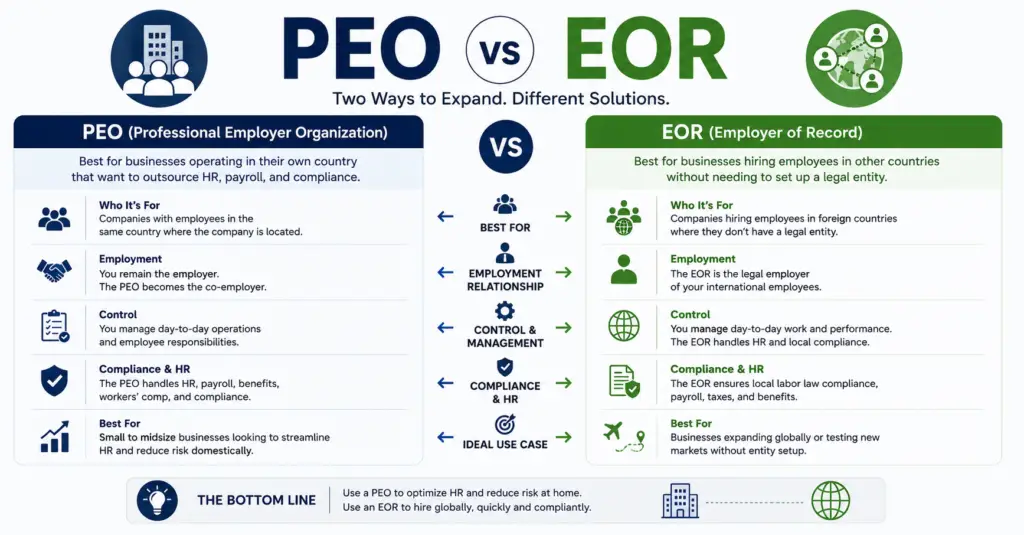
In a co-employment model, the PEO and the client company share certain employer responsibilities. The client company remains the primary decision-maker regarding day-to-day operations, hiring and firing, performance management, and overall business strategy. The PEO, on the other hand, assumes administrative and compliance responsibilities related to the workforce. This shared commitment allows for a robust support system without relinquishing control of the business’s direction. Think of it as a skilled navigator guiding a ship; the captain (client company) still sets the course and steers, while the navigator (PEO) handles the complex charts, weather patterns, and engine maintenance.

Key Responsibilities Delegated to the PEO

The scope of responsibilities transferred to a PEO can be extensive and varies depending on the agreement. However, common areas of delegation include:

Payroll Processing and Tax Administration

This encompasses the accurate calculation and disbursement of employee wages, including deductions for taxes, benefits, and other withholdings. The PEO also handles the filing of all relevant federal, state, and local payroll taxes, ensuring compliance with an ever-changing regulatory landscape.

Benefits Administration

PEOs often negotiate access to robust and cost-effective employee benefits packages, including health insurance, dental, vision, life insurance, and retirement plans. They manage enrollment, claims processing, and communication with benefit providers, offering employees access to a more comprehensive suite of benefits than a small to medium-sized business might be able to secure independently.

Human Resources Management

This broad category includes assistance with hiring processes, onboarding new employees, developing employee handbooks, implementing HR policies, and managing employee relations. PEOs provide expertise in areas such as employment law, disciplinary procedures, and performance management.

Workers’ Compensation and Risk Management

PEOs typically manage workers’ compensation insurance, including claims administration and safety program development. They can also offer guidance on risk mitigation strategies to help prevent workplace injuries and reduce potential liabilities.

Compliance and Regulatory Adherence

Staying abreast of the intricate web of labor laws and regulations is a significant challenge for many businesses. PEOs possess the specialized knowledge to ensure compliance with statutes such as the Fair Labor Standards Act (FLSA), the Employee Retirement Income Security Act (ERISA), and the Occupational Safety and Health Act (OSHA).

PEO solutions, or Professional Employer Organizations, offer businesses a comprehensive way to manage their human resources, payroll, and employee benefits. For those looking to understand the intricacies of PEOs and how they can benefit their organization, a related article can be found at What is a PEO?. This resource provides valuable insights into the functions and advantages of partnering with a PEO, making it an essential read for any business considering this option.

Advantages of Leveraging PEO Solutions for Business Growth

The integration of PEO services can act as a catalyst for business expansion, streamlining operations and mitigating risks. By offloading administrative complexities, companies can redirect their focus towards revenue-generating activities and strategic development.

Enhanced Access to Benefits and Cost Savings

One of the most compelling advantages of a PEO is the ability to offer employees competitive and comprehensive benefits packages.

Negotiating Power for Larger Groups

PEOs aggregate employees from multiple client companies, creating a larger purchasing pool. This allows them to negotiate more favorable rates for health insurance, retirement plans, and other benefits than a smaller company could achieve on its own. This access is like a small merchant joining a large buying cooperative to get wholesale prices.

Impact on Employee Attraction and Retention

A robust benefits package is a significant factor in attracting and retaining top talent. When employees feel valued and supported by their employer, their morale and loyalty tend to increase, leading to reduced turnover and a more stable workforce.

Potential for Reduced Healthcare Costs

Through careful plan design and vendor negotiation, PEOs can often help businesses control their healthcare expenditures. They can also offer wellness programs and other initiatives aimed at improving employee health, which can lead to long-term cost savings.

Streamlined HR and Payroll Operations

The administrative overhead associated with HR and payroll can be substantial, particularly for businesses experiencing rapid growth. PEOs provide efficient and accurate solutions that alleviate this burden.

Expertise in Payroll Processing

PEOs possess the technology and expertise to ensure timely and accurate payroll processing, including handling direct deposits, garnishments, and off-cycle payments. This precision minimizes errors and ensures employees are paid correctly and on time.

Mitigating Payroll Tax Errors and Penalties

Incorrect payroll tax filings can result in significant penalties and interest charges. PEOs are well-versed in complex tax regulations and manage the remittance of all payroll taxes, reducing the risk of compliance failures.

Consistent HR Support and Guidance

Businesses can tap into the PEO’s HR expertise for a wide array of needs, from drafting employment contracts to navigating complex employee disputes. This consistent access to knowledgeable professionals provides a valuable safety net.

Developing and Implementing HR Best Practices

PEOs help businesses establish and maintain HR policies and procedures that align with legal requirements and industry best practices, fostering a professional and productive work environment.

Improved Compliance and Reduced Liability

Navigating the labyrinth of employment laws and regulations presents a significant challenge for many businesses. PEOs offer a crucial layer of protection.

Staying Ahead of Evolving Labor Laws

Employment laws are constantly changing. PEOs dedicate resources to staying current on these developments, ensuring their clients remain compliant and avoid costly legal entanglements. This proactive approach is akin to having a legal radar system constantly scanning the horizon for changing weather fronts.

Diligence in Wage and Hour Compliance

Ensuring compliance with wage and hour laws, including overtime rules and minimum wage requirements, is paramount. PEOs meticulously manage these processes, minimizing the risk of wage and hour claims.

Managing Unemployment Claims and Workers’ Compensation Risks

PEOs often handle unemployment claims and manage workers’ compensation programs, including claims administration and dispute resolution. This can significantly reduce a company’s exposure to these types of liabilities.

Minimizing Workplace Safety Incidents

Through the development and implementation of safety protocols and training, PEOs aim to reduce the incidence of workplace accidents, thereby lowering workers’ compensation costs and enhancing employee well-being.

Identifying the Right PEO for Your Business Needs

Recruiting professionals studying candidate profiles


Selecting a PEO is a strategic decision that requires careful consideration of a business’s unique requirements and long-term objectives. Not all PEOs are created equal, and the right fit is essential for unlocking the full spectrum of benefits.

Assessing Your Business’s Specific Requirements

Before engaging with any PEO, it is imperative to conduct a thorough internal assessment of the company’s current HR, payroll, and benefits landscape.

Evaluating Current HR Pain Points

Identify the primary challenges the business faces in its HR operations. Are there issues with employee onboarding, benefits administration, payroll accuracy, or compliance? Understanding these “pain points” clarifies what specific services are most needed.

Determining Future Growth Projections

Consider the company’s anticipated growth trajectory. A PEO that can scale with the business is crucial for sustained support. A PEO should be able to grow alongside your business, like a sturdy vine that supports increasing fruit-bearing branches.

Budgetary Constraints and Financial Goals

Establish a clear understanding of the budget allocated for PEO services and the financial goals the business aims to achieve through such a partnership, such as cost reduction or improved employee productivity.

Due Diligence in PEO Selection

Once the internal assessment is complete, the next step involves meticulous research and evaluation of potential PEO providers.

Reviewing PEO Accreditations and Certifications

Look for PEOs that have achieved accreditations from industry organizations, such as the Employer Services Assurance Corporation (ESAC). Certifications demonstrate a commitment to ethical practices and financial stability.

Examining the PEO’s Service Offerings

Ensure the PEO’s service portfolio aligns directly with the identified needs of the business. A PEO might excel in benefits administration but be less adept in complex HR matters, so alignment is key.

Understanding Their Client Base and Industry Experience

Inquire about the PEO’s experience with businesses of a similar size and in the same industry. This often indicates a deeper understanding of sector-specific challenges and regulatory nuances.

Requesting Proposals and Comparing Service Levels

Obtain detailed proposals from multiple PEOs and compare their proposed services, pricing structures, and service level agreements (SLAs) to make an informed decision.

Implementing a PEO Solution Effectively

Human resources banners

The successful integration of a PEO solution is not merely about signing a contract; it requires a proactive and collaborative approach to ensure a seamless transition and optimal utilization of services.

Preparing Your Workforce for the Change

Effective communication with employees is critical to address any potential concerns and ensure a smooth adoption of the new PEO services.

Communicating the Benefits to Employees

Clearly articulate how the PEO partnership will enhance their benefits, simplify payroll inquiries, and provide access to improved HR support, focusing on the positive impact on their employee experience.

Addressing Employee Questions and Concerns

Establish clear channels for employees to ask questions and voice concerns about the PEO transition, providing timely and transparent answers to foster trust and understanding.

Providing Training and Resources

Ensure employees are informed about any new systems or processes that may be introduced as part of the PEO integration, providing necessary training and resources for easy navigation.

Establishing Clear Operational Protocols

Defining clear lines of communication and responsibilities between the client company and the PEO is fundamental to efficient operations.

Defining Points of Contact and Escalation Procedures

Establish designated points of contact within both the client company and the PEO for various functional areas, along with clear escalation procedures for addressing issues promptly.

Setting Expectations for Service Response Times

Clearly outline expected response times for inquiries and service requests from the PEO to ensure accountability and efficient workflow.

Regular Performance Reviews and Feedback

Schedule regular meetings with the PEO to review performance against agreed-upon metrics and provide constructive feedback to ensure continuous improvement and alignment of services.

Professional Employer Organization (PEO) solutions offer businesses a comprehensive way to manage their HR functions, including payroll, benefits, and compliance. For those looking to delve deeper into the specifics of payroll services within PEOs, a related article can provide valuable insights. You can explore this topic further in the article about payroll service providers and how they integrate with PEO solutions to streamline operations for companies of all sizes.

The Long-Term Impact of PEO Solutions on Business Sustainability

MetricDescriptionTypical RangeImportance
Employee CountNumber of employees managed under the PEO agreement10 – 5,000+High
Cost per EmployeeMonthly fee charged per employee for PEO services50 – 200High
Payroll Processing TimeAverage time taken to process payroll1 – 3 daysMedium
Benefits CoverageRange of employee benefits offered (health, dental, vision, etc.)Basic to ComprehensiveHigh
Compliance SupportLevel of assistance with regulatory and legal complianceBasic to Full-ServiceHigh
Employee Turnover RatePercentage of employees leaving annually under PEO management5% – 20%Medium
Onboarding TimeTime required to onboard new employees through the PEO1 – 7 daysMedium
Customer SatisfactionClient satisfaction rating with PEO services70% – 95%High

Beyond the immediate operational advantages, PEO solutions contribute significantly to the long-term health and sustainability of a business, allowing for strategic focus and resilience.

Enabling Strategic Focus and Innovation

By alleviating the administrative pressures of managing a workforce, PEOs empower businesses to concentrate on their core mission, fostering an environment conducive to innovation and strategic growth.

Redirecting Resources to Core Business Functions

With HR and payroll responsibilities managed by the PEO, company leaders can dedicate more time and intellectual capital to product development, market expansion, and strategic planning. This is akin to a craftsman focusing on honing their masterpiece, rather than being sidetracked by tool maintenance.

Fostering a Culture of Innovation and Agility

A business unburdened by administrative minutiae is more likely to be agile and adaptable to market changes, allowing for quicker implementation of innovative ideas and strategic pivots.

Building a Scalable and Resilient Business Infrastructure

PEO services create a robust and flexible infrastructure that can adapt to evolving business needs, ensuring continued operational efficiency and compliance as the company grows.

Mitigating Risks Associated with Rapid Expansion

As a business scales, the complexities of managing a growing workforce increase. PEOs provide the necessary expertise and systems to manage this growth effectively, minimizing the associated risks.

Enhancing Overall Business Stability and Predictability

By standardizing HR processes and ensuring regulatory compliance, PEOs contribute to a more stable and predictable business environment, reducing the likelihood of disruptive events and costly legal battles.

In conclusion, PEO solutions offer a multifaceted approach to business growth and operational efficiency. By strategically outsourcing key human resources functions, companies can unlock significant advantages, from enhanced employee benefits and cost savings to improved compliance and reduced liability. The decision to partner with a PEO represents a commitment to streamlining operations, empowering strategic focus, and building a more resilient and sustainable future for the business.

Ready to find the right PEO? Book a call with us

FAQs


What does PEO stand for in PEO solutions?

PEO stands for Professional Employer Organization. PEO solutions involve a service where a company partners with a PEO to handle various employee management tasks such as payroll, benefits, and compliance.

What services are typically included in PEO solutions?

PEO solutions generally include payroll processing, employee benefits administration, workers’ compensation, risk management, regulatory compliance, and human resources support.

How can PEO solutions benefit small and medium-sized businesses?

PEO solutions can help small and medium-sized businesses by reducing administrative burdens, providing access to better employee benefits, ensuring compliance with labor laws, and improving overall HR management efficiency.

Are employees hired through a PEO considered employees of the PEO or the client company?

Employees are typically co-employed by both the PEO and the client company. The PEO handles HR-related responsibilities, while the client company manages day-to-day work and business operations.

Is using a PEO solution cost-effective for businesses?

Using a PEO can be cost-effective as it allows businesses to leverage economies of scale for benefits and HR services, reduce risks related to compliance, and save time on administrative tasks, though costs vary depending on the provider and services selected.

A Professional Employer Organization (PEO) acts as a co-employer, meaning it shares certain employer-related responsibilities with your business. This allows small and medium-sized businesses (SMBs) to access large-group benefits, manage HR tasks more efficiently, and navigate complex compliance landscapes. However, with a crowded market, pinpointing the right PEO can feel like navigating a dense fog without a compass. This article aims to illuminate the path, providing a structured approach to finding the best Professional Employer Organization for your enterprise.

Before diving into specific reviews, it is crucial to grasp the fundamental role and operational model of a PEO. A PEO essentially becomes an extension of your HR department, but with a broader scope of responsibility and expertise. You retain control over your day-to-day operations and core business functions, while the PEO handles critical backend administrative tasks, often referred to as “co-employment.” This relationship is not a mere delegation of tasks; it’s a partnership built on shared responsibility and mutual benefit.

The Co-Employment Model Explained

The co-employment model is the bedrock of PEO services. Under this arrangement, the PEO becomes the employer of record for tax and insurance purposes. This means that W-2s are issued under the PEO’s name, and payroll taxes are remitted by the PEO. However, your company remains the “worksite employer,” responsible for hiring decisions, direct supervision, performance management, and defining job duties. This distinction is vital, ensuring that you maintain control over your workforce while leveraging the PEO’s infrastructure.

Advantages of Co-Employment

  • Access to Benefits: Perhaps the most significant advantage is the ability for SMBs to offer Fortune 500-level benefits. PEOs pool employees from numerous client companies, creating a large collective workforce that has significant bargaining power with insurance carriers. This translates to access to more comprehensive and cost-effective healthcare, dental, vision, and retirement plans than most SMBs could secure on their own.
  • HR Expertise and Compliance: Navigating the labyrinth of labor laws, tax regulations, and HR compliance is a daunting task for many businesses. PEOs house teams of experts in these areas, offering guidance and ensuring your business remains compliant with federal, state, and local regulations. This proactive approach can prevent costly fines and legal disputes.
  • Streamlined HR Administration: From payroll processing and tax filings to workers’ compensation claims management and unemployment insurance administration, PEOs shoulder much of the administrative burden. This frees up your internal staff to focus on strategic initiatives that drive business growth rather than being bogged down in paperwork.
  • Risk Management: PEOs can help mitigate various business risks. They often provide expertise in areas like workplace safety, workers’ compensation, and employment practices liability insurance (EPLI), which can protect your business from the financial repercussions of employee-related lawsuits.

Differentiating PEOs from Other HR Solutions

It is essential to distinguish PEOs from other HR service providers, such as Professional HR Consultants or payroll providers. While some services may overlap, the core operational model differs significantly.

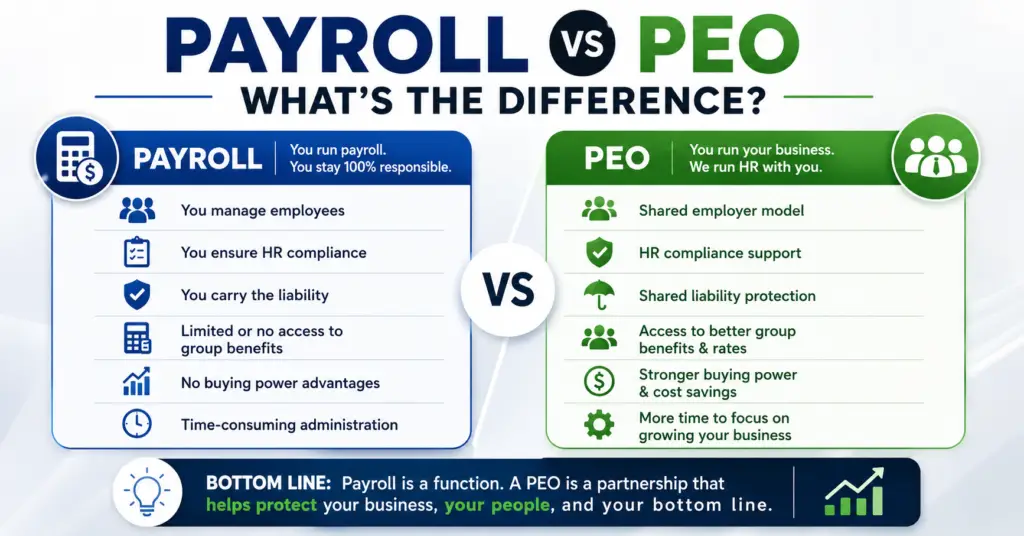
PEOs vs. Payroll Companies

Payroll companies primarily focus on processing payroll, calculating taxes, and remitting payments. They do not typically offer benefits administration, HR support, or workers’ compensation management as part of their core service. A PEO encompasses payroll services but extends far beyond them.

PEOs vs. HR Consultants

HR consultants offer advisory services, often on a project basis or retainer. They can help develop HR policies, conduct training, or assist with specific HR challenges. However, they do not typically take on the co-employment responsibilities or provide direct access to benefits plans in the same manner as a PEO.

If you’re considering partnering with a Professional Employer Organization (PEO) in Oregon, you may find valuable insights in the article titled “Understanding the Benefits of PEOs for Small Businesses.” This article provides a comprehensive overview of how PEOs can streamline HR functions, improve employee benefits, and enhance compliance with labor laws. To learn more about the various PEO options available in Oregon, you can visit this link: Oregon PEO Companies.

Key Factors to Consider When Evaluating PEOs

Selecting a PEO is a decision that will impact your employees, your financial health, and your operational efficiency. Careful consideration of several key factors is paramount to making an informed choice. Think of this as scouting for a reliable navigator for your ship; you wouldn’t choose just anyone.

Industry Specialization and Experience

Does the PEO have demonstrable experience working with businesses in your specific industry? Different industries have unique regulatory requirements, employee classifications, and operational challenges. A PEO with a deep understanding of your sector can offer tailored solutions and proactive advice.

Understanding Your Niche

  • Regulatory Compliance: Certain industries, like construction or healthcare, have a higher degree of regulated compliance. A PEO with experience in these areas will be better equipped to handle the specific legal and administrative needs.
  • Employee Benefits Landscape: The typical benefits package and employee expectations can vary by industry. A PEO familiar with your industry’s norms can source appropriate and competitive benefits.

Service Offerings and Customization

Not all PEOs offer the same suite of services, and the level of customization can vary. Evaluate whether their offerings align with your business’s current and future needs.

Comprehensive vs. Modular Services

  • Full-Service Model: Some PEOs provide a comprehensive package that includes payroll, benefits, HR, compliance, and risk management. This is often ideal for businesses seeking a one-stop solution.
  • Modular Approach: Other PEOs may offer more flexibility, allowing you to select specific services you require. This can be beneficial if you already have certain HR functions managed internally.

Tailoring Solutions

  • Scalability: Can the PEO’s services scale with your business as you grow? A PEO that can adapt to your evolving needs is a long-term asset.
  • Technology Integration: How does the PEO’s technology platform integrate with your existing systems? Seamless integration can improve efficiency and data accuracy.

Cost Structure and Transparency

Understanding how a PEO charges is critical to budgeting and avoiding hidden fees. PEO pricing models can differ, making transparency a key differentiator.

Fee Structures

  • Percentage of Payroll: This is the most common model, where the PEO charges a percentage of your total payroll. The typical range is between 2% and 12%.
  • Per-Employee, Per-Month Fee: Some PEOs charge a flat fee for each employee on a monthly basis. This can offer more predictable costs for fluctuating payrolls.
  • Bundled Services: The fee may be inclusive of all services, or there might be separate charges for specific add-ons.

Uncovering Hidden Costs

  • Setup Fees: Are there one-time charges for onboarding or setting up your account?
  • Deductibles and Claims Processing Fees: For workers’ compensation, understand how deductibles are handled and if there are any administrative fees associated with claims.
  • Additional Service Charges: Be clear about what is included and what incurs extra costs, such as specialized HR consulting or legal advice.

Reputation and Client Testimonials

A PEO’s track record and the experiences of its current and former clients are invaluable indicators of their service quality and reliability.

Due Diligence

  • Online Reviews and Ratings: Platforms like Google Reviews, the Better Business Bureau (BBB), and industry-specific review sites can offer insights into client satisfaction.
  • Ask for References: Reputable PEOs will be willing to provide references from businesses similar to yours. Contact these references to ask about their experience.
  • Industry Awards and Accreditations: While not always indicative of service quality, awards and accreditations from recognized organizations can suggest a commitment to standards and best practices.

Financial Stability and Security

Choosing a PEO means entrusting them with sensitive financial and employee data. Their financial health and security measures are paramount.

The Importance of Financial Soundness

  • ESAC Accreditation: The Employer Services Assurance Corporation (ESAC) is a voluntary accreditation program that assesses a PEO’s financial health, ethical conduct, and operational compliance. ESAC accreditation is a strong indicator of a PEO’s reliability.
  • Workers’ Compensation Insurance: Verify that the PEO has robust workers’ compensation insurance in place and that it is financially sound to handle claims.
  • Data Security Protocols: Inquire about their data security measures to protect your company’s sensitive employee and financial information from cyber threats.

Top PEO Reviews: A Comparative Overview


While specific company reviews can change and are best accessed through dedicated platforms, understanding the generally well-regarded PEOs and their common strengths can guide your initial research. Think of this as a general map before you consult detailed atlases.

Established Industry Leaders

Several PEOs have consistently appeared in top rankings due to their long-standing presence, comprehensive service offerings, and extensive client bases. These organizations often possess significant resources and a deep understanding of the PEO landscape.

Characteristics of Leaders

  • Broad Industry Reach: These PEOs typically serve a wide array of industries, demonstrating adaptability and extensive experience.
  • Robust Technology Platforms: They invest heavily in user-friendly and feature-rich HR technology for payroll, benefits administration, and HR management.
  • Strong Benefit Offerings: Due to their large client pools, they can negotiate highly competitive group benefits plans.

PEOs with Specialized Strengths

Beyond the large, generalist PEOs, there are organizations that have carved out niches by focusing on specific industries, company sizes, or types of services. These can be particularly attractive to businesses with unique needs.

Niche Market Focus

  • Industry-Specific PEOs: Some PEOs specialize in serving construction companies, tech startups, healthcare providers, or other particular sectors. Their expertise in the specific compliance and operational needs of these industries can be invaluable.
  • Small Business Focused PEOs: Certain PEOs design their services and pricing structures specifically for very small businesses, offering simpler, more cost-effective solutions.
  • Remote Workforce Specialists: With the rise of remote work, some PEOs have developed expertise in managing distributed workforces, including compliance across different states.

Emerging Players and Innovative Solutions

The PEO market is not static. New companies are emerging, often leveraging technology to offer more flexible or cost-effective solutions. While they may not have the decades-long track record of established players, their innovative approaches can be compelling.

Technology-Driven PEOs

  • Streamlined Onboarding: These companies often prioritize intuitive digital onboarding processes for both employers and employees.
  • Advanced Analytics and Reporting: They may offer sophisticated dashboards and reporting tools to provide deeper insights into HR data.
  • Agile Service Models: Their structures can allow for quicker adaptation to changing client needs and market trends.

The Review Process: How to Conduct Your Own Due Diligence

Business people standing at document


Reading a top PEO review article can point you in the right direction, but ultimately, the most important reviews are the ones you conduct yourself. This multi-step process will ensure you are making a decision based on your specific business requirements.

Step 1: Define Your Business Needs and Priorities

Before you even look at a PEO, you need a clear understanding of what you require. This is akin to knowing your destination before charting your course.

Identifying Core Requirements

  • Current Pain Points: What are your biggest HR headaches right now? Payroll errors? Skyrocketing benefits costs? Compliance concerns?
  • Desired Outcomes: What do you hope to achieve by partnering with a PEO? Reduced administrative burden? Better employee retention? Improved benefits offerings?
  • Budgetary Constraints: What is your realistic budget for PEO services?

Long-Term Goals

  • Growth Projections: How do you anticipate your business growing in the next 1-3-5 years?
  • Scalability Needs: Will the PEO’s services need to adapt to increased employee numbers or expanded service offerings?

Step 2: Shortlist Potential PEOs

Based on your needs and initial research (including reading reviews and industry guides), create a shortlist of 3-5 PEOs that appear to be a good fit.

Researching Beyond the Surface

  • PEO Websites: Explore their “services” pages to understand their core offerings.
  • Industry Publications: Read articles and reports from reputable HR and business publications that may feature PEOs.
  • Referrals: Ask trusted business contacts if they have experience with any PEOs.

Step 3: Request Proposals and Conduct Demonstrations

Once you have your shortlist, it’s time to engage directly with the PEOs. This is where the real evaluation begins.

The Proposal Stage

  • Tailored Proposals: Ensure the proposals you receive are specific to your business and address your stated needs. Generic proposals are a red flag.
  • Clear Pricing Breakdown: Scrutinize the pricing to ensure all fees are clearly itemized and explained.
  • Service Level Agreements (SLAs): Review any SLAs to understand response times, support availability, and performance metrics.

Technology Demonstrations

  • Interactive Demos: Request live demonstrations of their HR technology platform.
  • User Experience: Assess how intuitive and user-friendly the platform is for both administrators and employees.
  • Functionality: Ensure the platform supports all the features you require, from payroll processing to benefits enrollment.

Step 4: Evaluate References and Case Studies

Talk to PEOs’ existing clients to get firsthand accounts of their experiences.

The Power of Peer Feedback

  • Ask Specific Questions: Don’t just ask “Are you happy?” Ask about their experience with payroll accuracy, benefits administration, claims handling, and customer support.
  • Understand Client Fit: Try to speak with clients of a similar size and industry to yours.
  • Case Studies: While often curated, case studies can offer insights into how a PEO has helped businesses overcome specific challenges.

If you’re considering a Professional Employer Organization, reading PEO reviews can provide valuable insights into the experiences of other businesses. For a deeper understanding of the benefits and challenges associated with PEOs, you might find this related article helpful. It offers a comprehensive overview that can aid in your decision-making process. Check it out for more information on how PEOs can impact your business by visiting this link.

Navigating the Decision: Making the Final Choice

The PEO agreement is a legally binding document. It’s crucial to understand every clause before signing.

Key Contractual Elements

  • Term and Termination: What is the duration of the contract, and what are the conditions for early termination?
  • Indemnification Clauses: Understand who is responsible for what in case of legal disputes or liabilities.
  • Service Guarantees: Are there any service guarantees or penalties for non-performance?
  • Data Ownership and Portability: Clarify who owns your employee data and how you can retrieve it if you decide to switch PEOs.

The Importance of Communication and Relationship Building

While technology and services are vital, the human element of the PEO relationship cannot be overstated.

Finding a Responsive Partner

  • Dedicated Account Manager: Will you have a dedicated point of contact who understands your business and can address your concerns promptly?
  • Customer Support Accessibility: How easy is it to reach their customer support team, and what are their typical response times?
  • Proactive Communication: Does the PEO proactively communicate updates, compliance changes, or potential issues?

Long-Term Partnership: A Vision for the Future

Choosing a PEO is not a one-time transaction; it’s the initiation of a long-term partnership. The right PEO will grow with your business and contribute to its ongoing success. By diligently conducting your research, clearly defining your needs, and carefully evaluating potential partners, you can confidently navigate the PEO landscape and find the best Professional Employer Organization to support and propel your business forward.

Ready to find the right PEO? Book a call with us

FAQs


What is a PEO?

A PEO, or Professional Employer Organization, is a company that provides comprehensive HR services to businesses, including payroll, benefits administration, compliance assistance, and employee management.

Why are PEO reviews important?

PEO reviews help businesses evaluate the quality, reliability, and customer satisfaction of different PEO providers, enabling them to make informed decisions when selecting a partner for HR outsourcing.

What factors are commonly assessed in PEO reviews?

PEO reviews typically assess factors such as customer service, pricing, range of services offered, ease of use, compliance support, and overall client satisfaction.

How can I find trustworthy PEO reviews?

Trustworthy PEO reviews can be found on independent review websites, industry forums, business rating platforms like the Better Business Bureau, and through testimonials from current or past clients.

Are PEO reviews useful for all types of businesses?

Yes, PEO reviews are useful for businesses of all sizes and industries, as they provide insights into how well a PEO can meet specific business needs and help improve HR operations.

Understanding Professional Employer Organizations (PEOs) can be instrumental for businesses seeking to optimize their operations and mitigate risk. PEOs offer a co-employment model, wherein a business enters into a contractual agreement with a PEO and becomes a co-employer of its employees for specific administrative, human resources, and compliance purposes. This strategic partnership allows small and medium-sized enterprises (SMEs) to gain access to resources and expertise typically reserved for larger corporations. This article delves into the multifaceted benefits and strategic considerations of engaging a PEO, drawing upon expert insights to illuminate its potential.

The concept of outsourcing HR functions has a lineage that predates the formal establishment of PEOs. However, the PEO model emerged as a sophisticated solution to address the growing complexities of employment law and benefit administration. Understanding its historical context is crucial for appreciating its current role in the business landscape.

Early Precursors and the Need for Specialization

The mid-20th century saw a burgeoning awareness of the legal and administrative burdens associated with employing staff. As the regulatory environment became more intricate, businesses, particularly those lacking dedicated HR departments, struggled to keep pace. This period witnessed the rise of specialized payroll services and benefits brokers, offering piecemeal solutions to specific pain points. These early services, while helpful, did not offer a comprehensive approach. The underlying issues of compliance, insurance procurement, and employee management remained fragmented.

The Birth of the Modern PEO

The modern PEO model truly began to crystallize in the late 20th century. Recognizing the demand for integrated HR solutions, PEOs began offering a bundled service package. This package often included payroll processing, tax administration, workers’ compensation insurance, health insurance, and basic HR support. The co-employment relationship, a cornerstone of the PEO model, emerged as the legal framework that allowed PEOs to pool employee numbers. This pooling was a critical development, as it enabled smaller businesses to achieve economies of scale, particularly in the realm of benefits. By aggregating the employee base of multiple client companies, PEOs could negotiate more favorable rates for health insurance, retirement plans, and other benefits. This was akin to a small boat joining a larger convoy; it gained the protection and advantages of the larger vessel.

Regulatory Developments and Industry Maturation

Over time, the PEO industry has undergone significant regulatory evolution. Federal and state legislation has been enacted to provide greater clarity and oversight to the PEO model. The establishment of industry associations, such as the Employer Services Assurance Corporation (ESAC) and the National Association of Professional Employer Organizations (NAPEO), has further contributed to the maturation and professionalization of the PEO sector. These organizations promote best practices, establish accreditation standards, and advocate for the industry, building trust and confidence among businesses considering PEO partnership. This structured approach has transformed PEOs from mere service providers into strategic partners for businesses.

The PEO as a Growth Catalyst

In essence, the evolution of PEOs reflects a natural progression in the business world. As businesses grew more complex and the regulatory landscape more demanding, the need for specialized expertise and integrated solutions became paramount. PEOs emerged as a response to this demand, offering a scalable and efficient way for businesses to manage their human capital effectively. They have transitioned from being a niche offering to a mainstream strategy for businesses looking to navigate the complexities of employment and unlock their growth potential.

If you’re interested in understanding how Professional Employer Organizations (PEOs) structure their billing for services, you might find this article particularly insightful. It delves into the various pricing models used by PEOs and provides a comprehensive overview of what businesses can expect when partnering with these organizations. For more details, you can read the full article here: How PEOs Bill for Services.

Core Services and Operational Synergies

The value proposition of a PEO lies in its comprehensive suite of services, designed to alleviate administrative burdens and enhance operational efficiency. Understanding these core offerings provides insight into how a PEO can act as an extension of a business’s internal capabilities.

Integrated Payroll and Tax Administration

Payroll processing is often the gateway service for businesses engaging with PEOs. This includes accurate calculation of wages, deductions, and withholdings, along with timely remittance of payroll taxes to federal, state, and local authorities. PEOs manage the complexities of tax compliance, a task that can be a significant drain on internal resources, especially with evolving tax laws and reporting requirements. They act as a central hub for all payroll-related activities, ensuring compliance and accuracy. The PEO effectively shoulders the heavy lifting of this intricate financial machinery, allowing the business to focus on its core revenue-generating activities.

Comprehensive Benefits Administration and Procurement

A significant driver for PEO adoption is the access to robust employee benefits packages. PEOs leverage their pooled purchasing power to secure group health insurance, dental and vision plans, life insurance, disability insurance, and retirement savings plans (such as 401(k)s) at rates often inaccessible to individual small businesses. Beyond procurement, PEOs manage all aspects of benefits administration, including enrollment, claims processing, and communication with employees and providers. This not only enhances employee satisfaction and retention but also removes a substantial administrative burden from the business. It’s like a small seed being planted in a fertile, well-watered garden, allowing it to grow stronger and healthier with access to essential nutrients.

Workers’ Compensation and Risk Management

Navigating the complexities of workers’ compensation insurance is another critical area where PEOs provide immense value. PEOs can secure more favorable workers’ compensation rates through their aggregated employee base, often offering pay-as-you-go options where premiums are paid based on actual payroll. Furthermore, PEOs play a vital role in risk management, implementing safety programs, assisting with claims management, and working to reduce workplace accidents. This proactive approach to risk mitigation can lead to lower insurance premiums and a safer working environment, protecting the business from potentially crippling liabilities. The PEO acts as a seasoned navigator, charting a course through the often-treacherous waters of occupational safety and insurance.

Human Resources Support and Compliance

Beyond the transactional aspects of payroll and benefits, PEOs offer expert HR support. This can encompass a wide range of services, including employee onboarding and offboarding, handbook development, policy creation, performance management guidance, and dispute resolution. Crucially, PEOs remain abreast of the ever-changing landscape of employment law, from federal regulations like the Fair Labor Standards Act (FLSA) and the Family and Medical Leave Act (FMLA) to state-specific mandates. They help businesses interpret and comply with these regulations, thereby mitigating the risk of costly lawsuits and penalties. This HR expertise acts as a vigilant guardian, shielding the business from potential legal entanglements that could derail its progress.

Talent Acquisition and Management Integration

While PEOs don’t typically handle the strategic aspects of identifying ideal candidates or defining job roles, they can integrate with and support a business’s talent acquisition and management processes. They can assist with background checks, onboarding paperwork, and ensuring that new hires are properly set up in the payroll and benefits systems. Some PEOs also offer modules or guidance on performance management and employee development, contributing to a more holistic approach to human capital management. This integration ensures that once talent is acquired, the administrative framework is in place to support its success within the organization.

Strategic Benefits for Business Growth

The engagement of a PEO extends beyond mere administrative relief; it offers tangible strategic advantages that can fuel a business’s growth trajectory. By offloading non-core functions, businesses can unlock resources and focus their energy on activities that directly drive revenue and market expansion.

Enhanced Focus on Core Business Competencies

One of the most significant strategic benefits of a PEO partnership is the liberation of internal resources. When a business outsources complex HR, payroll, and benefits administration, its leadership and key personnel are freed from the operational minutiae. This allows them to dedicate more time and energy to strategic planning, product development, sales, marketing, and customer relationship management – the very activities that drive business growth. Imagine a skilled artisan no longer spending hours grinding pigments but instead focusing on perfecting their masterpiece; the PEO handles the pigment preparation, allowing the artist to create. This regained focus is a powerful engine for innovation and market penetration.

Access to Enterprise-Level Benefits and Talent Attraction

As discussed, PEOs provide access to comprehensive and competitive benefits packages. For SMEs, this can be a game-changer in attracting and retaining top talent. In today’s competitive job market, robust benefits are often a deciding factor for potential employees. By offering benefits comparable to larger corporations, a business partnering with a PEO can significantly enhance its employer brand and its ability to recruit skilled professionals. This elevates the business from a contender to a preferred destination for talent. Having access to a broader talent pool is like opening new avenues of exploration; it leads to discovering untapped potential and driving forward progress.

Improved Compliance and Reduced Risk Exposure

The regulatory landscape for businesses, particularly concerning employment, is a complex and ever-shifting terrain. PEOs are experts in navigating these complexities. They ensure that businesses remain compliant with all applicable federal, state, and local employment laws, minimizing the risk of costly fines, lawsuits, and reputational damage. This proactive approach to compliance acts as a robust shield, protecting the business from the disruptive forces of legal challenges. The PEO essentially acts as a seasoned navigator, steering the business’s ship away from the hidden reefs of non-compliance. This peace of mind allows for a more stable and predictable operational environment.

Economies of Scale and Cost Efficiencies

The co-employment model enables PEOs to achieve economies of scale by pooling the employees of multiple client companies. This aggregated purchasing power translates into lower costs for services such as health insurance, workers’ compensation, and other employee benefits. Furthermore, by consolidating the administrative functions of payroll and HR, PEOs can offer these services at a cost that is often more efficient than maintaining an in-house HR department, especially for smaller businesses that cannot spread the fixed costs over a large employee base. This cost-effectiveness is akin to a group purchase; the more participants, the lower the individual price.

Scalability and Support for Growth

As a business expands, its HR and administrative needs grow exponentially. A PEO partnership offers inherent scalability. The PEO can easily accommodate an increasing number of employees without requiring the business to invest in additional infrastructure or personnel for HR functions. This allows businesses to scale their operations rapidly and efficiently, responding to market opportunities without being hindered by administrative bottlenecks. The PEO acts as a flexible scaffolding, readily adaptable to support the increasing height and reach of the growing structure. This inherent adaptability is crucial for businesses aiming for ambitious growth.

Navigating the PEO Landscape: Considerations for Selection

Choosing the right PEO is a critical decision that can significantly impact a business’s success. A thorough evaluation process is essential to ensure alignment with the company’s specific needs, culture, and long-term objectives.

Understanding Different PEO Models and Service Offerings

PEOs can vary in their service models and areas of specialization. Some PEOs focus on specific industries, offering tailored solutions and expertise. Others provide a broader range of services, catering to a diverse client base. It is imperative for businesses to understand the different PEO structures, such as those that focus on technology platforms versus those that emphasize personalized service, and to identify a PEO whose offerings align precisely with their operational requirements and growth ambitions. This is like choosing the right tool for a specific job; a general wrench might work, but a specialized socket will be far more effective.

Due Diligence and Financial Stability Assessment

Before entering into a co-employment agreement, it is vital to conduct thorough due diligence on potential PEO partners. This includes assessing their financial stability, operational track record, and client retention rates. Verifying their accreditations, such as those from ESAC or NAPEO, can provide an additional layer of assurance regarding their adherence to industry best practices and ethical standards. A PEO’s financial health is the bedrock upon which the entire partnership rests; a shaky foundation will inevitably lead to instability.

Service Level Agreements and Contractual Clarity

A clearly defined Service Level Agreement (SLA) is paramount. This document should meticulously outline the scope of services to be provided, performance metrics, responsibilities of both parties, termination clauses, and any limitations on liability. Understanding the nuances of the co-employment agreement is crucial, as it defines the legal and operational relationship between the business, the PEO, and the employees. Ambiguity in contracts can be as perilous as a poorly drawn map; clear definitions and expectations are essential for a smooth journey.

Cultural Fit and Communication Channels

Beyond the transactional aspects, the cultural fit between the business and the PEO is essential for a successful long-term partnership. Open and clear communication channels are vital for addressing concerns, resolving issues, and ensuring a seamless integration of HR functions. A PEO that understands and respects the client’s company culture can provide more effective and tailored support. It is about more than just signing a contract; it is about building a collaborative relationship. An analogy might be that of two musicians: even with different instruments, if they share a similar rhythm and tempo, they can create harmonious music.

Technology and Integration Capabilities

In today’s digital age, the technology platform offered by a PEO is a significant consideration. The PEO’s system should be user-friendly, robust, and capable of integrating with existing business software where necessary. Efficient technological integration streamlines processes, improves data accuracy, and enhances the overall employee and employer experience. A well-integrated technology ecosystem functions like a well-oiled machine, ensuring smooth and efficient operations across all departments.

If you’re looking for insights on PEO quotes, you might find it helpful to explore a related article that delves into the benefits of partnering with a Professional Employer Organization. This resource offers valuable information on how PEOs can streamline HR processes and improve employee management. For more details, check out this informative piece on PEO Marketplace.

The Co-Employment Relationship: A Closer Examination

The co-employment model is the foundational principle of PEO partnerships. Understanding its intricacies is key to appreciating both its benefits and the shared responsibilities involved.

Defining Co-Employment and its Implications

Co-employment, in the PEO context, means that the PEO and the client business are considered joint employers of the worksite employees. However, the client business retains ultimate control over the day-to-day operations, management, and direction of its employees. The PEO assumes responsibility for specific employer-related functions, such as payroll processing, tax remittance, benefits administration, and compliance. This shared responsibility structure is crucial; it’s not a handover of control, but rather a delegation of specific administrative duties.

Responsibilities of the Client Business

While the PEO manages many HR functions, the client business retains significant responsibilities. These include dictating job roles and responsibilities, managing employee performance, overseeing day-to-day work, and creating and maintaining a safe work environment. The client also remains responsible for the strategic direction of the business and has the authority to hire and fire employees. The PEO acts as a specialized support system, not a replacement for the direct management of staff.

Responsibilities of the PEO

The PEO’s responsibilities are clearly defined through the co-employment agreement. They include ensuring accurate and timely payroll processing, managing all employment tax filings and payments, administering employee benefits programs, providing guidance on compliance with employment laws, and often managing workers’ compensation claims. The PEO essentially becomes an outsourced HR department, handling the administrative and compliance-related aspects of employment.

Legal and Liability Considerations

The co-employment relationship has implications for legal and liability matters. In most cases, the PEO assumes liability for its management of the outsourced functions, such as payroll tax withholding errors or benefits administration mistakes. However, the client business remains liable for the direct management of its employees, workplace safety, and compliance with industry-specific regulations. Understanding the division of liability is critical for both parties to manage risk effectively. This is a carefully calibrated distribution of accountability, ensuring that each party addresses their specific areas of expertise and control.

Benefits of the Co-Employment Model

The co-employment model offers several advantages. For the client business, it provides access to expert HR and compliance support, economies of scale in benefits procurement, and reduced administrative burden, allowing them to focus on core business activities. For the employees, it means access to better benefits, more robust HR support, and potentially a more secure and compliant employment environment. The PEO acts as a bridge, connecting the operational needs of the business with the administrative requirements of employment.

If you’re exploring the benefits of PEO quotes for your business, you might find it helpful to read a related article that compares PEOs with insurance brokers. This insightful piece discusses the advantages and disadvantages of each option, helping you make an informed decision for your small business needs. You can check it out here for more details on how these two services stack up against each other: PEO vs Insurance Broker for a Small Business.

The Future of PEOs: Innovation and Adaptation

The PEO industry is not static. It continues to evolve in response to technological advancements, changing economic conditions, and the dynamic needs of businesses. Adapting to these shifts will be crucial for PEOs to maintain their relevance and value proposition.

Technological Advigilation and Digital Transformation

PEOs are increasingly leveraging technology to enhance their service delivery. Cloud-based platforms, artificial intelligence (AI), and automation are being integrated to streamline payroll processing, benefits administration, and HR reporting. This digital transformation allows PEOs to offer greater efficiency, improved data analytics, and a more seamless user experience for their clients and their employees. The technological arm of the PEO is becoming an indispensable component of its service offering, much like improved communication technology revolutionized global business interactions.

Specialization and Niche Market Focus

As the PEO market matures, there is a growing trend towards specialization. PEOs are developing expertise in specific industries, such as healthcare, technology, or construction, offering tailored solutions that address the unique HR and compliance challenges of those sectors. This niche focus allows PEOs to provide deeper insights and more effective support to their clients. It’s like a general practitioner evolving into a specialist; while the broad knowledge is still fundamental, targeted expertise opens up new levels of therapeutic effectiveness.

Emphasis on Employee Experience and Engagement

Beyond administrative functions, forward-thinking PEOs are placing a greater emphasis on enhancing the employee experience and fostering engagement. This includes offering tools and resources for employee development, wellness programs, and improved communication platforms. By supporting employee satisfaction and well-being, PEOs help their clients build stronger, more productive workforces. This focus on the human element is a significant shift, recognizing that a company’s greatest asset is its people, and investing in that asset yields substantial returns.

Global Expansion and Cross-Border Services

While historically focused on domestic markets, some PEOs are beginning to offer cross-border services, assisting businesses with international payroll, benefits, and compliance as they expand globally. This trend reflects the increasing globalization of business and the need for HR solutions that can support international operations. This expansion represents a natural progression for PEOs, extending their reach to assist businesses in navigating the complexities of a connected world.

The PEO as a Strategic HR Partner

The future of PEOs lies in their evolution from service providers to strategic HR partners. By offering not only administrative support but also proactive guidance, data-driven insights, and a deep understanding of business objectives, PEOs can become indispensable collaborators in a company’s growth journey. They are no longer just processing paperwork; they are helping to shape organizational strategy and foster a thriving work environment. This metamorphosis from administrator to advisor is the hallmark of a PEO poised for enduring success in the years to come.

Ready to find the right PEO? Book a call with us

FAQs


What is a PEO quote?

A PEO quote is an estimate provided by a Professional Employer Organization (PEO) that outlines the costs and services associated with outsourcing HR functions, payroll, employee benefits, and compliance management.

What factors influence the cost of a PEO quote?

The cost of a PEO quote typically depends on the number of employees, the range of services selected, the industry, and the specific needs of the business, such as payroll frequency and benefits packages.

How can businesses obtain accurate PEO quotes?

Businesses can obtain accurate PEO quotes by providing detailed information about their workforce, current HR processes, and desired services. It is also helpful to compare multiple PEO providers to understand pricing and service differences.

Are PEO quotes binding contracts?

No, PEO quotes are generally non-binding estimates. They serve as a preliminary offer and can be subject to change based on further negotiations or additional information provided by the business.

What services are typically included in a PEO quote?

A PEO quote usually includes services such as payroll processing, employee benefits administration, workers’ compensation, regulatory compliance, risk management, and human resources support. The exact services can vary depending on the provider and client needs.

The landscape of modern business is a dynamic and often demanding arena. Companies, regardless of their size or industry, face a constant barrage of challenges, from navigating intricate labor laws and managing payroll with precision to ensuring employee well-being and fostering a productive work environment. At the heart of these operational complexities lies Human Resources (HR), a department that, when functioning optimally, acts as the engine driving talent acquisition, retention, and overall organizational success. However, maintaining this engine’s peak performance can be a formidable undertaking, particularly for businesses that lack the specialized expertise or dedicated resources to manage its multifaceted demands. This is where the strategic deployment of a Professional Employer Organization (PEO) can become a game-changer, offering a pathway to significantly enhanced efficiency and freeing up valuable internal capacity.

Understanding the PEO Model

A Professional Employer Organization (PEO) is a third-party service provider that enters into a co-employment relationship with businesses. This co-employment model allows PEOs to share certain employer responsibilities with the client company. Crucially, a PEO does not replace the client company’s management; rather, it partners with them, taking on specific administrative tasks and responsibilities related to human resources, payroll, benefits, and compliance. This partnership is built on the principle of shared responsibility, where the PEO becomes an extension of the client’s HR department, but with a more expansive toolkit and specialized knowledge base. Navigating the intricacies of HR can be likened to piloting a complex aircraft. While the business owner or leadership team are the ultimate captains steering the ship, a PEO provides the skilled flight crew and the advanced navigation systems, ensuring a smoother and more secure journey.

The Foundation of Co-Employment

The cornerstone of the PEO relationship is the co-employment agreement. In this arrangement, the PEO becomes the employer of record for tax and wage purposes, while the client company retains day-to-day control over its employees, including hiring, firing, performance management, and operational decisions. This distinction is critical. It means that the PEO assumes responsibility for many of the legal and administrative burdens that come with being an employer, thereby mitigating risk for the client company. Think of it as bringing in seasoned mechanics to maintain the complex engine of your business. They don’t tell you where to drive, but they ensure the engine is running at its best.

Legal Implications of Co-Employment

Understanding the legal ramifications of co-employment is paramount. While the PEO acts as the employer of record for specific functions, the client company remains accountable for workplace safety, discrimination, and other employment-related issues that arise from the actual day-to-day operations. The PEO’s role is to provide the framework and support that minimizes the client’s exposure to these risks through established best practices and robust compliance measures. This shared legal standing, when managed correctly, creates a powerful legal shield, protecting the business owner from many of the common pitfalls associated with employment legislation.

Streamlining Core HR Functions

The primary allure of engaging a PEO lies in its ability to alleviate the burden of day-to-day HR administration. Many small and medium-sized businesses (SMBs) find that their leadership team or a designated individual is forced to wear multiple hats, with HR often being a secondary responsibility. This can lead to oversights, inefficiencies, and an inability to dedicate sufficient time to strategic HR initiatives that foster growth. A PEO effectively acts as an outsourced HR department, capable of managing a wide array of essential functions with expertise and precision. This is akin to a skilled craftsman delegating the intricate finishing touches of their masterpiece to a specialist, allowing them to focus on the overall vision and structural integrity.

Payroll Processing and Tax Compliance

One of the most immediate and impactful benefits of a PEO is the professional management of payroll. This includes calculating wages, withholding taxes, issuing paychecks, and managing direct deposits. Furthermore, PEOs handle all federal, state, and local tax filings, ensuring timely submissions and compliance with ever-changing tax regulations. This meticulous attention to detail removes a significant administrative load and drastically reduces the likelihood of costly errors or penalties. Without a PEO, managing payroll can feel like navigating a labyrinth blindfolded; with one, you have a detailed map and a trusted guide.

Accurate Wage and Hour Administration

Ensuring accurate payment of wages and adherence to labor laws regarding overtime, minimum wage, and breaks is a complex task. PEOs possess specialized knowledge of federal and state wage and hour laws, ensuring that all payroll calculations are compliant and that employees are compensated correctly. This proactive approach to compliance safeguards the business from potential lawsuits and disputes arising from payroll discrepancies.

Timely and Accurate Tax Filings

Tax compliance is a persistent challenge for businesses. PEOs are equipped with the expertise and systems to manage the entire spectrum of payroll tax responsibilities, from quarterly filings to annual W-2 preparation. This not only ensures accuracy and timeliness but also frees up valuable internal resources that would otherwise be dedicated to this complex and often time-consuming process.

Benefits Administration and Management

Employee benefits are a critical component of attracting and retaining top talent. However, managing benefits plans, from selecting providers to handling enrollment, claims, and compliance with regulations like ERISA (Employee Retirement Income Security Act), can be a significant undertaking. PEOs leverage their scale and expertise to negotiate better rates on benefits such as health insurance, dental, vision, retirement plans, and life insurance, making comprehensive packages more accessible and affordable for smaller businesses. They also manage the administrative complexities, ensuring smooth operations for employees.

Enhanced Benefit Offerings

By pooling the employee base of multiple client companies, PEOs can often access group insurance rates that are significantly more favorable than those available to individual businesses. This allows client companies to offer more robust and competitive benefits packages, boosting employee morale and reducing turnover. Imagine a small orchestra suddenly able to secure concert hall rates usually reserved for symphonies – that’s the power of pooled resources.

Streamlined Enrollment and Administration

PEOs handle the entire lifecycle of benefits administration, from initial employee enrollment and ongoing changes to managing claims and ensuring compliance with complex regulations. This significantly reduces administrative overhead for the client company and provides employees with a clear and efficient point of contact for their benefits-related inquiries.

Workers’ Compensation and Risk Management

Workplace safety is not only a moral imperative but also a legal and financial necessity. PEOs provide comprehensive workers’ compensation insurance solutions, often at more competitive rates due to their aggregated purchasing power. They also assist with risk management strategies, helping clients implement safety programs, conduct workplace assessments, and navigate the claims process. This proactive approach helps prevent injuries, reduce claims costs, and ensure compliance with OSHA (Occupational Safety and Health Administration) regulations.

Access to Better Insurance Rates

Similar to benefits, PEOs can negotiate better terms and rates for workers’ compensation insurance due to the larger pool of employees they represent. This can lead to substantial cost savings for the client company.

Proactive Safety and Claims Management

Beyond just providing insurance, PEOs often offer robust risk management services. This can include developing safety protocols, conducting site inspections, and providing guidance on accident investigation and prevention. They also manage the workers’ compensation claims process, ensuring timely filing and communication with insurance providers, thereby minimizing disruption to the business.

Elevating Employee Onboarding and Engagement

The journey of an employee with a company begins even before their first day and continues throughout their tenure. Effective onboarding is crucial for setting the tone and ensuring new hires integrate smoothly into the organization. Similarly, fostering employee engagement is key to productivity and retention. PEOs can play a significant role in both these vital areas, providing structured processes and expert guidance. Think of onboarding as laying the foundation for a new building; it needs to be solid, well-planned, and executed with precision to support a strong structure.

Optimized Onboarding Processes

PEOs can design and implement standardized onboarding processes that ensure all new hires receive consistent information, complete necessary paperwork efficiently, and are integrated into the company culture effectively. This includes handling all the necessary new hire paperwork, background checks, and initial training coordination, allowing the client company to focus on introducing the employee to their team and role.

Efficient Paperwork and Compliance

The initial onboarding phase involves a significant amount of paperwork, from I-9 forms and W-4s to company-specific policies and agreements. A PEO can manage this administrative burden, ensuring accuracy and compliance, and providing employees with a clear and organized introduction to their employment.

Introduction to Company Culture and Values

While the PEO handles the administrative aspects of onboarding, they can also provide support in introducing new employees to the company’s culture and values. This can involve providing standardized welcome materials or facilitating initial orientation sessions, ensuring a consistent and positive introduction for every new team member.

Enhancing Employee Retention and Development

A key indicator of a healthy business is its ability to retain its valuable employees. PEOs contribute to this by helping companies create a more positive and supportive work environment. This can be achieved through improved benefits, more efficient HR processes, and access to resources that support employee development.

Professional Development Support

Many PEOs offer resources or guidance that can help client companies identify employee training needs and implement development programs. This investment in employee growth not only enhances individual skills but also contributes to the overall capability and innovation of the business.

Performance Management Frameworks

PEOs can assist in establishing or refining performance management systems. This involves helping companies set clear performance expectations, provide regular feedback, and conduct fair and objective performance reviews. A well-defined performance management system is a compass guiding employees towards organizational goals.

Mitigating Compliance Risks and Navigating Regulations

The labyrinth of labor laws and regulations is a constantly shifting terrain. For businesses, staying abreast of and compliant with these ever-evolving requirements is a significant challenge and a constant source of potential risk. PEOs are essentially navigators in this complex regulatory environment, equipped with the expertise and resources to guide businesses safely and efficiently. Ignoring regulatory compliance is like building a house on unstable ground; it’s a disaster waiting to happen.

Staying Ahead of Labor Law Changes

Labor laws are not static; they are subject to frequent updates at federal, state, and local levels. PEOs dedicate resources to staying informed about these changes, ensuring that their client companies are always operating in compliance. This proactive approach helps to prevent violations and the associated penalties.

Federal and State Employment Law Expertise

PEOs employ legal and HR professionals who are well-versed in a broad range of federal and state employment laws, including those related to equal employment opportunity (EEO), the Fair Labor Standards Act (FLSA), the Family and Medical Leave Act (FMLA), and more. They provide guidance and ensure that client businesses adhere to these complex mandates.

Local Ordinance Awareness

Compliance often extends beyond state and federal laws to include specific local ordinances. PEOs can assist in identifying and adhering to these unique local requirements, further strengthening the client’s overall compliance posture.

HR Policy Development and Implementation

Clear and consistently applied HR policies are the bedrock of a fair and efficient workplace. PEOs can assist in developing comprehensive employee handbooks, policy manuals, and other HR documents tailored to the specific needs and industry of the client company. They ensure these policies are legally sound and reflect best practices.

Crafting Legally Compliant Employee Handbooks

An employee handbook is more than just a document; it’s a foundational tool for setting expectations and ensuring fair treatment. PEOs help create handbooks that are legally compliant, clearly communicate company policies, and protect the employer from potential disputes.

Standardizing HR Procedures

By developing standardized HR procedures, from hiring and disciplinary actions to termination and conflict resolution, PEOs help to ensure consistency and fairness across the organization. This consistency reduces the likelihood of subjective decision-making and strengthens the company’s position in the event of a challenge.

Focusing on Core Business Growth and Strategy

Perhaps the most strategic benefit of partnering with a PEO is the liberation of internal resources. By entrusting essential yet time-consuming HR functions to a PEO, business leaders and their teams can redirect their energy and focus towards their core competencies and strategic objectives. This allows for greater innovation, market responsiveness, and sustainable growth. When the weight of administrative burdens is lifted, businesses can truly spread their wings and soar.

Redirecting Management Time and Energy

The time and mental bandwidth that business owners and managers spend wrestling with payroll issues, benefits enrollment, or compliance paperwork can be substantial. Offloading these tasks to a PEO allows them to reclaim this valuable time, enabling them to concentrate on strategic planning, product development, customer relations, and other activities that directly drive revenue and market share.

Strategic Business Planning

With administrative burdens minimized, leadership teams can dedicate more time and resources to higher-level strategic thinking, market analysis, and long-term business planning. This enhanced focus is crucial for navigating competitive markets and achieving sustainable growth.

Operational Efficiency Improvements

By freeing up management’s time, PEOs indirectly contribute to operational efficiency improvements. Leaders can now dedicate more attention to optimizing processes, workflow, and resource allocation within their core business operations.

Fostering Innovation and Competitive Advantage

When organizations are bogged down by administrative tasks, their capacity for innovation can be stifled. A PEO partnership frees up the mental and operational space necessary for creative problem-solving, exploration of new ideas, and the development of unique products or services. This can translate directly into a significant competitive advantage.

Empowering Employee Productivity

By ensuring employees have access to excellent benefits, efficient HR support, and a clear understanding of company policies, PEOs contribute to a more productive and engaged workforce. This sustained productivity is a critical driver of business success and innovation.

Embracing Scalability and Growth

As businesses grow, their HR needs expand exponentially. PEOs provide a scalable HR solution, allowing companies to manage a growing workforce without proportionally increasing their internal HR overhead. This scalability is essential for businesses aiming for rapid expansion and sustainable growth.

In conclusion, the decision to partner with a Professional Employer Organization is a strategic one that can profoundly impact a business’s efficiency, compliance, and overall success. By understanding the intricacies of the PEO model and the breadth of services they offer, businesses can make an informed choice about how to best leverage these partnerships to navigate the complexities of modern HR, mitigate risks, and ultimately, free themselves to focus on what truly matters: growing and thriving in their respective markets.

Ready to find the right PEO? Book a call with us

FAQs


What does PEO stand for in PEO HR?

PEO stands for Professional Employer Organization. It is a firm that provides comprehensive HR services to businesses by entering into a co-employment relationship.

What services does a PEO typically offer in HR?

A PEO typically offers services such as payroll processing, employee benefits administration, workers’ compensation management, regulatory compliance assistance, and risk management.

How does a PEO HR arrangement benefit small and medium-sized businesses?

PEO HR arrangements help small and medium-sized businesses by reducing administrative burdens, providing access to better employee benefits, ensuring compliance with labor laws, and improving overall HR efficiency.

Is the client company still responsible for managing employees when using a PEO?

Yes, the client company retains control over day-to-day employee management, such as hiring, firing, and directing work, while the PEO handles HR-related administrative tasks.

Are there any legal implications of using a PEO for HR services?

Yes, using a PEO creates a co-employment relationship where both the PEO and the client company share certain legal responsibilities related to employment, such as payroll taxes and compliance with labor laws.

The intricacies of managing a workforce extend far beyond the core business operations. For many organizations, the administrative burden associated with payroll and human resources can become a significant drain on resources and a source of potential compliance risks. This is precisely where a Professional Employer Organization (PEO) can emerge as a strategic partner, offering a comprehensive solution for these critical functions. Understanding the multifaceted benefits of PEO payroll, its mechanisms, and its potential impact on a business’s trajectory is crucial for informed decision-making.

A Professional Employer Organization operates on a co-employment model. In this arrangement, the client company enters into a contractual agreement with the PEO, effectively sharing employer responsibilities. The client company retains control over day-to-day management and operational aspects, while the PEO assumes responsibility for specific HR functions, including payroll, benefits administration, compliance, and workers’ compensation. This division of labor allows each entity to focus on its areas of expertise, akin to two gears meshing perfectly to drive a single machine.

The Dynamics of Co-Employment

The co-employment relationship is distinct from traditional outsourcing. While outsourcing typically involves a vendor taking over a specific task, co-employment implies a deeper, shared responsibility. The PEO becomes the “employer of record” for tax and insurance purposes, handling all associated liabilities and filings. This legal distinction is fundamental to understanding the benefits that accrue to the client company. The client, however, remains the “worksite employer,” maintaining direct control over employee supervision, job duties, and company culture. This duality ensures a balance of administrative relief and operational autonomy.

Services Offered by PEOs

The scope of services offered by PEOs can vary, but generally encompass a broad spectrum of HR functions. At its core, the most prominent offering is payroll processing, but this often includes much more than simply cutting checks.

  • Payroll Processing: This involves calculating wages, deducting taxes and benefits contributions, generating pay stubs, and ensuring timely direct deposits or check distribution.
  • Tax Compliance: PEOs handle all payroll tax filings, including federal, state, and local taxes, and often act as the primary contact for tax authorities. They navigate the labyrinthine world of tax codes, ensuring accuracy and adherence.
  • Benefits Administration: PEOs typically offer access to a robust suite of employee benefits, including health insurance, dental, vision, life insurance, and retirement plans. They manage enrollments, deductions, and claims.
  • Workers’ Compensation: PEOs procure and administer workers’ compensation insurance, handling claims management and ensuring compliance with state regulations.
  • HR Compliance: This includes ensuring adherence to a plethora of employment laws and regulations, such as those related to minimum wage, overtime, FMLA, ADA, and EEO. They act as a shield against potential legal pitfalls.

For businesses looking to streamline their payroll processes while aligning their workforce with strategic goals, exploring the benefits of Professional Employer Organizations (PEOs) can be invaluable. A related article that delves into this topic is “Strategic HR Planning with PEOs: Aligning People and Business Goals,” which discusses how PEOs can enhance HR functions and support organizational objectives. You can read more about it by following this link: Strategic HR Planning with PEOs.

Streamlining Payroll and HR Operations

One of the most immediate and tangible benefits of partnering with a PEO is the substantial streamlining of payroll and HR operations. For many businesses, particularly small and medium-sized enterprises (SMEs), these tasks consume a disproportionate amount of time and resources, diverting focus from core revenue-generating activities.

Reducing Administrative Burden

Imagine the daily battle against a rising tide of paperwork, forms, and compliance updates. A PEO acts as a powerful levee, stemming this tide. By offloading the meticulous and often repetitive tasks associated with payroll calculation, tax withholding, and benefits enrollment, companies can significantly reduce their administrative workload. This frees up internal staff, allowing them to concentrate on strategic initiatives rather than transactional processes. Consider the hours saved each pay period that could be reallocated to product development, sales, or customer service.

Enhancing Accuracy and Efficiency

Payroll processing is an area where even small errors can have significant financial and legal repercussions. Incorrect withholdings, missed deadlines, or miscalculations can lead to penalties, disgruntled employees, and damage to a company’s reputation. PEOs, specializing in these functions, bring a high level of expertise and technology to the table. Their advanced payroll systems and dedicated specialists ensure accuracy and efficiency, minimizing the risk of costly mistakes. This precision acts as a finely tuned clock, ensuring every tick is perfectly aligned.

Access to Advanced Technology

Many PEOs leverage sophisticated HR information systems (HRIS) and payroll software that would be cost-prohibitive for individual SMEs to acquire and maintain. These systems offer features such as employee self-service portals, online timekeeping, and integrated benefits management. Access to such technology can significantly enhance the employee experience, reduce manual data entry, and provide valuable HR analytics. It’s like upgrading from a manual ledger to a powerful supercomputer for your HR needs.

Mitigating Compliance Risks

The landscape of employment law is in constant flux, a turbulent sea that can capsize unprepared businesses. From federal regulations to state and local ordinances, maintaining compliance is a complex and demanding endeavor. Failure to adhere to these regulations can result in substantial fines, legal challenges, and reputational damage.

Navigating Regulatory Complexity

The sheer volume and complexity of employment laws can be overwhelming for any business owner. Laws such as the Fair Labor Standards Act (FLSA), the Affordable Care Act (ACA), the Americans with Disabilities Act (ADA), and myriad state-specific regulations require constant vigilance. PEOs employ teams of legal and HR experts whose sole purpose is to stay abreast of these changes. They act as your seasoned navigators, guiding your ship through treacherous legal waters. This expertise ensures that your payroll practices, HR policies, and benefits offerings are always in full compliance, minimizing the risk of costly penalties or lawsuits.

Reducing Exposure to Penalties and Fines

Non-compliance can manifest in various forms, from misclassifying employees as independent contractors to failing to provide mandatory leave. Each misstep carries financial penalties, which can escalate rapidly. By assuming responsibility for compliance, PEOs significantly reduce a client company’s exposure to such risks. They handle all necessary filings, maintain accurate records, and advise on best practices, acting as a robust firewall against regulatory infractions.

Expertise in Workers’ Compensation

Workers’ compensation is another critical area where compliance and administration can be particularly challenging. PEOs not only manage the insurance policies but also handle claims administration, often bringing down overall workers’ compensation costs through better claims management and risk mitigation strategies. Their experience in this area can be invaluable, especially for businesses in industries with higher risk profiles.

Enhancing Employee Benefits and Retention

Attracting and retaining top talent is a perpetual challenge for businesses of all sizes. A robust and competitive benefits package is often a cornerstone of a successful recruitment and retention strategy. However, for smaller organizations, offering comprehensive benefits can be financially unfeasible.

Access to Premium Benefits Packages

This is where the PEO’s collective buying power becomes a game-changer. By pooling the employees of all its client companies, a PEO can negotiate much more favorable rates for health insurance, dental plans, retirement plans, and other benefits than an individual small business could achieve on its own. This allows SMEs to offer their employees benefits packages comparable to those of much larger corporations, leveling the playing field in the talent war. This aggregated purchasing power acts as a powerful magnet, attracting and retaining valuable employees.

Improved Employee Morale and Satisfaction

A good benefits package signals to employees that their employer cares about their well-being. Access to quality health insurance, retirement savings options, and other perks can significantly boost employee morale, reduce stress, and foster a sense of loyalty. When employees feel valued and supported, they are more likely to be engaged, productive, and committed to the organization’s success. This translates directly into a more stable and dedicated workforce.

Streamlined Benefits Administration

Beyond simply offering benefits, PEOs also take on the administrative burden of managing them. This includes enrollment, deductions, claims processing, and communicating benefits information to employees. This alleviates a significant workload for internal HR staff and ensures that employees have clear and consistent access to information about their benefits.

When considering the benefits of PEO payroll services, it’s essential to understand how these organizations structure their billing for services. For a deeper insight into this topic, you can explore a related article that discusses the various billing methods used by PEOs. This information can help businesses make informed decisions about partnering with a PEO for their payroll needs. To learn more, visit the article on how PEOs bill for services.

Cost Savings and ROI


When internal staff are freed from administrative tasks, they can dedicate more time and energy to core business activities – those that directly contribute to revenue generation and strategic growth. This improved focus and productivity translate into tangible economic benefits. Consider the opportunity cost of employees spending hours on payroll every two weeks when they could be engaging with customers or developing new products. A PEO allows you to reallocate this valuable human capital strategically.

When considering the benefits of using a Professional Employer Organization (PEO) for payroll management, it’s essential to understand the distinctions between part-time and full-time employees. A related article that delves into this topic is available at Part-Time vs Full-Time Employees, which outlines how these classifications can impact payroll processes and overall business operations. By exploring these differences, businesses can make more informed decisions about their workforce and payroll strategies.

Strategic Business Growth and Scalability

For businesses aiming for growth, a PEO can become an invaluable strategic partner, providing a scalable and supportive infrastructure.

Scalability and Flexibility

As a business grows, its HR needs also expand. Hiring new employees, moving into new states, and navigating evolving legal requirements can be challenging. PEOs offer the flexibility to scale HR services up or down as needed, without the overhead of building an internal HR department from scratch. This allows businesses to adapt quickly to changing market conditions and growth trajectories, akin to having an expandable HR department that grows with your business.

Entry into New Markets

Expanding into new geographic locations often means grappling with a completely new set of state and local employment laws, tax regulations, and benefits requirements. A PEO with multi-state experience can seamlessly manage these complexities, allowing a business to enter new markets with confidence and reduced administrative hurdles. They provide the local expertise, even if you are thousands of miles away.

Focus on Core Competencies

Ultimately, the most profound benefit of a PEO is the ability it grants business leaders to concentrate on their core competencies – innovation, product development, sales, and customer service. By offloading the operational complexities of HR and payroll, a PEO allows the leadership team to steer the company with a clearer vision and undivided attention. This focus can be the differentiator between stagnation and significant growth.

In conclusion, the decision to engage with a PEO is a strategic one, offering a compelling array of benefits that extend far beyond simple payroll processing. From streamlining operations and mitigating compliance risks to enhancing employee benefits and fostering strategic growth, a PEO can serve as a vital partner in navigating the challenging currents of modern business. By understanding the intricate workings of this model, businesses can unlock their full potential and focus on what truly matters: building and expanding their enterprise. The PEO, in essence, becomes the sturdy bedrock upon which a thriving business can be confidently built.

Ready to find the right PEO? Book a call with us

FAQs


What is PEO payroll?

PEO payroll refers to the payroll services provided by a Professional Employer Organization (PEO). A PEO manages employee payroll, tax withholdings, benefits administration, and compliance on behalf of client companies.

How does a PEO handle payroll processing?

A PEO processes payroll by collecting employee work hours, calculating wages, withholding taxes, and issuing paychecks or direct deposits. They also file payroll taxes and ensure compliance with federal, state, and local regulations.

What are the benefits of using PEO payroll services?

Using PEO payroll services can save time, reduce administrative burdens, improve compliance with tax laws, and provide access to better employee benefits. It also helps small and medium businesses manage payroll efficiently.

Is the employer or the PEO responsible for payroll taxes?

When using a PEO, the PEO typically becomes the employer of record for tax purposes and is responsible for payroll tax filings and payments. However, the client company remains responsible for employee management and worksite decisions.

Can PEO payroll services be customized for different business needs?

Yes, PEO payroll services are often customizable to fit the specific needs of a business, including payroll schedules, benefit plans, and reporting requirements. Many PEOs offer scalable solutions for businesses of various sizes and industries.

Navigating the complex landscape of human resources and payroll can be a daunting task for any business, regardless of its size or sector. Companies frequently find themselves at a crossroads when evaluating solutions designed to streamline these critical functions. Two prominent players in this arena are Professional Employer Organizations (PEOs) and Gusto, a cloud-based payroll and HR platform. While both aim to simplify HR, their approaches, scopes, and target audiences differ significantly. Understanding these distinctions is paramount for businesses to make an informed decision that aligns with their specific needs and strategic objectives.

A Professional Employer Organization operates on a co-employment model, a fundamental concept that sets it apart from traditional HR software. In this arrangement, the PEO becomes the “employer of record” for tax purposes and certain other responsibilities, while the client company retains control over the day-to-day management of its employees. This shared responsibility is akin to a partnership where the PEO acts as a seasoned navigator, guiding the ship through the turbulent waters of HR compliance and benefits administration, while the business owner remains the captain, determining the course and managing the crew.

The Co-Employment Relationship

Under the co-employment agreement, the PEO typically assumes responsibility for a wide array of administrative tasks. These commonly include payroll processing, tax filing, workers’ compensation administration, and the provision of employee benefits. The client company, on the other hand, retains its core functions: managing its employees’ work duties, setting compensation, and fostering its organizational culture. This division of labor allows the business to offload significant administrative burdens while maintaining operational control.

Comprehensive Service Offerings

One of the most compelling aspects of a PEO is its comprehensive suite of services. PEOs are essentially a one-stop shop for HR, offering a breadth of expertise that extends beyond mere payroll.

Payroll and Tax Administration

PEOs meticulously handle all aspects of payroll processing, from calculating wages and withholdings to issuing paychecks or direct deposits. They also take on the responsibility for filing all federal, state, and local payroll taxes, ensuring compliance and mitigating the risk of penalties. This eliminates a significant administrative headache for businesses, freeing up valuable time and resources.

Employee Benefits Administration

Access to a robust benefits package is often a significant draw for employees. PEOs, by aggregating the employees of multiple client companies, can leverage their collective buying power to secure PPO-level health insurance plans, dental, vision, life, and disability insurance at more competitive rates than individual small businesses might obtain. They also manage the administration of these benefits, including enrollment, claims processing, and compliance with regulations such as ERISA and COBRA. This can be a game-changer for attracting and retaining top talent.

Workers’ Compensation and Risk Management

Navigating workers’ compensation can be complex and costly. PEOs manage all aspects of workers’ compensation, including policy procurement, claims management, and audits. Furthermore, they often provide risk management services, assisting clients in developing safety programs, conducting workplace safety training, and ensuring compliance with OSHA regulations. This proactive approach helps reduce workplace accidents and associated costs.

HR Compliance and Legal Guidance

Staying abreast of ever-evolving labor laws and regulations is a formidable challenge for businesses. PEOs act as a shield, protecting clients from potential compliance pitfalls. They provide expert guidance on issues such as FMLA, ADA, EEO, and state-specific mandates. Many PEOs also offer access to HR professionals who can provide advice on employee relations, disciplinary actions, and terminations, thus reducing legal exposure.

When comparing PEO services like PEO and Gusto, it’s essential to consider various factors such as pricing, features, and customer support. For those interested in exploring more about PEO options available in specific regions, a helpful resource is the article on Nebraska PEO companies, which provides insights into local providers and their offerings. You can read more about it here: Nebraska PEO Companies.

Gusto’s Cloud-Based Solution

Gusto, in stark contrast to the PEO model, operates as a technology-driven, cloud-based platform primarily focused on payroll, benefits, and HR administration. It empowers businesses to manage these functions themselves through an intuitive and user-friendly interface. Gusto is less about a co-employment partnership and more about providing a powerful toolbox that enables businesses to build and manage their own HR infrastructure effectively.

Streamlined Payroll Processing

Gusto’s core offering revolves around simplified payroll. The platform automates calculations for wages, deductions, and taxes, allowing businesses to run payroll in minutes. It also handles direct deposits, generates pay stubs, and automatically files federal, state, and local payroll taxes. This automation significantly reduces the time and effort traditionally associated with payroll management.

Tax Filing Automation

A key advantage of Gusto is its automated tax filing. The platform calculates, files, and pays all necessary payroll taxes on behalf of the business. This eliminates the need for manual calculations or concerns about missed deadlines, providing a significant layer of security and convenience.

Employee Self-Service Portals

Gusto offers secure employee self-service portals where staff can access their pay stubs, W-2s, and other important documents. They can also update their personal information, directly enroll in benefits, and manage their time-off requests. This empowers employees and reduces administrative inquiries for employers.

Integrated HR Features

While Gusto started primarily as a payroll platform, it has expanded its offerings to include a robust set of HR features, making it a comprehensive solution for many small to mid-sized businesses.

Onboarding and Offboarding Tools

Gusto streamlines the onboarding process with features like electronic new hire paperwork, offer letter templates, and integrated e-signing capabilities. This creates a seamless experience for new employees and reduces administrative burden. Similarly, it assists with offboarding by managing final paychecks, COBRA paperwork, and other necessary documentation.

Time and Attendance Tracking

The platform includes tools for tracking employee work hours, managing time-off requests, and integrating with payroll for accurate compensation. This eliminates the need for separate time tracking systems and simplifies overall workforce management.

Benefits Administration (Brokerage Model)

Unlike PEOs which provide benefits, Gusto typically acts as a broker for benefits. It integrates with various insurance providers, allowing businesses to shop for and administer health insurance, dental, vision, 401(k) plans, and more directly through the platform. While Gusto doesn’t assume the legal responsibility of providing these benefits, it simplifies the administrative aspects of offering them.

Key Differentiators: PEO vs. Gusto

The fundamental differences between PEOs and Gusto lie in their operational models, the scope of their services, and the level of responsibility they assume. Understanding these distinctions is crucial for businesses evaluating which path to take.

Co-Employment vs. Software-as-a-Service (SaaS)

This is the bedrock difference. A PEO involves a co-employment relationship, where the PEO shares employer responsibilities. Gusto, conversely, is a Software-as-a-Service (SaaS) platform. You are the sole employer, and Gusto provides the tools and automation to manage your HR functions. This distinction is paramount when considering legal liabilities and administrative burdens. A PEO acts as an extension of your own HR department, often with legal implications, whereas Gusto is a powerful software tool.

Comprehensive Service vs. Empowered Self-Service

PEOs offer a concierge-level, comprehensive service where they handle a vast majority of HR tasks. They are your outsourced HR department, a safety net catching many of the complexities and risks. Gusto, however, empowers businesses to manage their own HR. It provides the automation and intuitive interface to simplify tasks, but the ultimate responsibility and execution of these tasks remain with the business. It’s like the difference between hiring an expert chef to prepare your meals versus being given a state-of-the-art kitchen and cookbook to cook them yourself.

Cost Structure and Value Proposition

The cost structures of PEOs and Gusto also diverge significantly.

PEO Cost Model

PEOs typically charge a fee based on a percentage of the client’s total payroll or a per-employee per-month (PEPM) fee. While this can seem more expensive upfront, it often includes the cost of benefits, workers’ compensation, and comprehensive HR support. The value proposition of a PEO often includes access to better benefits, reduced administrative burden, and mitigation of compliance risks, which can lead to significant long-term savings and peace of mind.

Gusto Cost Model

Gusto operates on a more predictable subscription model, typically a base monthly fee coupled with a per-employee per-month charge. This cost covers the use of the platform and its features. Benefits administration, if chosen through Gusto, will have additional costs associated with the premiums themselves, not Gusto’s platform fee. The perceived value of Gusto lies in its affordability for many small businesses, its user-friendliness, and its ability to automate time-consuming tasks.

Target Audience and Business Size

Their ideal customer profiles also vary, reflecting their differing capabilities and pricing.

PEO for Growth and Complexity

PEOs are often a strong fit for established small to medium-sized businesses (SMBs) that are experiencing rapid growth, have complex HR needs, or operate in industries with high compliance risks. Businesses with 10 to 100+ employees often find PEOs particularly beneficial, as they can scale quickly without needing to build out a large internal HR department. They are especially useful for companies looking to offer competitive benefits to attract talent but lack the negotiating power of larger enterprises.

Gusto for Simplicity and Scalability

Gusto is exceptionally well-suited for startups, very small businesses, and growing SMBs that value efficiency and prefer a more hands-on approach to their HR. Businesses with 1 to 50 employees often find Gusto’s platform to be an ideal blend of robust features and affordability. It’s a scalable solution that allows businesses to manage their HR as they grow without incurring the higher, more comprehensive costs of a PEO until their needs dictate a deeper level of HR partnership.

Making the Right Choice for Your Business

The decision between a PEO and Gusto is not a one-size-fits-all proposition. It requires careful consideration of a business’s current stage, its strategic goals, risk tolerance, and internal capabilities. Think of it as choosing between navigating the open sea with a seasoned captain who handles all the ship’s mechanics (PEO) or being given a state-of-the-art vessel with powerful automated systems to helm yourself (Gusto). Both can reach the destination, but the journey and the responsibilities differ.

Assess Your Current HR Needs and Infrastructure

Begin by taking stock of your current HR landscape. Do you have dedicated HR staff? How much time is spent on payroll and benefits administration? Are you confident in your compliance efforts?

Internal HR Expertise

If your business lacks internal HR expertise or is stretched thin managing administrative tasks, a PEO can provide much-needed support and guidance. If you have some HR knowledge or are willing to learn the platform, Gusto can be a highly effective tool.

Compliance Concerns

Businesses operating in heavily regulated industries or those concerned about staying compliant with federal and state labor laws may find the protective embrace of a PEO invaluable. PEOs are experts in compliance and often assume a degree of liability, offering a strong shield. Gusto provides tools and resources to help businesses remain compliant, but the ultimate responsibility falls on the business itself.

Evaluate Your Budget and Long-Term Costs

Consider not just the sticker price, but the total cost of ownership and the value received.

Cost-Benefit Analysis

While PEOs may appear more expensive on a per-employee basis, factor in the hidden costs of managing HR in-house: time spent on payroll, legal fees for compliance issues, the cost of separate benefits brokers, and the administrative burden of workers’ comp. For many businesses, the comprehensive nature of a PEO can result in efficiency gains and risk reduction that offset the higher direct costs. Gusto offers clear, transparent pricing, making it easy to budget for, but remember that the administrative time for benefits and more complex HR issues may still fall to your team.

Scalability of Solutions

Consider how each solution will scale with your business. A PEO can grow with you, continuously providing comprehensive support. Gusto also scales well in terms of employee count and feature upgrades, allowing you to add more sophisticated HR functionalities as your business evolves.

Consider Your Company Culture and Control Preferences

Finally, reflect on your desired level of control over HR functions and how each model aligns with your company culture.

Control Over HR Processes

If maintaining granular control over every HR process is critical, Gusto offers that autonomy. You are in the driver’s seat, directly managing your HR information. If you prefer to delegate administrative burdens to experts and focus on core business operations, a PEO provides that hands-off approach.

Employee Experience

Both PEOs and Gusto aim to enhance the employee experience through streamlined processes and accessible benefits. Gusto’s employee self-service portal is often highly praised for its ease of use. PEOs, by providing a broader range of high-quality benefits, can also significantly improve employee satisfaction and retention.

In conclusion, the decision between a PEO and Gusto is a strategic one, not merely a transactional one. It requires a deep understanding of your business’s unique circumstances, challenges, and aspirations. A PEO offers a co-employment partnership, acting as a comprehensive, outsourced HR department that handles significant administrative burden and risk. Gusto provides a powerful, user-friendly SaaS platform that empowers businesses to efficiently manage their own payroll, benefits, and HR. By carefully weighing the distinct advantages of each, businesses can confidently choose the solution that best supports their financial health, operational efficiency, and overall strategic growth.

Ready to find the right PEO? Book a call with us

FAQs


What is the main difference between a PEO and Gusto?

A PEO (Professional Employer Organization) provides comprehensive HR outsourcing services by becoming a co-employer of your staff, handling payroll, benefits, compliance, and risk management. Gusto is primarily a payroll and HR software platform designed for small to medium businesses to manage payroll, benefits, and HR tasks without co-employment.

Can Gusto be considered a PEO?

No, Gusto is not a PEO. While Gusto offers payroll, benefits administration, and HR tools, it does not enter into a co-employment relationship with your employees, which is a defining characteristic of a PEO.

Which businesses benefit more from using a PEO compared to Gusto?

Businesses that want comprehensive HR outsourcing, including risk management, compliance assistance, and access to large group benefits, often benefit more from a PEO. Smaller businesses or startups looking for user-friendly payroll and HR software without co-employment typically prefer Gusto.

Does using a PEO or Gusto affect employee benefits?

Yes. PEOs often provide access to better or more affordable employee benefits by pooling employees from multiple companies. Gusto offers benefits administration but typically relies on the employer’s existing benefit plans or offers options suitable for small businesses.

How do pricing models differ between PEOs and Gusto?

PEOs usually charge a percentage of total payroll or a per-employee monthly fee that covers a broad range of HR services. Gusto charges a base monthly fee plus a per-employee fee, primarily for payroll and HR software services, often making it more cost-effective for smaller companies with simpler needs.


Navigating the complexities of business ownership often involves significant decision-making, and one such critical crossroads for many business leaders is the question: “Do I really need a PEO?” This article aims to provide a factual, detailed examination of Professional Employer Organizations (PEOs) and their potential role in [your business]. Rather than offering platitudes, this exploration will dissect the functionalities of PEOs, their associated costs and benefits, and the crucial indicators that suggest their integration might be a strategic imperative.

At its heart, a PEO acts as a co-employer, sharing certain employer-related responsibilities with your business. This relationship is established through a co-employment agreement, a legal framework that distributes the employer burden. It is vital to grasp this co-employment model, as it underpins all the services a PEO provides. When a PEO and a client business enter into such an agreement, the PEO becomes the employer of record for tax purposes, handling payroll, tax filings, and often the administration of employee benefits. Your business, however, retains the day-to-day management of your employees, directing their work, determining their roles, and making hiring and firing decisions. This division of labor is not simply a semantic distinction; it carries tangible legal and administrative implications, offering a potential pathway to streamline operations and mitigate risks.

The Mechanics of Co-Employment

The co-employment relationship is akin to a partnership where responsibilities are clearly delineated. The PEO assumes the primary legal responsibility for the employees concerning areas like workers’ compensation insurance, unemployment insurance administration, and compliance with various labor laws. This does not mean your business relinquishes all control; rather, it signifies a shared commitment to managing the employee lifecycle effectively. The PEO’s expertise in these complex regulatory landscapes can be a significant advantage, especially for businesses attempting to navigate the labyrinth of federal, state, and local employment laws. Think of it as bringing in a seasoned navigator to chart a course through waters your own crew might find treacherous.

Services Typically Offered by PEOs

PEOs offer a comprehensive suite of services designed to alleviate the administrative burden on businesses. These typically include:

Payroll Processing and Tax Administration

This is often the most immediate and tangible benefit a PEO provides. They handle all aspects of payroll, from calculating wages and deductions to ensuring timely payments and managing tax remittances. This includes federal, state, and local income taxes, as well as Social Security and Medicare contributions. The PEO will file all necessary tax forms and ensure compliance with IRS regulations. For businesses that have struggled with payroll errors or the intricacies of tax filings, this service can be a game-changer, freeing up valuable time and reducing the risk of costly penalties. It’s like having an accountant on speed dial, but one who also cuts the checks.

Benefits Administration

One of the most significant advantages of partnering with a PEO is access to more robust and cost-effective employee benefits. PEOs leverage their scale to negotiate group rates on health insurance, dental insurance, vision insurance, life insurance, and retirement plans (such as 401(k)s). This allows small and medium-sized businesses to offer benefits comparable to those found in larger corporations, which can be crucial for attracting and retaining top talent. The PEO manages enrollment, claims processing, and compliance with ERISA (Employee Retirement Income Security Act) regulations, further simplifying the benefits landscape for your business.

Human Resources Support and Compliance

PEOs provide expert guidance on a wide range of HR matters. This can include assistance with employee handbooks, policy development, disciplinary procedures, and termination processes. They also play a crucial role in ensuring compliance with complex labor laws such as the Fair Labor Standards Act (FLSA), the Family and Medical Leave Act (FMLA), and the Americans with Disabilities Act (ADA). This support acts as a proactive shield, helping to prevent costly lawsuits and regulatory penalties. Imagine having a seasoned HR lawyer and administrator available on demand.

Workers’ Compensation and Risk Management

PEOs typically provide workers’ compensation insurance, often as a pay-as-you-go program. This means you pay premiums based on your actual payroll, rather than a large upfront deposit. They also assist with claims management, helping to reduce workplace injuries and manage claims effectively. Their expertise in risk management can help your business identify potential hazards and implement strategies to mitigate them, fostering a safer work environment. This can be particularly attractive for businesses in industries with higher inherent risks.

Talent Acquisition and Onboarding

Some PEOs also offer assistance with recruiting and onboarding new employees. This can include help with job postings, candidate screening, and the creation of efficient onboarding processes. While not always a core offering, it can be an integrated part of their HR services, aiming to streamline the entire employee lifecycle from recruitment to retirement.

If you’re contemplating whether a Professional Employer Organization (PEO) is the right choice for your business, you might find it helpful to read a related article that delves into the benefits of HR outsourcing. This article outlines various aspects of HR management and how outsourcing can streamline operations and improve efficiency. For more insights, check out this informative piece on HR outsourcing at HR Outsourcing for Your Biz.

When Might a PEO Be a Strategic Necessity?

The decision to engage a PEO is not a universal one. It hinges on specific business needs, growth stages, and the current operational capacity of your internal team. Understanding these triggers can help you determine if a PEO is more than just an option, but a strategic necessity.

Rapid Growth and Scaling Challenges

For businesses experiencing rapid growth, the administrative demands associated with managing an expanding workforce can become overwhelming. Hiring new employees, processing payroll for a larger team, and ensuring compliance with ever-evolving regulations can stretch internal resources thin. A PEO can step in to shoulder much of this administrative burden, allowing leadership to focus on strategic growth initiatives rather than getting bogged down in paperwork. Without this support, rapid growth can sometimes feel like trying to steer a ship through a storm with a skeleton crew – possible, but fraught with peril.

Strain on Internal HR and Administrative Staff

As your workforce expands, your existing HR and administrative personnel, if any, can become overburdened. They may lack the specialized knowledge or the sheer time required to manage increasingly complex payroll, benefits, and compliance responsibilities. A PEO can effectively augment your internal team, providing the necessary expertise and capacity to handle these critical functions. This prevents burnout and ensures these essential tasks are performed accurately and efficiently.

Inability to Offer Competitive Benefits

Small and medium-sized businesses often struggle to offer benefits packages that are competitive with larger corporations. This can hinder your ability to attract and retain top talent. A PEO, by pooling employees from multiple client companies, can procure benefits at significantly lower rates than an individual business could. This levels the playing field, allowing you to offer attractive health insurance, retirement plans, and other perks that can differentiate you in the labor market. It’s about accessing the buying power of a crowd to get deals an individual can only dream of.

Compliance Complexities and Risk Mitigation

The landscape of employment law is a dense thicket, and navigating it without expert guidance can lead to significant pitfalls. For businesses operating in multiple states or industries with specific regulatory requirements, maintaining compliance can be a constant challenge. A PEO’s expertise in this area can be invaluable in preventing costly legal battles and regulatory fines.

Operating in Multiple States

If your business employs individuals in different states, you are subject to varying labor laws, tax regulations, and workers’ compensation requirements. Managing this multijurisdictional complexity can be a significant administrative headache. A PEO has established systems and expertise to handle these diverse compliance needs efficiently. They act as your localized guide in each distinct territory.

Industries with High Risk or Strict Regulations

Certain industries, such as construction, manufacturing, or healthcare, inherently carry higher risks of workplace injuries or are subject to stringent industry-specific regulations. PEOs often have specialized knowledge and insurance programs tailored to these sectors, helping businesses manage their risk profiles and ensure adherence to all applicable laws.

Desire to Reduce HR and Payroll Errors

Payroll errors and compliance mistakes can be incredibly costly, not only in terms of financial penalties but also in damage to employee morale and your business’s reputation. A PEO brings established processes, advanced technology, and experienced professionals to ensure accuracy and compliance in these critical areas, acting as a powerful error-prevention mechanism.

Focusing on Core Business Competencies

The primary reason many businesses outsource non-core functions is to dedicate more time and resources to what they do best. For a business owner, a significant portion of their day can be consumed by administrative tasks that do not directly contribute to their product or service. A PEO liberates this time.

Limiting Time Spent on Administrative Tasks

When administrative burdens consume a disproportionate amount of a business owner’s or executive team’s time, it detracts from revenue-generating activities. Engaging a PEO allows leadership to refocus their energy on strategy, innovation, product development, sales, and customer service – the very activities that drive business success. It’s like hiring a skilled mechanic to keep your car running so you can focus on your road trip.

Improving Bottom-Line Performance Through Efficiency

By streamlining payroll, benefits, and HR processes, PEOs can lead to greater operational efficiency. Reduced errors, optimized benefits costs, and mitigated compliance risks all contribute to a healthier bottom line. This efficiency gain can be a subtle but significant driver of profitability.

When Might a PEO Not Be the Right Fit?

While PEOs offer substantial benefits, they are not a panacea for all business challenges. There are specific circumstances where the costs and co-employment model may outweigh the advantages.

Small, Stable, and Highly Compliant Businesses

If your business is small, has a stable workforce, and already has robust internal HR and payroll systems in place, the added cost of a PEO might not be justified. If you are deeply knowledgeable about all relevant employment laws and meticulously manage your compliance, a PEO might introduce an unnecessary layer of overhead without a commensurate return. In such cases, your existing efficient machinery might be all you need.

Established Internal Expertise and Infrastructure

Businesses with dedicated, knowledgeable HR departments and sophisticated payroll systems may already possess the capabilities that a PEO offers. If your internal team is well-equipped to handle benefits administration, compliance, and payroll accurately and efficiently, the value proposition of a PEO diminishes.

Limited Need for Benefits Enhancement or Cost Savings

If your current benefits package is already competitive and cost-effective, and you have no immediate plans to scale your workforce significantly, the primary driver for engaging a PEO – access to better and cheaper benefits – might be less compelling.

Preference for Complete Control Over Employment-Related Tasks

The co-employment model, by its nature, involves sharing employer responsibilities. Some business owners prioritize maintaining absolute, sole control over all aspects of their employee management, from payroll to HR policies. If this level of autonomy is paramount and the sharing of responsibilities is a non-starter, a PEO may not be ideal.

Concerns About the Co-Employment Relationship

The co-employment model, while legally defined, can be a point of apprehension for some business owners. The idea of sharing employer status, even with clear delineations, can be a sensitive issue. Understanding the legal and practical implications of this relationship is crucial before proceeding.

Desire for Direct Relationship with All Vendors

Some businesses prefer to manage their relationships directly with individual vendors, such as insurance providers, payroll processors, and benefits administrators. A PEO acts as an intermediary, consolidating these relationships. If a direct vendor relationship is a core preference, a PEO might not align with this operational philosophy.

Evaluating PEO Costs and ROI

The decision to engage a PEO ultimately comes down to a cost-benefit analysis. Understanding the pricing structures and calculating the potential return on investment (ROI) is essential for making an informed decision.

Common PEO Pricing Models

PEOs typically charge a fee based on a percentage of your total gross payroll or a per-employee, per-month (PEPM) fee. Understanding these models is key to anticipating costs.

Percentage of Payroll Model

In this model, the PEO charges a percentage of your company’s total gross payroll. This percentage can vary widely depending on the services included and the size of your business. This is a straightforward way to understand the cost, as it scales directly with your payroll expenses.

Per-Employee, Per-Month (PEPM) Model

This model involves a fixed fee per employee for each month of service. This can offer more predictable budgeting, especially if your payroll fluctuates significantly but your employee count remains relatively stable.

Calculating the Return on Investment (ROI)

To determine if a PEO is a wise investment, you need to quantify the benefits against the costs. This involves looking beyond just the fees.

Quantifiable Benefits

Tangible benefits include potential savings on benefits premiums, reduced workers’ compensation insurance costs, and the avoidance of fines and penalties due to compliance errors.

Intangible Benefits

Less tangible, but equally important, benefits include the time saved by leadership and administrative staff, increased employee retention due to better benefits, and peace of mind from reduced compliance risks. Imagine reclaiming hours or days that were once lost to administrative tasks; that is regained productivity.

Comparing PEO Costs to In-House Costs

It is crucial to compare the total cost of engaging a PEO with the projected costs of maintaining these functions in-house. This includes salaries for HR and payroll staff, software subscriptions, insurance premiums, and the potential cost of mistakes. When you tally up all the hidden costs of internal management, the PEO’s fee might appear much more reasonable.

If you’re considering whether a Professional Employer Organization (PEO) is the right choice for your business, you might find it helpful to explore additional resources that discuss the benefits and drawbacks of using a PEO. One such article that provides valuable insights is available at this link. It outlines various factors to consider when deciding if a PEO aligns with your company’s needs, helping you make a more informed decision.

The Final Decision: A Personalized Assessment


MetricDescriptionTypical Value/RangeRelevance to PEO Decision
Number of EmployeesSize of the workforce in the company1-100+Smaller companies often benefit more from PEO services
HR Administrative TimeHours per week spent on HR tasks5-20 hoursHigh HR time may justify outsourcing to a PEO
Employee Turnover RatePercentage of employees leaving annually10%-30%High turnover may indicate need for better HR management
Compliance Risk LevelRisk of non-compliance with labor laws and regulationsLow, Medium, HighHigher risk favors using a PEO for compliance support
HR BudgetAnnual budget allocated to HR functionsVaries widelyLimited budget may make PEO cost-effective
Benefits Offering ComplexityNumber and complexity of employee benefits providedBasic to ComprehensiveComplex benefits packages can be easier to manage via PEO
Payroll Processing FrequencyHow often payroll is processedWeekly, Biweekly, MonthlyFrequent payroll may increase administrative burden
Employee Satisfaction ScoreAverage rating of employee satisfaction (scale 1-10)VariesLow scores may indicate HR issues a PEO can help address

The question “Do I really need a PEO?” is not one that can be answered with a simple yes or no. It requires a thorough, personalized assessment of your business’s unique circumstances, goals, and operational capacity.

Assessing Your Business’s Specific Needs

Begin by taking a critical inventory of your current HR, payroll, and benefits administration processes. Identify pain points, inefficiencies, and areas of compliance risk. Is your existing system a well-oiled machine, or is it sputtering and in need of a tune-up?

Evaluating Your Existing Resources and Expertise

Honestly assess the capabilities and bandwidth of your internal team. Do they possess the specialized knowledge required to navigate the complexities of employment law and benefits administration? Are they adequately staffed to handle the demands of your current and projected workforce?

Considering Your Growth Trajectory

If your business is on an upward trajectory, anticipating future needs is as important as addressing current ones. A PEO can be a proactive solution that scales with your growth, rather than a reactive measure implemented after you’re already overwhelmed.

The PEO as a Strategic Partner

Ultimately, a PEO should be viewed not merely as a vendor, but as a strategic partner. Their integration with your business should align with your overarching goals and contribute to your long-term success. The right PEO can be a powerful lever for growth, efficiency, and risk mitigation, transforming administrative burdens into opportunities for focused innovation and strategic advancement.


FAQs


What is a PEO?

A PEO, or Professional Employer Organization, is a company that provides comprehensive HR services to businesses, including payroll, benefits administration, compliance assistance, and risk management. They enter into a co-employment relationship with the client company, sharing certain employer responsibilities.

How can a PEO benefit my business?

A PEO can help streamline HR functions, reduce administrative burdens, improve employee benefits offerings, ensure compliance with labor laws, and potentially lower costs through economies of scale. This allows business owners to focus more on core operations.

Are there specific types of businesses that should consider using a PEO?

PEOs are often beneficial for small to mid-sized businesses that lack extensive internal HR resources or want to improve their HR capabilities without hiring additional staff. Companies experiencing rapid growth or facing complex compliance requirements may also find PEOs helpful.

What are the potential drawbacks of using a PEO?

Some drawbacks include loss of direct control over certain HR functions, potential costs associated with PEO services, and the need to carefully review contracts to understand responsibilities and liabilities. Not all PEOs offer the same level of service or expertise.

How do I determine if I really need a PEO?

Evaluate your current HR challenges, administrative workload, compliance risks, and employee needs. Consider whether outsourcing HR functions would save time, reduce risks, or improve benefits. Consulting with HR professionals or peers can also help in making an informed decision.

Managing payroll and employee benefits is one of the most time-consuming and high-risk responsibilities for any business. Errors in payroll processing, missed tax filings, or poorly managed benefits can quickly lead to compliance issues, employee dissatisfaction, and unnecessary costs. That’s why more organizations are turning to payroll and benefits outsourcing as a strategic solution.

By outsourcing these critical HR functions, businesses can reduce administrative burden, improve accuracy, and free up internal teams to focus on growth. In this blog, we’ll break down what payroll and benefits outsourcing is, how it works, its advantages, and how to decide if it’s the right move for your company.


What Is Payroll and Benefits Outsourcing?

Payroll and benefits outsourcing involves partnering with a third-party provider to manage payroll processing, tax filings, and employee benefits administration on your behalf. Instead of handling everything internally, businesses delegate these complex tasks to specialists who have the systems, expertise, and compliance knowledge to manage them efficiently.

Outsourcing can cover:

  • Payroll calculations, direct deposits, and tax withholdings

  • Payroll tax filing and reporting

  • Benefits enrollment and administration

  • Health, retirement, and voluntary benefit management

  • Ongoing compliance support

This approach is commonly used by small and mid-sized businesses but is also increasingly adopted by growing and multi-state organizations.


Why Businesses Choose Payroll and Benefits Outsourcing

Many companies initially manage payroll and benefits in-house. Over time, complexity grows—more employees, more regulations, and more benefit options. Outsourcing becomes appealing for several reasons.

First, it significantly reduces administrative workload. Payroll and benefits require recurring attention every pay period, month, and year. Outsourcing shifts that responsibility to a dedicated team.

Second, it helps improve compliance and accuracy. Payroll errors and benefit mismanagement can be costly. Outsourcing providers use standardized processes and compliance expertise to reduce risk.

Third, outsourcing often improves employee experience. Employees benefit from timely pay, clearer benefits communication, and self-service access to payroll and benefits information.


Key Benefits of Payroll and Benefits Outsourcing

Payroll and benefits outsourcing delivers both operational and strategic advantages.Payroll and benefits outsourcing blog footer with company logo representing HR, payroll, and employee benefits support

  • Time savings: Internal teams spend less time on repetitive administrative tasks.

  • Cost efficiency: Outsourcing can be more affordable than maintaining in-house payroll staff and systems.

  • Compliance support: Providers stay current on changing tax laws and benefit regulations.

  • Scalability: Outsourced solutions grow with your business without requiring additional hires.

  • Better benefits access: Some outsourcing models allow access to broader or more competitive benefit options.

Together, these benefits allow business leaders to focus on strategy, customers, and revenue instead of HR paperwork.


Payroll and Benefits Outsourcing vs. In-House Management

Choosing between outsourcing and in-house management depends on your business size, complexity, and goals.

With in-house payroll and benefits, businesses retain full control but must invest in staff, software, training, and compliance monitoring. As regulations evolve, the risk and workload increase.

With payroll and benefits outsourcing, businesses trade some direct control for efficiency, expertise, and reduced risk. For many growing companies, the consistency and support gained from outsourcing outweigh the loss of hands-on management.


Who Should Consider Payroll and Benefits Outsourcing?

Payroll and benefits outsourcing is especially valuable for:

  • Small businesses without dedicated HR teams

  • Growing companies adding employees or locations

  • Businesses operating in multiple states

  • Organizations struggling with payroll errors or compliance concerns

  • Employers looking to improve benefits administration without adding overhead

If payroll and benefits tasks are pulling leadership away from core operations, outsourcing is often a strong next step.


How to Choose the Right Payroll and Benefits Outsourcing Partner

Not all providers offer the same level of service. When evaluating options, consider the following:

  • Service scope: Ensure payroll, tax filing, and benefits administration are fully covered.

  • Technology: Look for user-friendly systems with employee self-service access.

  • Compliance support: Confirm how the provider manages tax and benefits regulations.

  • Transparency: Understand pricing, contract terms, and exit options.

  • Scalability: Make sure the solution can grow with your business.

Taking the time to evaluate these factors helps ensure a long-term, successful outsourcing partnership.


Is Payroll and Benefits Outsourcing Worth It?

For many businesses, the answer is yes. Payroll and benefits outsourcing offers a practical way to reduce risk, save time, and improve efficiency without sacrificing quality. While it may not be the right fit for every organization, companies experiencing growth or administrative strain often see immediate value.

The key is choosing a partner that aligns with your business needs and provides clear, reliable support.


Conclusion

Payroll and benefits outsourcing is more than a cost-saving tactic—it’s a strategic decision that can improve compliance, employee satisfaction, and operational efficiency. By delegating these complex responsibilities to experts, businesses can focus on what matters most: growth, innovation, and serving their customers.

If you’re exploring options like a PEO for hiring in multiple states, comparing PEO vs buying health insurance on the open market, or learning how to use a PEO for benefits administration, it helps to start with a clear understanding of what a PEO (Professional Employer Organization) actually is.

A PEO is a third‑party organization that enters into a co‑employment arrangement with your business. Under that structure, the PEO takes on certain administrative, payroll tax, benefits, compliance and HR tasks. The business retains control over operational decisions, hiring/firing, strategy and company culture.

This model enables businesses—especially small and medium sized—to access services and benefits typically reserved for much larger companies: such as group health insurance at more competitive rates, risk management support, multi‑state payroll filings, compliance with employment laws, and more.

When these core services are understood, the next step is to see how they apply to key scenarios: multi‑state hiring, benefit administration, and the health insurance decision.


PEO for Hiring in Multiple States

Hiring employees in more than one state introduces layers of complexity: state payroll taxes, unemployment insurance, workers’ compensation mandates, local labor laws, benefit variations, and more. This is where using a PEO for hiring in multiple states becomes especially advantageous.

When a PEO operates across state lines, they handle many of the administrative burdens:

  • Filing payroll taxes in each state where the employee resides

  • Registering and managing unemployment insurance (SUTA) in each state

  • Ensuring workers’ compensation coverage meets local requirements

  • Keeping up‑to‑date with each state’s labor laws and wage‑and‑hour regulations

  • Coordinating benefits eligibility and carriers across state jurisdictions

By leveraging a PEO, your business can scale with less risk and fewer surprises.

One practical example: your company hires a sales associate in Florida, a developer in Texas, and a remote manager in New York. Rather than your internal HR team researching each state’s requirements and setting up separate systems, a PEO that spans all three states means you have one partner managing the regulatory burden, allowing you to focus on talent, growth and performance rather than paperwork.


Why Multi‑State Hiring Is So Challenging

Multi‑state hiring isn’t just “more work”—the risks and costs escalate quickly:

  • Each state has its own tax thresholds, unemployment insurance rules, payroll reporting deadlines and forms. Mis‑filing can result in audits and penalties.

  • Workers’ compensation requirements varies by state in coverage, premium calculations and claims processes.

  • Labor laws—such as minimum wage, overtime, meal break rules, rest break rules—differ across states. Failing to comply opens you up to wage‑and‑hour claims.

  • Benefits eligibility and mandatory offerings may vary; for example, some states have additional leave laws or insurance mandates.

  • Scaling operations so you have consistent policies and processes across states becomes difficult without centralized infrastructure.

Because of these variables, many growing companies find that handling multi‑state hiring on their own becomes an administrative drain and risk exposure. That’s precisely when a multi‑state capable PEO becomes a strategic asset.


How a PEO Makes Multi‑State Hiring Easier

A well‑chosen PEO with multi‑state capabilities will:

Business owner reviewing PEO for hiring in multiple states and benefits administration

  • Provide a unified payroll and HR platform for all employees, regardless of state.
  • Handle state registrations, unemployment and workers’ comp filings on your behalf.

  • Offer compliance guidance specific to each state.

  • Enable consistent onboarding processes across states.

  • Provide access to benefits plans that cover employees in multiple states, reducing fragmentation.

  • Scale with your business without needing separate vendors in every state.

By selecting a PEO that already operates and is accredited in multiple states, the hassle of building your own local HR operations significantly diminishes. It basically gives you one HR “hub” rather than multiple disconnected spokes.


What to Look For in a Multi‑State PEO Partner

When choosing a PEO for multi‑state hiring, pay attention to:

  • State footprint: Are they licensed or registered in all states where you operate or intend to operate?

  • Payroll and tax filing capacity: Do they file federal, state and local payroll taxes for remote employees?

  • Benefits coverage: Do they offer benefits plans that span multiple states (or carrier networks that work nationwide)?

  • Compliance support: Do they monitor and support each state’s unique regulations (leave laws, wage laws, etc)?

  • Transitions and scalability: Can they support your growth into additional states without new vendor onboarding each time?

  • Technology & platform: Is there a unified HRIS/portal for your employees in different states?

  • References & accreditation: Are they accredited by industry bodies (like ESAC or IRS‑certified) and do they have client references for multi‑state support?

If a PEO meets these criteria, you’ll be better positioned for smooth multi‑state employment operations.


PEO vs Buying Health Insurance on the Open Market

One of the most significant decisions you’ll face is whether to work with a PEO (and gain access via the PEO’s group purchasing power) versus buying health insurance directly from the open market (via brokers or carrier direct). Let’s compare.

PEO‑Based Health Insurance

When you partner with a PEO, you often gain access to group health plans that the PEO negotiates for its pooled clients. These plans may provide better rates, broader carrier access, and administrative support. According to industry sources:

  • PEOs give small and medium businesses access to “Fortune‑500‑level benefits at affordable cost.”

  • They can simplify benefit administration and compliance, reducing HR burden.

  • Because the PEO handles payroll, benefits enrollment, COBRA, reporting and more, you get a more integrated solution.

Open‑Market Health Insurance

If you buy health insurance on the open market:

  • You are essentially negotiating or buying as your own entity; you may have less bargaining leverage if you’re a small business.

  • You may still need to handle administration, payroll deductions, ACA reporting, COBRA, etc.

  • You might get a specific plan tailored to your business, but the administrative burden, compliance risk and cost could be higher.

Which is better?

If you’re a smaller business looking for efficiency, risk reduction and better benefits, the PEO route often wins. However, in some cases (e.g., you have a very large employee count, highly specialized benefits needs, or you want full control) open‑market insurance may be appropriate.

One firm put it simply: “Partnering with a PEO to provide employee healthcare benefits might offer significant advantages to small and medium‑sized businesses over the traditional open market.”


The Benefit of PEO‑Sourced Health Insurance

When you choose the PEO route for benefits, you typically gain:

  • Access to stronger carrier networks and better plan design options (due to pooled purchasing).

  • An integrated HR/benefits platform (enrollment, payroll deduction, COBRA, electronic records).

  • Less administrative burden: the PEO handles many back‑office tasks.

  • Better compliance support: ACA tracking, state benefit mandates, reporting.

  • Potential cost savings: in some cases the aggregated purchasing power helps drive lower premiums or better package options.

This integrated and streamlined approach helps you focus less on benefits logistics and more on attracting and retaining talent.


Key Considerations When Buying Insurance on the Open Market

If you’re leaning open market, keep in mind:

  • You’ll bear the administrative burden: you may have separate vendors for payroll, benefits enrollment, COBRA, compliance.

  • You may lack the bargaining leverage that a PEO pool offers.

  • You might face higher premiums or less favorable plan design because you’re negotiating as a smaller group.

  • You must ensure your HR systems support enrollment, deductions, reporting, compliance.

  • If you operate in multiple states, the complexity multiplies (state mandates, tax credit eligibility, etc).

Therefore, while open market has its place, many companies choose PEOs for the simplification and value they bring.


How to Use a PEO for Benefits Administration

Now, let’s zoom in on exactly how to use a PEO for benefits administration—a critical piece of the overall HR‑services puzzle.

Step 1: Select the PEO With Strong Benefits Capabilities

Start by ensuring the PEO offers robust benefits administration services: carriers, plan types, tech platform, employee portal, open enrollment support.

Step 2: Define Your Benefits Strategy

Work with the PEO to define your plan offerings, cost‑sharing structure, eligibility criteria, and enrollment schedule. The PEO’s team can help benchmark and design competitive offerings.

Step 3: Data & System Setup

Provide employee data (names, dependents, addresses, hire dates) to the PEO’s system. The PEO will integrate with payroll, deductions, carrier enrollment, and user access.

Step 4: Enrollment Launch

The PEO administers enrollment windows, sends employee communications, supports self‑service portals, and handles carrier feeds. They often take care of open enrollment process entirely.

Step 5: Ongoing Administration

After enrollment, the PEO processes monthly deductions, new hires, terminations, qualifying events, dependents, COBRA, and carrier reconciliation.

Step 6: Compliance & Reporting

The PEO tracks ACA reporting, state benefit mandates, audit readiness, plan changes, and supports you with documentation and notices.

Step 7: Performance Review & Renewal

Each renewal period, the PEO assists with carrier negotiation, benchmarking, and plan redesign if needed. They help present options to you and your employees.

By following these steps under a PEO partnership, you achieve streamlined, professional benefits administration without adding major internal burden.


Advantages of Benefits Administration Through a PEO

Using a PEO for benefits administration brings you:

  • Lower administrative overhead (fewer vendors, fewer systems)

  • Better employee experience (self‑service portal, consistent interface)

  • Enhanced compliance support (ACA, COBRA, state mandates)

  • Access to stronger benefits (due to pooled buying power)

  • Scalability as you grow across states or add employees

  • Integrated payroll, HR, benefits ecosystems—fewer errors and less duplication


Common Mistakes in Benefits Administration and How a PEO Helps

Typical mistakes include:

  • Using disparate systems for payroll and benefits, leading to errors in deductions or eligibility

  • Choosing benefits without benchmarking or understanding true employee needs

  • Missing critical deadlines (enrollment windows, carrier filings, ACA reporting)

  • Underestimating the complexity of qualifying event handling and terminations

  • Failing to manage multi‑state benefit mandates or variations

A capable PEO mitigates these risks by offering unified systems, compliance oversight, dedicated benefits administration teams, and multi‑state experience.


Integrating Multi‑State Hiring and Benefits Administration with a PEO

When you’re using a PEO for hiring in multiple states and leveraging benefits administration via the same PEO, the integration benefits become exponential:

  • One vendor manages onboarding, payroll taxes, state filings and benefits plan eligibility across states.

  • You enjoy standardized processes regardless of employee location.

  • Data flows seamlessly between payroll, HR and benefits systems—reducing manual reconciliation.

  • Employee experience is consistent no matter where they work.

  • Compliance burden is centralized, not fragmented state by state.

This unified approach is particularly powerful for companies scaling into new states or supporting remote teams across jurisdictions.


How Platforms Like PEO Marketplace Streamline the Process

Selecting the right PEO is itself a critical step. This is where platforms such as PEO Marketplace come into play. We help you compare multiple PEO providers side by side, simplifying metrics like services offered, multi‑state capabilities, benefits administration strength, pricing and accreditation. We enable businesses to “compare multiple providers side by side … avoiding being locked into just one choice.”

By using such a platform you can:

  • Submit your business profile once and receive quotes from multiple PEOs

  • Compare apples‑to‑apples: cost, service, benefits, multi‑state support

  • Filter providers by state presence, accreditation, technology, benefits strength

  • Speed up decision‑making and avoid the time‑sink of contacting each vendor individually

In short, when you’re evaluating PEO for hiring in multiple states, and focusing on how to use a PEO for benefits administration, leveraging a comparison marketplace platform helps you get clarity and confidence.


Cost and Value: Evaluating PEO Fees vs DIY HR + Insurance

When making decisions, you’ll want to understand both cost and value:

  • PEOs typically charge a fee—often a flat per‑employee per‑month rate or a percentage of payroll.

  • While there’s a cost, the value arises from savings in time, risk, benefits bargaining, multi‑state compliance, and elimination of multiple vendors.

  • Buying health insurance on the open market may appear cheaper but often accumulates cost via admin burden, less favorable rates, and risk exposure.

  • The best approach is calculating your internal HR time, vendor fees, risk‑exposure cost, benefits costs, and comparing that to what a PEO offers.

This evaluation ensures you’re choosing not just based on cost but overall value.


Ensuring Compliance Across States and Benefit Laws

Across multiple states and benefits administration, compliance risks linger:

  • State wage laws, leave laws, workers’ compensation, unemployment insurance—each state varies.

  • Benefit mandates, carrier requirements, ACA rules, COBRA—all need monitoring.

  • Harsh penalties exist for mis‑filings, non‑compliance, benefit errors.

A PEO with multi‑state capacity helps centralize these compliance functions so you’re less exposed. And when you use a marketplace platform to vet PEOs, you can easily filter for compliance‑capable providers.


Technology, Data, and Reporting in a PEO Relationship

Modern PEOs offer strong technology platforms: HRIS, employee portals, benefits dashboards, reporting tools, analytics. When you’re managing hiring across states and benefits admin, this tech matters. Look for:

  • Unified dashboards for all employees regardless of state

  • Self‑service for employees (benefits enrollment, pay stubs, attendance)

  • Integrated payroll/benefits/HR data to reduce duplication

  • Multi‑state tax and compliance reporting modules

  • Analytics dashboards for turnover, cost per employee, benefits participation, etc.

This feature set ensures you get not just service but insight.


Onboarding New Employees Across States via a PEO

Efficient onboarding is critical when you have multi‑state hiring. With a PEO:

  • You get one onboarding process that works regardless of state.

  • The PEO handles state‑specific paperwork (tax forms, SUTA registration, workers’ comp coverage).

  • Benefits eligibility and enrollment are streamlined via the portal.

  • Payroll deductions, eligibility, and launch happen without juggling separate vendors.

That means you hire faster and onboard smoother.


Open Enrollment Made Simple with a PEO

Every year, open enrollment for benefits can be an administrative headache. But when you’re using a PEO:

  • The PEO manages communications, self‑service portals, carrier feeds, deductions changes, and compliance documentation.

  • Because benefits are already integrated with payroll and HR, the process is smoother.

  • Even for multi‑state employees, the PEO ensures consistent experience and appropriate eligibility across jurisdictions.


When You Might Choose Open‑Market Insurance Instead of a PEO

While PEOs offer many advantages, there are cases where an open‑market insurance path may be appropriate:

  • You have a large, established HR team and negotiate benefits directly at scale.

  • You want full control over benefit design and select carriers individually.

  • Your business is highly specialized with unique benefit needs open‑market carriers must tailor.

  • Your employee base is localized in one state and complexities of multi‑state hiring or benefits are minimal.

In those cases, open‑market insurance might make sense—but you still likely benefit from comparing quotes via a PEO or PEO‑Marketplace style approach.


Scaling Up: Using a PEO During Growth or Acquisition

If your business is expanding into new states, acquiring another company, or rapidly growing headcount, a PEO becomes a strategic partner:

  • You can onboard new states quickly.

  • You can integrate acquired employees without building localized HR teams.

  • Your benefits admin scales seamlessly.

  • You get consistent policies and vendor oversight across units.

Evaluating PEOs now and using a marketplace to select the right one ensures you’re ready for future growth.


Exit Strategy: Transitioning Out of a PEO or Changing Benefit Models

Every business should plan for what happens if you change model:

  • What happens when you leave the PEO? How will your payroll, benefits, and compliance transition?

  • Are there termination fees? What about benefit carrier changes and COBRA?

  • If you shift from PEO‑sourced insurance to open‑market, how do you maintain employee continuity?

  • A good PEO vendor will provide exit support and a transition plan.


Real‑World Example of a Business Using a PEO for Multi‑State Hiring and Benefits

Consider a technology firm headquartered in Florida that expanded to hire remote developers in Texas, sales staff in California and operations in New York. They used a PEO that had presence in all four states.

  • The PEO managed all state tax filings, workers’ compensation, unemployment registrations and benefits eligibility uniformly.

  • The PEO’s benefits plan offered network access across all these states and bundled health insurance at better rates than the company could negotiate alone.

  • When comparing insurance open market vs PEO‑based plan, the PEO route resulted in lower per‑employee insurance cost and far less administrative time.

  • During open enrollment, the PEO’s portal handled deductions, eligibility, self‑service and carrier feeds seamlessly.

  • The company also used a PEO Marketplace‑style platform to evaluate three PEO providers, comparing multi‑state capability, benefits administration strength and cost before selecting the vendor.

This illustrates how integrating hiring in multiple states plus benefits administration under one PEO can yield significant operational and financial benefits.


Questions to Ask Potential PEOs

When evaluating PEOs (especially for multi‑state hiring and benefits administration), ask:

  • In how many states are you licensed/registered?

  • Do you handle payroll tax filings, SUTA, workers’ comp in each state?

  • Is your benefits plan national or multi‑state? Do employees in remote states receive the same carrier networks?

  • How do you handle open enrollment, benefits admin, deductible changes, qualifying events?

  • What technology platform do you provide? Is there self‑service for employees?

  • What is your fee model and how does it scale as we grow in states or employees?

  • What happens if we exit? How is transition managed?

  • Are you accredited (ESAC, IRS certified) and can you provide references with multi‑state clients?

  • How do you compare vs open‑market insurance? What value do you bring?

  • How do you help us hire and onboard employees in new states quickly?

These questions will help you discern whether the PEO is fit for your multi‑state and benefits needs.


Summary and Next Steps

To recap: using a PEO for hiring in multiple states, evaluating PEO vs buying health insurance on the open market, and learning how to use a PEO for benefits administration are three inter‑linked strategies that can transform how your business manages HR, growth, compliance and talent.

If you’re expanding into new states, a PEO centralizes your hiring infrastructure. If you’re evaluating benefits, a PEO often offers higher quality at better cost than the open market. And if you want simplified, integrated benefits administration, the PEO model gives you one vendor, one platform, one unified system.

Don’t navigate this alone. Use a comparison platform like PEO Marketplace to gather multiple quotes, compare side by side, and select a partner aligned with your strategic needs. Then define your hiring blueprint, benefits strategy, technology stack and success metrics together with your chosen PEO.

The path ahead is clear: choose wisely, scale confidently, and let the right PEO support your growth, compliance and workforce success.

Scroll to Top