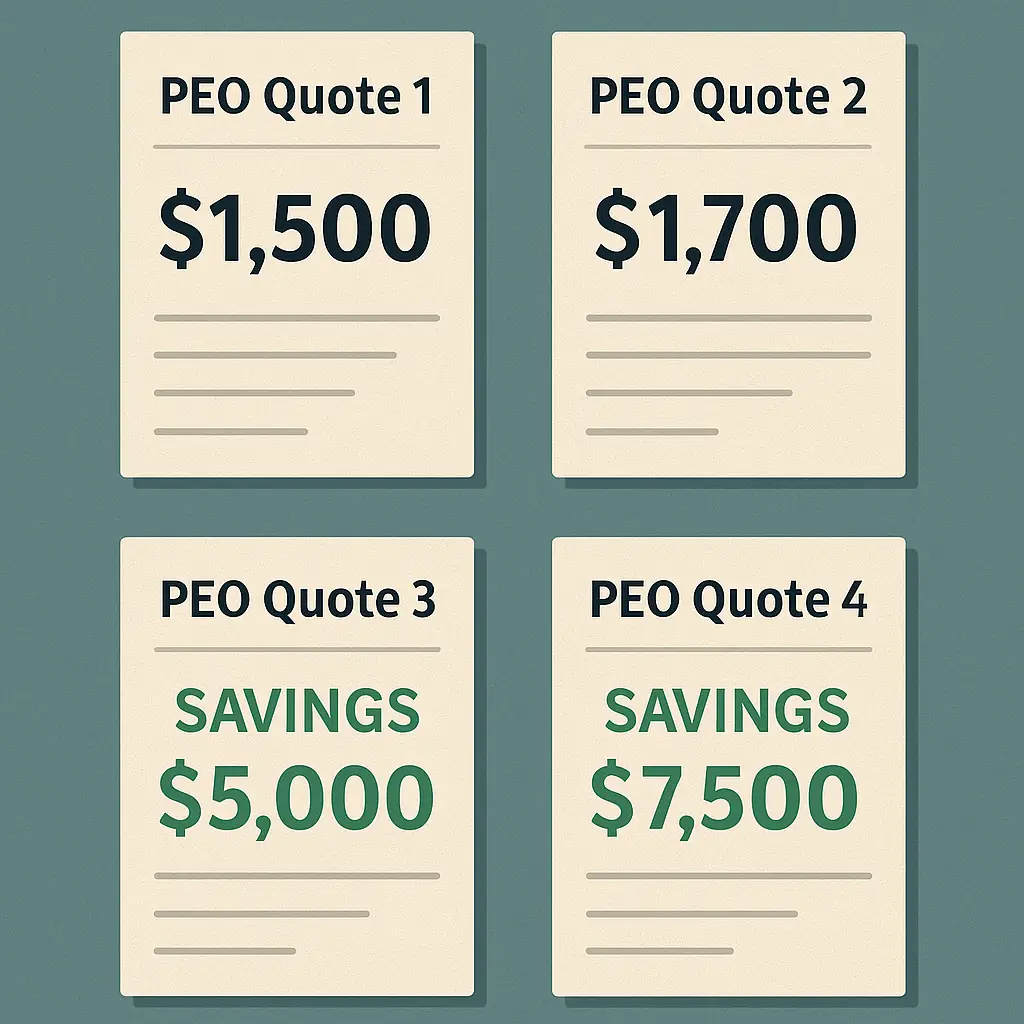

Blog

Welcome to the PEO Marketplace Blog

At PEO Marketplace, we’re dedicated to helping businesses find & compare the perfect Professional Employer Organization (PEO) to streamline HR, payroll, benefits, compliance, and more. Our blog is your go-to resource for expert insights, industry trends, and practical advice on managing your workforce more efficiently.

What You’ll Find Here

Why Follow Our Blog?

Choosing the right PEO can be a game-changer for your business, and our blog is here to guide you every step of the way. Whether you’re a startup, a growing business, or an established company, our insights will help you make informed decisions to optimize your HR processes.

Stay tuned for expert content, actionable tips, and in-depth resources to help your business thrive.

As a business owner, you know that providing workers compensation insurance is a necessary expense. But with the increasing complexity of laws and regulations, many businesses are turning to Professional Employer Organizations (PEOs) to handle their workers comp needs. If you’re considering a PEO workers comp insurance, use this ultimate checklist to ensure you choose the right provider for your business.

PEO for Workers Comp Experience and Reputation

PEO workers comp insurance

When it comes to choosing a PEO workers comp insurance provider, experience and reputation are key. Look for a provider that has been in the industry for several years and has a good track record of providing quality services to their clients.

Also, you can verify online testimonials and request referrals from other companies in your sector to have a more solid grasp of the provider’s reputation.

PEO Workers Comp Insurance Coverage Options

One of the main reasons businesses turn to PEO workers comp insurance is the ability to access a wider range of coverage options. When considering a PEO, make sure they offer coverage options that meet your specific needs. This may include coverage for different types of employees, such as full-time, part-time, and seasonal workers, as well as coverage for different types of injuries and illnesses. Here’s a checklist to make sure you outline important factors when choosing your peo workers comp insurance.

Consider Different Types of Employees Coverage

  • Full-time workers
  • Part-time workers
  • Seasonal workers

Determining the Level of Coverage Needed

  • Assessing the risk factors in your industry & business
  • Understanding the legal requirements for coverage based on your state of operation

Additional Coverage Options to Consider

  • Employer’s liability insurance
  • Excess workers compensation insurance
  • Occupational accident insurance

Comparing Coverage Limits and Exclusions

  • Reviewing the maximum benefit limits
  • Understanding the exclusions and limitations

Assessing the PEOs’ Network of Medical Providers

  • Access to a wide network of healthcare providers
  • Ensuring quality healthcare services for injured employees

Evaluating the Claims Management Process

  • Streamlining the claims process
  • Ensuring timely and accurate claims handling

Tailoring Coverage for Specific Job Functions

  • Designating job classifications for coverage
  • Adjusting coverage based on job-related risks

Monitoring Changes in Regulations and Laws

  • Staying up to date with workers comp regulations
  • Adapting coverage as new laws come into effect

Periodic Review and Adjustments to Coverage

  • Conducting regular coverage audits
  • Making necessary adjustments based on business changes

By following this checklist, you can ensure that you choose a PEO workers comp provider that offers comprehensive coverage options tailored to your business’s unique needs.

PEO Workers Comp Insurance Cost and Fees

While cost should not be the only factor in your decision, it is an important consideration. PEOs typically charge a percentage of your payroll as their fee or a flat per employee per month fee, so make sure you understand the costs involved and how they compare to other providers. Additionally, ask about any additional fees or hidden costs that may not be included in the initial quote. Or you can access our marketplace which ensures no hidden costs or additional fees.

Compliance and Risk Management

One of the main benefits of working with a PEO for workers comp is their expertise in compliance and risk management. Make sure the provider you choose has a strong track record of helping businesses stay compliant with laws and regulations, as well as implementing effective risk management strategies to prevent workplace injuries and illnesses.

Customer Service and Support

As with any business relationship, it’s important to have good communication and support from your PEO workers comp provider. Look for a provider that offers dedicated account managers and a responsive customer service team. This will ensure that any issues or concerns are addressed in a timely and efficient manner. Search for a provider here.

Technology and Tools

In today’s digital age, it’s important for PEOs to have advanced technology and tools to streamline processes and improve efficiency. Ask about the technology and tools the provider uses to manage workers comp claims and track data. This will not only make your experience as a client smoother, but it can also help you identify areas for improvement in your own risk management strategies.

By using this ultimate checklist, you can confidently choose a PEO workers comp insurance provider that meets your business’s specific needs and helps you navigate the complex world of workers compensation insurance.

Navigating the world of Professional Employer Organizations (PEO) can be a complex journey for any business owner. Among the myriad of options, Engage PEO stands out as a beacon for small to mid-size businesses seeking comprehensive HR solutions. But what exactly is a PEO, and how does Engage PEO differentiate itself in this crowded marketplace? Let’s dive in to Engage PEO reviews.

What is a PEO?

A PEO, or Professional Employer Organization, is a firm that allows small and medium-sized businesses to outsource their employee management tasks, such as payroll, employee benefits, HR, and compliance. By doing so, businesses can focus more on their core operations while ensuring that their HR needs are expertly managed.

Engage PEO: A Closer Look

Engage, founded on the principles of providing exceptional HR services, has carved a niche in the PEO industry. But what’s the story behind this company?

Background and Founding

Engage was founded by Jay Starkman, a visionary with extensive experience in the PEO sector. The company started with a simple yet powerful idea: to provide personalized and effective HR solutions to small and mid-size businesses. From its humble beginnings, Engage has grown into a reputable player in the PEO industry.

Current Operations

Today, Engage is renowned for its innovative approach to HR management. The company operates across various states, offering a range of services that include payroll processing, benefits administration, risk management, and compliance assistance.

Pros and Cons of Engage

Like any service, Engage PEO comes with its set of advantages and potential drawbacks.Pros:
  1. Customized Solutions: Engage PEO stands out for its ability to tailor services to the specific needs of each business.
  2. Expertise: With a team of seasoned HR professionals, clients can expect top-notch advice and support.
  3. Cost-Effective: For many businesses, partnering with Engage can be more cost-effective than managing HR in-house.
Cons:
  1. Suitability: For very small businesses, the cost might be a consideration.
  2. Service Range: While comprehensive, some niche businesses might require more specialized services.
  3. Coverage: May not offer insurance options that fit your business
Unique Offerings Compared to Other PEOsEngage PEO distinguishes itself through its unique offerings. This includes their state-of-the-art technology platform, which simplifies HR processes, and their focus on compliance, ensuring businesses stay on the right side of regulations.

Conclusion: Is Engage PEO Right for Your Business?

Deciding whether Engage is the right fit for your business depends on various factors, including your specific HR needs, business size, and budget. For those interested in exploring what Engage  has to offer, or if you’re considering other PEO options, visit our marketplace for competitive Engage PEO pricing and comparisons with other PEO services.Remember, choosing the right PEO can be a game-changer for your business, offering not just HR solutions but a partnership that fosters growth and stability.

Are you tired of paying exorbitant medical expenses? Are you looking for ways to reduce your healthcare costs without sacrificing quality? Look no further than PEO health insurance rates.

PEO (Professional Employer Organization) health insurance rates are a cost-effective solution for small and medium-sized businesses. In this article, we’ll explore what PEO health insurance is, how it can benefit your business, and insider tips on how to get the best rates.

What is PEO Health Insurance?

PEO healthcare is a type of group insurance offered by a PEO, which is a company that provides comprehensive HR solutions to businesses. PEOs partner with insurance carriers to offer health insurance plans to their clients, which are typically small and medium-sized businesses.

PEO health insurance rates are often more affordable than traditional health insurance plans because PEOs have a larger pool of employees, allowing them to negotiate better rates with insurance carriers. This means that businesses can offer their employees quality health insurance at a lower cost.

                                                                                                                                                           Benefits of PEO Health Insurance

peo health insurance rates

There are several benefits to choosing PEO insurance for your business, including:

  • Cost savings: As mentioned, PEO for health insurance rates are often more affordable than traditional health insurance plans, allowing businesses to save money on healthcare costs.
  • Comprehensive coverage: PEO health insurance plans typically offer comprehensive coverage, including medical, dental, and vision insurance. This means that employees have access to a wide range of healthcare services.
  • Compliance assistance: PEOs are experts in HR and employment laws, meaning they can help businesses stay compliant with regulations and avoid costly penalties.
  • Administrative support: PEOs handle all administrative tasks related to health insurance, such as enrollment, claims processing, and billing. This frees up time for businesses to focus on their core operations.

Insider Tips on Getting the Best PEO health insurance rates

Now that you understand the benefits of PEO insurance, let’s explore some insider tips on how to get the best rates for your business.

1. Understand Your Needs

Before you start shopping for PEO health insurance rates, it’s important to understand your business’s healthcare needs. This includes the number of employees you have, their age range, and any pre-existing conditions that may affect their healthcare costs.

By understanding your needs, you can choose a PEO for health insurance plan that offers the right coverage for your employees, without paying for unnecessary services.

2. Compare Multiple PEOs

Not all PEOs are created equal, and neither are their health insurance rates. It’s important to compare multiple PEOs to find the best rates for your business.

When comparing PEOs, consider factors such as their reputation, experience, and the services they offer in addition to health insurance. This will help you find a PEO that not only offers competitive health insurance rates but also meets your overall HR needs. Not sure how to best compare PEOs? Take a look at our marketplace.

3. Negotiate

Just like with any other business transaction, it’s possible to negotiate rates. If you have a large number of employees, you may be able to negotiate better rates with a PEO.

Additionally, if you have a good relationship with a PEO, they may be willing to offer you a discount on their health insurance rates. Don’t be afraid to negotiate and see if you can get a better deal for your business.

4. Consider a Customized Plan

While PEOs offer pre-packaged health plans, they may also be able to create a customized plan for your business. This can be beneficial if your employees have specific healthcare needs or if you want to offer additional benefits, such as wellness programs.

A customized plan may come with a higher price tag, but it could also provide better coverage for your employees and potentially save you money in the long run.

5. Utilize Technology

Statistics on a laptopTechnology has revolutionized the healthcare industry, and PEOs are no exception. Many PEOs offer online portals or mobile apps that allow employees to access their health insurance information, submit claims, and track their healthcare expenses.

By utilizing these technologies, you can streamline the health insurance process and potentially save money on administrative costs.

6. Review Your Plan Regularly

Once you’ve chosen a PEO health plan, it’s important to review it regularly. As your business grows and your employees’ needs change, you may need to adjust your plan to ensure it still meets your needs and offers the best rates.

Additionally, as healthcare costs continue to rise, PEOs may adjust their rates. By reviewing your plan regularly, you can ensure that you’re still getting the best rates for your business.

Real-World Example of PEO Health Rates

One example of a company that has benefited from PEO health insurance rates is ABC Kids Company. ABC Kids Company, a small business with 50 employees, was struggling to provide quality health insurance to its employees at an affordable cost.

After partnering with a PEO, ABC Kids Company was able to offer its employees a comprehensive health insurance plan at a lower cost than their previous plan. This not only saved the company money but also improved employee satisfaction and retention.

Conclusion

PEO health insurance rates offer a cost-effective solution for businesses looking to provide quality healthcare to their employees. By understanding your needs, comparing multiple PEOs, and utilizing technology, you can get the best rates for your business.

Avoid letting expensive healthcare costs hinder your business. Consider partnering with a PEO and take advantage of their competitive health insurance rates. Your employees and your bottom line will thank you.

The construction industry is constantly evolving, and staying ahead of the game is crucial for success. One major aspect of this evolution is the adoption of Professional Employer Organizations (PEOs) in construction companies. A PEO for construction companies offer many services, including human resources, payroll, and benefits administration. This assistance helps construction firms to simplify their processes and concentrate on their primary business activities. In this article, we will explore the future of PEOs in the construction industry and how they are revolutionizing the way construction companies operate.

By collaborating with a PEO for construction companies, construction firms can improve their workforce management, guaranteeing that employees are adequately trained and competent in their positions. This not only enhances productivity but also improves safety on the job site. PEOs offer specialized safety training and resources, helping construction companies comply with Occupational Safety and Health Administration (OSHA) regulations and reduce the risk of workplace accidents.

The Rise of Construction Technology

The construction industry has been slow to adopt new technology, but that is quickly changing. With the introduction of new tools and software, construction companies are now able to streamline their processes, reduce costs, and improve safety. Some of the most notable technologies being used in the industry include Building Information Modeling (BIM), drones, and virtual reality. These technologies are not only improving the efficiency of construction projects, but they are also making the job site safer for workers.

The Role of a PEO for construction companies

PEOs for construction companies have been around for decades, but they are now gaining popularity in the construction industry. PEOs provide a range of services, including human resources, payroll, and benefits administration. By partnering with a PEO, construction companies can outsource these tasks and focus on their core business. This allows them to save time and money, while also ensuring compliance with labor laws and regulations. Moreover, PEOs play a crucial role in navigating the complex landscape of labor laws and regulations. They ensure compliance, reducing the risk of costly penalties and legal battles for construction companies. Additionally, PEOs provide assistance with workers’ compensation, helping construction companies manage the complex process and protect their employees.

Streamlining Processes

One of the biggest challenges in the construction industry is managing a large and diverse workforce. A PEO for construction companies help streamline this process by handling all HR-related tasks, such as recruiting, onboarding, and training. This allows construction companies to focus on their projects and ensures that all workers are properly trained and qualified for their roles. PEOs also handle payroll and benefits administration, which can be time-consuming and complex for construction companies with a large number of employees. In a PEO, construction companies can optimize their workforce management, ensuring that workers are properly trained and qualified for their roles. This not only enhances productivity but also improves safety on the job site. PEOs offer specialized safety training and resources, helping construction companies comply with Occupational Safety and Health Administration (OSHA) regulations and reduce the risk of workplace accidents.

Improving Safety

Safety is a top priority in the construction industry, and PEOs play a crucial role in ensuring a safe work environment. PEO for construction companies provide safety training and resources to construction companies, helping them comply with OSHA regulations and reduce the risk of accidents. They also conduct regular safety audits and provide guidance on how to improve safety protocols. By partnering with a PEO, construction companies can reduce the risk of workplace injuries and fatalities, which not only protects their workers but also saves them from costly legal battles.

The Future of PEOs in Construction

As the construction industry continues to evolve, the role of PEOs will become even more important. With the rise of construction technology and the increasing demand for efficiency and safety, construction companies will rely on PEOs to handle their HR and administrative tasks. PEOs for construction companies will also play a crucial role in helping construction companies navigate the changing labor laws and regulations, ensuring compliance and avoiding costly penalties.

In conclusion, the future of construction is being shaped by technology and the rise of PEOs. By embracing these changes, construction companies can improve their processes, reduce costs, and create a safer work environment for their employees. Are you ready to revolutionize your construction business with a PEO? Find a PEO specializing in construction companies here.

In today’s ever-changing business landscape, companies are constantly looking for ways to streamline their operations and reduce costs. One of the ways they are doing this is by utilizing the services of an employer of record (EOR) and professional employer organization (PEO) in the UAE. Let’s dive deeper into what an employer of record is, professional employer organization uae, how they work, and the benefits they can provide for your business.professional employer organization uae

What is an Employer of Record?

An employer of record is a third-party organization that takes on the legal responsibility of being the employer for a group of workers. This means that the EOR handles all the administrative tasks associated with employment, such as payroll, benefits, taxes, and compliance. By partnering with an EOR, companies can offload these tasks and focus on their core business operations.

For example, let’s say a company in the UAE wants to expand its workforce quickly to meet growing customer demands. Instead of going through the lengthy process of hiring and onboarding new employees, they can partner with a professional employer organization (PEO) or professional employer organization uae, that acts as an employer of record. The PEO will handle all the administrative tasks, including payroll, benefits, and compliance, allowing the company to scale up without the hassle.

How Does an Employer of Record Work?

When a company partners with an EOR, such as a professional employer organization UAE, the EOR becomes the legal employer of the workers, while the company maintains control over the day-to-day tasks and responsibilities of the workers. This allows the company to focus on their core business while the EOR handles all the administrative tasks.

For example, let’s say a company in the UAE needs to hire a team of developers for a new software project. They partner with a professional employer organization (PEO) that acts as an employer of record. The company maintains control over the project, assigning tasks and managing the development process, while the PEO handles the employment-related tasks, such as payroll, benefits, and compliance.

Employer of Record vs Staffing Agency

While an employer of record and a staffing agency may seem similar, there are some key differences between the two. A staffing agency typically provides temporary workers to a company, filling short-term positions or specific projects. On the other hand, an employer of record, like a professional employer organization (PEO) in the UAE or professional employer organization UAE,  provides long-term employment solutions.

For example, let’s say a company in the UAE needs to hire additional staff to handle a seasonal increase in customer demand. They can choose to work with a staffing agency to hire temporary workers for a few months. However, if the company wants to build a long-term workforce, they would partner with an employer of record, such as a professional employer organization (PEO), which provides continuous employment solutions.

Additionally, a staffing agency does not take on the legal responsibility of being the employer, while an EOR does. This means that the EOR handles all employment-related legal obligations and compliance, ensuring that the company operates within the legal framework.

Why is an Employer of Record Important in the Modern Workforce?

In today’s fast-paced business world, companies are constantly looking for ways to stay competitive and reduce costs. Partnering with an employer of record, such as a professional employer organization (PEO) in the UAE or professional employer organization UAE can help businesses achieve these goals in several ways.

Cost Savings

One of the main reasons companies choose to work with an EOR is the cost savings. By outsourcing employment responsibilities to an EOR, companies can save money on payroll taxes, benefits, and other administrative costs associated with employment. Additionally, partnering with an EOR can also save companies money on legal fees and potential fines for non-compliance. The EOR takes on the legal responsibility of employment, reducing the risk for the company.

For example, let’s say a company in the UAE operates in a highly regulated industry with complex employment laws. By partnering with a professional employer organization UAE, they can ensure that they are in compliance with all relevant regulations, avoiding costly fines and legal issues.

Flexibility and Scalability

In today’s gig economy, companies need to be able to adapt quickly to changing business needs. Partnering with an employer of record, such as a professional employer organization (PEO) in the UAE, allows companies to scale their workforce up or down as needed without the hassle of hiring and firing employees.

For example, let’s say a company in the UAE experiences fluctuations in customer demand throughout the year. By working with a professional employer organization (PEO) as an employer of record, they can easily adjust their workforce based on peak and off-peak periods, ensuring they have the right number of employees without the burden of unnecessary costs during slower periods.

Compliance and Risk Management

Employment laws and regulations are constantly changing, making it challenging for companies to stay compliant. By partnering with an employer of record, such as a professional employer organization (PEO) in the UAE, companies can ensure that they are following all employment laws and regulations, reducing the risk of legal issues and fines.

Additionally, the EOR will handle any legal issues that may arise, such as workers’ compensation claims or labor disputes, further reducing the risk for the company. This allows businesses to focus on their core operations and have peace of mind knowing that employment-related matters are being managed effectively.

How Can an Employer of Record Benefit Your Business?

Now that we understand the role of an employer of record, including professional employer organizations (PEOs) in the UAE, in the modern workforce, let’s explore how they can benefit your business.

                                                                                                                        Global Expansioneor uae

One of the main benefits of partnering with an employer of record, such as a professional employer organization (PEO) or professional employer organization UAE, is the ability to expand your business globally. By working with an EOR in a new country, companies can enter new markets quickly and easily without the hassle of setting up a legal entity in that country.

For example, let’s say a company in the UAE wants to enter the European market. Instead of establishing a legal entity, navigating complex employment laws, and setting up payroll systems, they can partner with a professional employer organization (PEO) that has a presence in Europe. The PEO will handle all employment-related tasks, ensuring compliance with local regulations, and allowing the company to focus on establishing their operations.

Compliance and Risk Management

As mentioned earlier, an employer of record can help companies stay compliant with employment laws and regulations, reducing the risk of legal issues and fines. This is especially important for companies looking to expand into new countries, as employment laws can vary significantly from country to country.

For example, let’s say a company in the UAE is considering expanding operations into Asia. By partnering with a professional employer organization (PEO) that has expertise in Asian employment laws and regulations, they can ensure compliance with all relevant requirements, minimizing the risk of costly legal disputes and penalties.

Additionally, the EOR will handle any legal issues that may arise, freeing up the company’s time and resources to focus on their core business activities. This allows businesses to operate with confidence, knowing that they have a trusted partner managing their employment-related matters.

Cost Savings

Partnering with an employer of record can also save companies money on administrative costs associated with employment. By outsourcing these tasks to the EOR, companies can reduce their payroll taxes, benefits costs, and other administrative expenses.

For example, let’s say a company in the UAE wants to expand its workforce but does not have the resources to set up an in-house HR department. By partnering with a professional employer organization (PEO) or professional employer organization UAE, they can leverage the expertise and infrastructure of the EOR to handle HR-related tasks, saving on the costs of hiring HR personnel and setting up HR systems. This allows companies to allocate their resources more efficiently and focus on growing their business, rather than getting bogged down by administrative tasks.

How to Choose the Right Employer of Record : Professional Employer Organization UAE

When choosing an employer of record, it’s essential to consider several factors to ensure you are making the right decision for your business.

  • Experience and Reputation

The first thing to consider is the EOR’s experience and reputation. Look for a company with a proven track record of success and positive reviews from other businesses. It’s important to partner with an EOR that has experience working in your industry and understands the unique needs and challenges you may face.

  • Global Reach

If you are looking to expand your business globally, it’s crucial to choose an EOR with a global reach. This will ensure that they have the necessary expertise and resources to help you expand into new markets. A global EOR can navigate complex employment laws and regulations in various countries, providing you with the support and guidance needed for successful expansion.

  • Technology and Integration

Partnering with an EOR should make your business operations more efficient, not more complicated. Look for an EOR that offers technology solutions and integrates with your existing systems to streamline processes and improve communication. This could include features such as automated payroll systems, employee self-service portals, and real-time reporting capabilities. A technologically advanced EOR can help optimize your HR processes and enhance overall efficiency.

Real-World Examples of Employer of Record Services

One example of a company that has successfully utilized the services of an employer of record is Uber. As Uber expanded into new markets, they partnered with EORs to handle all the legal and administrative tasks associated with employment in those countries. This allowed Uber to enter new markets quickly and easily, without the hassle and expense of setting up a legal entity in each country.

Conclusion

In today’s fast-paced business world, companies need to be able to adapt quickly to changing business needs. Partnering with an employer of record, such as a professional employer organization (PEO) in the UAE, can help businesses achieve this by providing cost savings, flexibility, and compliance and risk management.

When choosing an EOR, it’s essential to consider their experience, global reach, and technology solutions to ensure you are making the right decision for your business. With the right EOR, your business can expand globally and stay competitive in the modern workforce.

Written by peo-marketplace.com, an online marketplace for PEO, ASO, and EOR Services

Managing payroll can be a daunting task for any business owner. From calculating taxes to ensuring timely payments, it can be a time-consuming and complex process. That’s why many businesses turn to payroll solutions to streamline their payroll processes. But with so many options available, how do you choose the right strategic payroll solutions for your business? In this article, we’ll discuss the key factors to consider when selecting a payroll solution.

Payroll Solutions Budget

The first thing to consider when choosing a payroll solution is your budget. This can range from basic software to full-service options that handle everything from tax filing to employee benefits. Determine how much you are willing to spend on a payroll solution and then research options within your budget. Keep in mind that while a basic software may be cheaper upfront, it may not have all the features you need and could end up costing you more in the long run.

Size of Your Business

The size of your business is another important factor to consider when choosing a payroll provider. If you have a small business with only a few employees, a basic software or online payroll service may be sufficient. However, if you have a larger business with multiple locations and a larger number of employees, you may need a more comprehensive payroll solution that can handle complex payroll processes.

Features and Services

Different payroll solutions offer different features and services, so it’s important to determine which ones are essential for your business. Some common features to look for include direct deposit, tax filing, and employee self-service portals like in the case of s2 hr solutions payroll. You may also want to consider additional services such as HR solutions, time and attendance tracking, and benefits administration. Make a list of the features and services that are important to your business and use it as a guide when researching.

Integration with Other Systems

If your business already uses other systems such as HR or accounting software, it’s important to choose a payroll solution that can integrate with these systems. This will save you time and effort in data entry and ensure that all your systems are working together seamlessly. Be sure to ask potential payroll solution providers about their integration capabilities before making a decision.

Customer Support

No matter how user-friendly a payroll solution may be, there may come a time when you need assistance or have questions. That’s why it’s important to choose a payroll solution provider that offers reliable customer support. Look for payroll solutions providers that offer multiple channels of support, such as phone, email, and live chat. You may also want to read reviews or ask for recommendations from other businesses to get an idea of the level of customer support provided by different payroll solution providers.

Final Thoughts

Choosing the right payroll solution for your business is a crucial decision that can save you time and money in the long run. Consider your budget, the size of your business, necessary features and services, integration capabilities, and customer support when making your decision. With the right solution, you can streamline your payroll processes and focus on growing your business. Have any tips for choosing the right payroll solution? Let us know in the comments.


In the ever-evolving landscape of business management and human resources, the role of Professional Employer Organization (PEO) brokers has become increasingly significant. This comprehensive guide aims to demystify the concept of PEO brokers, providing in-depth insights and answering the most frequently asked questions.

What is a PEO Broker?

A PEO broker is a professional or a firm that acts as an intermediary between businesses and PEOs. They help companies find the right PEO service provider that aligns with their specific needs, such as payroll processing, employee benefits management, compliance with labor laws, and HR administration.

The Role of PEO Brokers

Brokers assess a company’s HR and administrative needs and match them with a suitable PEO. They have a deep understanding of the PEO market and can negotiate terms on behalf of a business, often securing more favorable conditions than a company might achieve on its own.

Why Use a PEO Brokerage?

The primary advantage of using a PEO brokerage is the expertise and market knowledge they bring. They can:

  • Save time and resources in finding the right PEO.
  • Provide access to a wider range of options and insights into various PEOs.
  • Offer expertise in negotiating terms and understanding complex HR solutions.

Choosing the Right PEO Broker

When selecting a broker, consider:

  • Experience and Expertise: Look for brokers with a proven track record and extensive knowledge of the PEO industry.
  • Network and Relationships: A broker with a broad PEO network can offer more options and insights.
  • Understanding of Your Business Needs: A good broker should understand your specific business requirements and challenges.

PEO Brokers Network: A Closer Look

A brokers network is a collective of professional brokers who specialize in connecting businesses with PEOs. These networks often have:

  • A wide range of PEO partners, offering diverse solutions.
  • Updated knowledge of the latest trends and changes in the PEO industry.
  • Resources and tools to assist businesses in making informed decisions.

How PEO Brokers Add Value to Businesses

PEO brokers add value by:

  • Customizing Solutions: They ensure that the PEO services align with the unique needs of a business.
  • Cost-Effectiveness: Brokers can negotiate better rates and terms, potentially leading to cost savings.
  • Compliance and Risk Management: They help businesses stay compliant with ever-changing labor laws and regulations.

Frequently Asked Questions

What Should I Expect in Terms of Costs When Working with a PEO Broker?

Typically, PEO brokers are compensated by the PEOs themselves, meaning there’s often no direct cost to the business seeking a PEO. However, it’s important to clarify this with your broker upfront.

Can a PEO Brokerage Help with Specific Industry Needs?

Yes, many PEO brokers specialize in certain industries and can provide tailored solutions that meet specific industry requirements.

How Does a PEO Brokerage Ensure Compliance?

PEO brokers stay updated on federal and state employment laws and ensure that the PEOs they recommend are compliant with these regulations.

Traditional PEO Brokers vs. PEO-Marketplace.com

In the realm of Professional Employer Organizations, the choice between traditional PEO brokers and modern platforms like PEO-Marketplace.com is crucial. Understanding the differences can significantly impact how businesses find and partner with the right PEO.

Traditional PEO Brokers

Traditional PEO brokers operate on a more personal, one-on-one basis. They typically offer:

  • Personalized Consultation: Direct interaction with a broker who assesses your business needs.
  • Customized Recommendations: Brokers use their industry knowledge to recommend suitable PEOs.
  • Negotiation and Mediation: They negotiate terms with PEOs on behalf of the business.

While effective, this traditional approach can sometimes be time-consuming and limited by the broker’s network and expertise.

PEO-Marketplace.com: A Modern Approach

PEO-Marketplace.com represents a modern approach to connecting businesses with PEOs. It offers several key advantages:

  1. Broader Range of Options: PEO-Marketplace.com provides access to a wide array of PEOs, offering more choices than a traditional broker might have in their network.
  2. Technology-Driven Matching: Utilizing advanced AI algorithms, PEO-Marketplace.com matches businesses with PEOs based on specific needs and criteria, ensuring a more precise fit.
  3. Speed and Efficiency: The platform streamlines the process, allowing businesses to quickly find and compare PEO options without the need for lengthy consultations.
  4. Transparency and Control: Businesses have direct access to information and can make informed decisions without solely relying on a broker’s advice.
  5. Cost-Effectiveness: With a competitive marketplace, businesses might find more cost-effective solutions than through traditional brokers.
  6. Up-to-Date Information: PEO-Marketplace.com regularly updates its offerings and information, providing the latest options available in the market.

Why PEO-Marketplace.com Stands Out

PEO-Marketplace.com stands out for its ability to blend technology with a comprehensive understanding of the PEO landscape. This platform is particularly advantageous for businesses looking for a quick, transparent, and wide-ranging approach to finding a PEO. It democratizes the process, empowering businesses of all sizes the tools to find a PEO that aligns perfectly with their needs.

Conclusion

While traditional PEO brokers offer a personalized touch, platforms like PEO-Marketplace.com are transforming the landscape with their efficiency, breadth of options, and technological innovation. For businesses navigating the complexities of HR management and compliance, understanding these options is key to making an informed decision that best suits their unique needs.

In the bustling business environment of New York, staying abreast of the state’s intricate employment laws can be a daunting task for any company. This is where PEO (Professional Employer Organization) companies in New York play a pivotal role. By offering expert HR management and compliance services, PEO New York are becoming indispensable partners for businesses. This detailed guide explores how PEOs are navigating New York-specific laws, ensuring their client companies thrive in this dynamic regulatory landscape.

The Unique Challenges of New York’s Employment Laws

New York State is known for its progressive and often complex employment legislation. From wage and hour laws to employee benefits and workplace safety, the state sets high standards, making compliance a significant challenge for businesses.

How PEOs in New York Ensure Compliance

  1. Navigating Wage and Hour Laws: New York has specific regulations regarding minimum wage, overtime, and other wage-related matters. PEOs ensure that businesses comply with these laws, thus avoiding potential legal issues.
  2. Managing Leave Policies: New York’s leave policies, including family leave, sick leave, and other types of employee leave, are more comprehensive than federal standards. PEOs manage these intricacies, ensuring businesses provide the required benefits.
  3. Handling Workers’ Compensation: New York requires businesses to have workers’ compensation insurance. PEOs assist in procuring appropriate coverage and managing claims, often at more favorable rates due to their pooled resources.
  4. Adhering to Anti-Discrimination Laws: With strict laws against workplace discrimination and harassment, PEOs help businesses develop policies, conduct training, and manage any arising claims.

The Advantages of Partnering with a PEO in New York

Partnering with a Professional Employer Organization (PEO) in New York offers numerous advantages for businesses, especially for small and medium-sized enterprises looking to expand their operations or streamline their existing HR and administrative processes. Here are some of the key benefits:

1. Compliance with Local Regulations

New York has a complex regulatory environment, with stringent labor laws and regulations. A PEO, well-versed in local compliance requirements, can help businesses navigate these complexities, ensuring adherence to state-specific labor laws, wage and hour laws, and workplace safety standards. This reduces the risk of non-compliance and the potential for costly penalties.

2. Access to Comprehensive Benefits

PEOs can offer small businesses access to a broader range of employee benefits that might otherwise be unavailable or too costly, such as health insurance, retirement savings plans, and workers’ compensation. By pooling together employees from multiple companies, PEOs can negotiate more favorable rates with benefits providers, making it possible for small businesses to offer competitive benefits packages that attract and retain talent.

3. Improved HR Management and Support

PEOs provide comprehensive HR services, including recruitment support, employee onboarding, payroll administration, and performance management. This allows business owners to offload administrative tasks and focus on core business activities. Additionally, PEOs offer expert HR advice and support, helping businesses to implement best practices and improve employee relations.

4. Risk Management and Liability Reduction

In New York, where employment-related lawsuits can be costly, partnering with a PEO can help mitigate risks. PEOs assist with risk management strategies and ensure that employment practices comply with current laws and regulations. They also often manage workers’ compensation claims, reducing liability and promoting a safer workplace.

5. Cost Savings

Outsourcing HR functions to a PEO can lead to significant cost savings. By leveraging the economies of scale, PEOs can reduce costs associated with HR administration, payroll processing, and benefits procurement. This can free up resources that can be redirected towards growth-oriented activities.

6. Flexibility and Scalability

For businesses in New York looking to grow, PEOs offer the flexibility to scale HR services up or down based on current business needs. This scalability is particularly beneficial for businesses experiencing rapid growth or seasonal fluctuations in staffing.

7. Local Expertise

PEOs with experience in the New York market have local knowledge that can be invaluable for businesses, especially those new to the area or looking to expand into New York. This local expertise can guide decisions on competitive salaries, benefits packages, and compliance with city-specific ordinances.

8. Enhanced Employee Experience

By providing access to a wider array of benefits and professional HR support, PEOs can help enhance the overall employee experience. This is crucial for employee satisfaction and retention, particularly in a competitive job market like New York.

Selecting the Right PEO New York

When choosing a PEO in New York, consider their experience in the state, the range of services they offer, their technology capabilities, and client feedback. It’s essential to partner with a PEO that not only ensures compliance but also aligns with your business’s unique needs.

The Future of PEO Services in New York

As New York continues to update its employment laws, the role of PEOs is becoming increasingly vital. Future trends for PEOs in New York include enhanced technology integration, personalized service models, and proactive strategies for compliance and HR management.

Conclusion

For businesses in New York, navigating the state’s complex HR landscape can be overwhelming. PEO companies in New York offer a solution, providing the expertise and resources necessary to manage HR responsibilities effectively. Whether you’re a small startup or an established enterprise, a PEO in New York can be a valuable partner in ensuring compliance and fostering business growth.

In the complex and ever-changing landscape of PEO California’s employment laws, businesses often find themselves navigating a challenging regulatory environment. This is where PEO (Professional Employer Organization) companies in California step in, offering a vital lifeline to businesses striving for compliance and efficiency. In this comprehensive guide, we delve into how PEOs in California are helping businesses thrive by managing intricate legal requirements and HR tasks.

Understanding the Role of PEOs in California

California, known for its stringent labor laws and regulations, presents unique challenges for businesses. PEO companies in California specialize in understanding and adhering to these state-specific requirements, ensuring that client companies remain compliant and avoid costly legal pitfalls.

Key California PEO Laws and Compliance

  1. Wage and Hour Laws: California has specific laws regarding minimum wage, overtime, and meal breaks. PEOs ensure that client companies adhere to these regulations, thus mitigating risks of non-compliance.
  2. Leave Policies: The state has unique requirements for various types of leave, including sick leave, family leave, and disability. PEOs manage these aspects, ensuring businesses provide the mandated benefits to their employees.
  3. Workers’ Compensation: California has its own workers’ compensation insurance requirements. PEOs navigate these regulations, often providing more favorable insurance rates due to their larger pooled resources.
  4. Harassment and Discrimination Laws: With California’s strict anti-discrimination laws, Professional Employer Organizations play a crucial role in training, policy development, and handling any related employee claims.

The Benefits of Partnering with a California Professional Employer Organization

Businesses partnering with Professional Employer Organizations in California can expect several advantages:

  • Expert Guidance: Continuous updates and expert guidance on California-specific employment laws.
  • Cost Savings: Reduced costs in HR administration and access to better employee benefits.
  • Risk Reduction: Minimized legal risks and improved compliance with state laws.
  • Operational Efficiency: More time to focus on core business activities, with the PEO handling complex HR tasks.

Choosing the Right PEO California

When selecting a PEO in California, consider factors like their experience in the state, range of services, technology integration, and client testimonials. It’s crucial to choose a PEO that not only promises compliance but also aligns with your business culture and goals.

The Future of PEOs in California

As California continues to update and introduce new employment laws, the role of PEOs becomes increasingly significant. The future of PEOs in California is geared towards more integrated technology solutions, personalized service offerings, and proactive compliance strategies.

Conclusion

For businesses operating in California, partnering with a PEO can be a game-changer. PEO companies in California offer the expertise and resources needed to navigate the state’s complex legal landscape, allowing businesses to focus on growth and success. Whether you’re a small startup or a growing enterprise, a California PEO can provide the support and peace of mind you need in managing your HR responsibilities.

hr outsourcing companiesIntroduction: The Small Business Dilemma In the heart of a bustling city, there was a small but ambitious tech startup named “Innovatech.” With a team of passionate innovators and a vision to disrupt the market, Innovatech was on a path to success. However, as the business grew, so did its challenges, particularly in managing human resources. Emily, the CEO, found herself overwhelmed with HR tasks – from payroll complexities to compliance issues. It was a common dilemma faced by many small businesses: how to manage HR effectively without diverting focus from their core mission. This is when Emily stumbled upon the concept of HR outsourcing companies, a decision that would transform Innovatech’s operations. This story mirrors the journey of countless businesses in today’s dynamic corporate landscape and how they mold outsourced HR to fit their needs.

The Rise of HR Outsourcing Companies

In recent years, HR outsourcing has emerged as a strategic solution for businesses grappling with the complexities of human resource management. According to a report by Grand View Research, the global human resource outsourcing market size was valued at USD 32.8 billion in 2020 and is expected to grow at a compound annual growth rate (CAGR) of 7.8% from 2021 to 2028. This significant growth is a testament to the increasing reliance of businesses on HR outsourcing companies to streamline their HR functions.

Understanding Outsourced HR

Outsourced HR involves delegating various HR functions to external organizations. These functions can range from payroll processing, benefits administration, recruitment, employee training, to performance management. A pivotal study by the National Association of Professional Employer Organizations (NAPEO) reveals that small businesses using PEOs (Professional Employer Organizations) grow 7% to 9% faster than those that don’t. This statistic highlights the substantial impact of outsourced HR on business growth and scalability.

Why Businesses Turn to HR Outsourcing

  1. Cost Efficiency: One of the primary reasons businesses opt for HR outsourcing is cost savings. The Society for Human Resource Management (SHRM) notes that businesses can save up to 35% on HR administration costs by using a PEO. This efficiency is particularly crucial for small and medium-sized enterprises (SMEs) that operate on tighter budgets and need to optimize their resource allocation.
  2. Focus on Core Business: Outsourcing HR allows companies like Innovatech to concentrate on their primary business activities. A survey by Deloitte found that 28% of businesses outsource to free up internal resources for business-critical functions. This shift in focus can lead to enhanced productivity and innovation.
  3. Access to Expertise: Outsourced HR provides businesses with access to a pool of experts and specialized knowledge. According to a report by Accenture, 80% of businesses believe outsourcing HR functions helps them access skills and capabilities that are otherwise unavailable in-house. This expertise is particularly valuable in navigating the ever-changing landscape of employment laws and HR best practices.
  4. Compliance and Risk Management: The legal aspects of HR management are complex and constantly evolving. NAPEO reports that businesses using PEOs are 16% less likely to have an employment liability claim, indicating the significant role of outsourced HR in mitigating legal risks and ensuring compliance.

Choosing the Right HR Outsourcing Company

Selecting an appropriate HR outsourcing partner is a critical decision for businesses. Factors to consider include the range of services offered, industry-specific expertise, technology integration, customer support, and the provider’s track record and client testimonials. It’s essential to partner with a company that aligns with your business values and understands your unique needs.

The Future of HR Outsourcing

The HR outsourcing industry is not static; it’s evolving with technological advancements. Artificial Intelligence (AI) and machine learning are increasingly being integrated into HR processes to enhance efficiency and decision-making. From automated recruitment systems to advanced performance analysis tools, technology is reshaping the landscape of HR outsourcing. The future of this industry lies in the strategic partnership between businesses and HR firms, leveraging technology for smarter, more efficient HR solutions.

Conclusion: The Innovatech Success Story

Innovatech’s journey with an HR outsourcing company was transformative. They experienced reduced HR costs, improved compliance, and could focus on their core mission – innovation. This success story is a testament to the power of outsourced HR in supporting business growth and operational efficiency.

In conclusion, HR outsourcing companies offer a pathway for businesses to navigate the complexities of HR management efficiently and effectively. As the industry continues to grow and evolve, more businesses are likely to turn to outsourced HR as a strategic solution for growth and success. The story of Innovatech is just one among many, illustrating the transformative impact of embracing outsourced HR solutions in the modern business world.

In the heart of the Lone Star State, small businesses face a unique set of challenges, especially when it comes to navigating the complex web of state and local laws. This is where Professional Employer Organizations (PEOs) come into play, offering a beacon of guidance and support. In this article, we provide a comprehensive directory of professional employer organizations in Texas, with a specific focus on how these entities handle compliance with Texas state laws, right down to city jurisdictions.

Understanding the Role of PEOs in Texas

Before diving into the directory, it’s crucial to understand what a PEO does. A Professional Employer Organization is a firm that allows small and medium-sized businesses to outsource their employee management tasks, such as employee benefits, payroll, workers’ compensation, and compliance with state and federal regulations. In Texas, where business regulations can vary significantly from one city to another, PEOs play a vital role in ensuring that businesses stay on the right side of the law.

How PEOs Handle Texas State Law Compliance

Compliance is a critical area where PEOs prove invaluable, particularly in Texas. The state’s laws on employment, taxation, and workers’ compensation are intricate, and keeping up with them can be a daunting task for business owners. PEOs in Texas specialize in understanding these laws and ensuring that their client businesses comply with them. This includes:

  • Employment Laws: Texas has its own set of employment laws regarding minimum wage, overtime, and employment practices. PEOs ensure that businesses adhere to these laws, thus avoiding costly legal issues.
  • Taxation: Texas does not have a state income tax, but there are other taxes like franchise and sales taxes. PEOs assist businesses in navigating these taxation complexities, ensuring timely and accurate tax filings.
  • Workers’ Compensation: Texas has unique workers’ compensation requirements. PEOs manage these aspects, ensuring businesses meet state requirements and handle claims efficiently.

PEOs and City Jurisdiction Compliance

Texas is a vast state with diverse city jurisdictions, each with its own set of rules and regulations. PEOs in Texas are adept at handling these local variations. For instance, the business regulations in Houston might differ significantly from those in Austin or Dallas. PEOs take these local nuances into account, providing tailored compliance solutions to businesses based on their location.

Directory of Professional Employer Organizations in Texas

Now, let’s look at some of the top PEOs in Texas:

  1. ADP Totalsource: Based Miami, FL they offer comprehensive HR solutions and are known for their expertise in local and national compliance.
  2. Paychex PEO: With offices in Dallas, Paychex PEO provides customized services with a focus on small to medium-sized businesses, ensuring adherence to both state and city regulations.
  3. G&A Partners: Headquartered in the Houston area, they offer localized and national HR services, understanding the unique business landscape of Houston and beyond.For a more detailed directory of PEOs with a presence and expertise in Texas state law take a look at our marketplace.

Choosing the Right PEO in Texas

When selecting a PEO in Texas, consider the following:

  • Local Expertise: Choose a PEO with experience in your specific city jurisdiction.
  • Services Offered: Ensure they provide the services you need, such as payroll, HR, compliance, and workers’ compensation.
  • Reputation and Reliability: Look for PEOs with good reviews and a strong track record.

Conclusion

For businesses in Texas, partnering with a professional employer organization can be a game-changer, especially when it comes to compliance with state and local laws. This directory is a starting point for Texas businesses looking to navigate the complexities of state and city regulations with the help of a PEO. Remember, the right PEO can not only ensure legal compliance but also contribute to the overall growth and efficiency of your business.

Top Professional Employer Organization Companies for 2024

Exploring PEO Companies in 2024

In the current landscape of 2024, professional employer organization companies are at the forefront of reshaping the HR industry. These PEO companies are not only revolutionizing the way businesses outsource HR functions but also setting new standards in employee management. The innovative approaches and comprehensive solutions offered by these HR outsourcing firms are transforming the traditional models of workforce management. As market dynamics continue to evolve, businesses are increasingly turning to PEO companies for efficient and effective HR solutions, marking a significant shift in the industry.

Revolutionizing HR Functions

Regulatory Compliance and Market Growth

  • The top PEO companies in 2024 prioritize regulatory compliance, ensuring that businesses remain updated with the latest labor laws and industry regulations. By staying abreast of these critical compliance requirements, PEO companies enable their client businesses to operate within legal frameworks, mitigating potential risks associated with non-compliance.
  • Market growth strategies implemented by leading PEO companies are reshaping the HR landscape by offering innovative solutions for business growth. These strategies encompass a holistic approach to workforce management, aligning with the dynamic needs of modern businesses. Through tailored HR solutions, PEO companies facilitate the expansion and development of their client organizations, contributing to overall market growth and sustainability.

Benefits of PEO Services

  • PEO services provide comprehensive HR solutions that encompass various aspects of employee management. From efficient payroll management to benefits administration and risk management, these services offer a one-stop solution for all HR needs. By partnering with PEO companies, businesses can experience substantial cost savings while enhancing their operational efficiency through streamlined HR processes.
  • Furthermore, businesses leveraging PEO services benefit from improved compliance with labor laws and regulations. This not only reduces potential legal liabilities but also fosters a more secure and stable work environment for employees. Additionally, access to better employee benefits through PEO services contributes to higher employee satisfaction and retention rates within client organizations.

Analyzing PEO Services

Cost Implications and Client Testimonials

When considering the adoption of professional employer organization (PEO) services, businesses must carefully analyze the cost implications associated with outsourcing HR functions. Understanding the financial impact is crucial for making informed decisions about leveraging PEO services for employee management. By conducting a thorough cost analysis, businesses can assess the potential savings and efficiencies that PEO services offer in comparison to maintaining in-house HR operations.

In addition to evaluating costs, client testimonials play a significant role in providing valuable insights into the experiences of businesses that have integrated PEO services into their HR strategies. These testimonials offer firsthand accounts of the benefits and challenges encountered by organizations when partnering with PEO companies. By examining client feedback, businesses gain a deeper understanding of how PEO services contribute to enhancing employee management and overall operational effectiveness.

Comparing PEO and Traditional HR Services

Drawing a clear distinction between PEO and traditional HR services is essential for businesses seeking to optimize their HR management approach. While traditional HR models involve in-house management of human resources, PEO services offer an outsourced solution that encompasses various aspects of employee management. Businesses can benefit from comparing the advantages and limitations of each approach to determine which best aligns with their organizational needs.

The evolving landscape of workforce management emphasizes the need for businesses to consider the comprehensive solutions offered by PEO companies over traditional HR models. As market dynamics continue to evolve, it becomes increasingly important for organizations to adapt their HR strategies to meet the changing demands of modern workplaces.

Client Testimonials and Industry Trends

Insights from Client Testimonials

When delving into client testimonials, businesses gain firsthand perspectives on the advantages of partnering with professional employer organization (PEO) companies. These testimonials provide valuable insights into the real-life experiences of industry peers who have integrated PEO services into their operations. By understanding the specific benefits and challenges encountered by other businesses, organizations can make informed decisions about leveraging PEO solutions for their own employee management needs.

Evolving Landscape of Workforce Management

Industry trends indicate a notable shift in the landscape of workforce management, with PEO companies spearheading innovation and efficiency. The adoption of PEO services aligns closely with the evolving needs of businesses to streamline HR functions and adapt to changing workplace dynamics. As businesses navigate an increasingly dynamic market environment, the role of PEO companies becomes pivotal in driving forward-thinking approaches to employee management and workplace efficiency.

Navigating the PEO Landscape in 2024

In navigating the PEO landscape in 2024, businesses are presented with a diverse array of options from top professional employer organization companies. These industry leaders are reshaping HR management by offering innovative solutions tailored to meet the evolving needs of modern businesses. As organizations seek efficient HR management, the comprehensive services provided by PEO companies, also known as employee management firms, offer a strategic advantage in streamlining operations and enhancing overall workforce efficiency. To start finding the best PEO for your unique business visit our comprehensive PEO marketplace full of crucial information to health you search and pick the right PEO for your unique business.

professional employer organization insurance

Understanding Professional Employer Organization Insurance Options

Understanding PEO Insurance

In today’s dynamic business landscape, understanding the significance of professional employer organization insurance, commonly referred to as PEO insurance or employee leasing insurance, is crucial. This type of insurance offers a range of benefits for businesses, providing coverage for various aspects of employment. From managing risks to ensuring compliance with regulations, PEO insurance plays a vital role in supporting the overall well-being and stability of organizations. As businesses navigate through the complexities of human resources and workforce management, having a comprehensive understanding of PEO insurance becomes increasingly important.

Exploring Coverage Options

When it comes to exploring coverage options, professional employer organization insurance, or PEO insurance, offers a wide array of benefits for businesses. This type of insurance coverage goes beyond the traditional scope, providing comprehensive support for various aspects of employment and workforce management.

Types of Professional Employer Organization Insurance Coverage

PEO insurance coverage brings significant advantages to businesses, including risk management, compliance support, and access to affordable benefits for employees. By partnering with PEO providers, businesses can benefit from a range of insurance coverage options tailored to their specific needs. These may include workers’ compensation insurance, general liability insurance, and healthcare coverage. The diverse types of insurance coverage offered by PEO providers ensure that businesses have the necessary protection in place to navigate the complexities of human resources management.

Customized Insurance Plans

One of the key strengths of professional employer organization insurance is its ability to offer customized insurance plans that align with the unique requirements of different businesses. PEOs understand that each industry and company size has distinct needs when it comes to insurance coverage. As a result, they provide flexible and tailored solutions to accommodate these varying needs effectively. Whether a business operates in manufacturing, technology, healthcare, or any other industry sector, PEOs can design customized insurance plans that address specific risks and challenges faced by the business.

Comparing Plan Benefits

Cost-Effective Solutions

PEO insurance plans offer cost-effective solutions for businesses of all sizes. By partnering with a PEO, companies can access comprehensive insurance coverage at competitive rates, allowing them to allocate their financial resources more efficiently. The cost-effectiveness of PEO insurance plans is particularly beneficial for small and medium-sized enterprises that may not have the bargaining power to negotiate favorable insurance premiums on their own. Additionally, PEOs pool together multiple businesses, creating economies of scale that lead to reduced overall insurance costs for each participating company.

When comparing the benefits of PEO insurance plans with traditional insurance options, the cost savings become evident. Traditional insurance plans often come with higher premiums, limited coverage options, and administrative burdens. In contrast, PEO insurance plans streamline the process by offering bundled services that encompass various aspects of employment-related insurance. This not only reduces costs but also simplifies the administrative workload for businesses, allowing them to focus on their core operations while ensuring comprehensive coverage for their employees.

Comprehensive Coverage

PEO insurance plans provide comprehensive coverage that extends beyond traditional offerings. These plans encompass a wide range of benefits for both employees and employers, including healthcare coverage, retirement benefits, workers’ compensation, and general liability protection. The comprehensive nature of PEO insurance ensures that businesses can address multiple facets of risk management and employee well-being through a single integrated solution.

Moreover, the breadth of coverage offered by PEOs contributes to enhanced employee satisfaction and retention rates. Employees value access to robust benefits packages, which are made possible through PEO insurance plans. By providing extensive coverage options, businesses can attract top talent and foster a positive work environment while mitigating potential risks associated with workforce management.

Trends and Compliance

Regulatory Compliance

Ensuring regulatory compliance is a critical aspect of professional employer organization insurance. PEO insurance providers navigate a complex landscape of federal, state, and local regulations to ensure that businesses remain compliant with employment laws and insurance requirements. As regulations evolve, PEOs stay abreast of the changes, providing businesses with the necessary support to adapt their insurance plans and practices accordingly.

The trends in PEO insurance compliance and regulations reflect an increasing emphasis on transparency, accountability, and ethical business practices. Regulatory bodies are placing greater scrutiny on the management of employee benefits, worker protections, and fair labor standards. This shift underscores the importance of partnering with PEOs that demonstrate a strong commitment to compliance and uphold the highest standards of ethical conduct in their operations.

Emerging Trends

The PEO insurance landscape continues to evolve in response to emerging trends that shape the industry. Businesses are witnessing a growing focus on technology integration within PEO services, leading to streamlined processes for insurance administration, data management, and regulatory reporting. Additionally, there is a notable trend towards enhanced cybersecurity measures within PEO insurance offerings as businesses seek robust protection against data breaches and privacy risks.

Staying updated with emerging trends in PEO insurance involves proactive engagement with industry resources such as professional associations, regulatory updates from government agencies, and insights from reputable publications. Businesses can also benefit from collaborating with experienced PEO advisors who provide valuable guidance on navigating evolving trends while maintaining compliance with regulatory requirements.

Empowering Business Decisions

In the realm of professional employer organization insurance, businesses are empowered to make informed decisions that align with their unique needs and priorities. By gaining a comprehensive understanding of PEO insurance, organizations can effectively navigate the complexities of human resources management and workforce well-being.

Expert Tip: When considering professional employer organization insurance options, it’s essential for businesses to assess their specific requirements and seek tailored solutions that offer comprehensive coverage.

Staying informed about the evolving landscape of PEO insurance enables businesses to proactively address emerging trends, regulatory compliance, and cost-effective insurance plans. This empowerment equips organizations with the knowledge and insights needed to make strategic decisions that support their long-term success.

Understanding the Professional Employer Organization Meaning and Its Impact

PEO Overview

Professional Employer Organization (PEO) is a key player in providing employment solutions for businesses. These organizations offer a wide array of services, including efficient payroll management, benefits administration, and ensuring HR compliance. Understanding the meaning of a professional employer organization is crucial for companies looking to streamline their employment processes and achieve optimal efficiency in managing their workforce.

Exploring PEOs vs. Other Models

PEO Comparison

When comparing Professional Employer Organizations (PEOs) with temporary staffing agencies and HR outsourcing services, it’s essential to consider the distinct advantages and disadvantages of each employment model. PEOs offer comprehensive services that go beyond what temporary staffing agencies provide, including long-term HR solutions and benefits administration. On the other hand, HR outsourcing services may focus solely on specific HR functions without the breadth of services offered by PEOs.

In terms of advantages, PEOs can provide businesses with a broader range of HR support compared to temporary staffing agencies. Additionally, they often offer more extensive benefits packages for employees. However, one potential disadvantage of PEOs is that they may involve higher costs compared to temporary staffing agencies due to the comprehensive nature of their services.

Understanding these comparisons is crucial for companies seeking the most suitable employment model for their specific needs.

Advantages of PEOs

Employee Benefits and Payroll Management

PEOs offer significant advantages when it comes to employee benefits and payroll management. By partnering with a PEO, businesses can provide their employees with access to cost-effective and comprehensive benefits packages. This includes health insurance, retirement plans, and other perks that may not have been affordable otherwise. Additionally, PEOs handle the complexities of payroll management, ensuring accurate and timely processing while also managing tax filings and compliance.

The significance of PEOs in providing cost-effective benefits for employees cannot be overstated. Small and medium-sized businesses, in particular, benefit from the ability to pool their resources with other companies within the PEO, allowing them to access more competitive rates for employee benefits. This level of support enhances employee satisfaction and retention while relieving the administrative burden on business owners.

Overall, the impact of PEOs on employee benefits and payroll management is instrumental in fostering a positive work environment and ensuring financial stability for both businesses and their employees.

Considerations and Compliance

Regulatory Compliance in PEO Arrangements

When it comes to Professional Employer Organization (PEO) arrangements, regulatory compliance is a critical aspect that requires careful consideration. PEOs take on the responsibility of managing various HR functions for client companies, including payroll, benefits administration, and employee relations. As such, it’s essential to analyze the regulatory compliance requirements associated with these arrangements.

One key aspect of regulatory compliance in PEO arrangements is ensuring that all employment-related laws and regulations are diligently followed. This includes adherence to federal and state labor laws, tax regulations, anti-discrimination laws, and workplace safety standards. By partnering with a PEO, businesses can benefit from the expertise of HR professionals who stay abreast of these complex and ever-changing compliance requirements.

Understanding the legal considerations associated with PEOs is crucial for businesses to ensure that they are operating within the bounds of the law while also providing their employees with a safe and fair work environment. With the support of a reputable PEO, companies can navigate the intricate landscape of regulatory compliance more effectively, allowing them to focus on their core business operations with confidence.

Evaluating Cost-Effectiveness

Cost-Benefit Analysis of PEOs

When assessing the cost-effectiveness of Professional Employer Organizations (PEOs) for businesses, it’s essential to conduct a comprehensive cost-benefit analysis. This involves evaluating the financial benefits derived from partnering with a PEO and comparing them with other employment models available to businesses.

A cost-benefit analysis allows companies to weigh the expenses associated with engaging a PEO against the potential savings and advantages it offers. It includes an assessment of the fees charged by the PEO for their services, such as payroll management, benefits administration, and HR support, in contrast to the value gained from these services. Additionally, businesses can compare the financial benefits of partnering with a PEO with those of alternative employment models like temporary staffing agencies or independent HR management.

By conducting a thorough cost-benefit analysis, businesses can gain insights into how PEOs contribute to their overall financial well-being and operational efficiency. This evaluation enables companies to make informed decisions regarding their workforce management strategies while ensuring business cost-effectiveness.

Cost-Effectiveness Insight: Conducting a rigorous cost-benefit analysis is crucial for businesses to determine the most economically viable employment model that aligns with their specific needs and long-term objectives.

Significance of PEOs

PEOs are pivotal in delivering streamlined employment solutions for businesses, encompassing efficient HR and payroll management. Understanding the professional employer organization meaning is indispensable for companies aiming to achieve cost-effective HR strategies. PEOs wield a substantial influence on employee benefits, regulatory compliance, and overall business cost-effectiveness.

Beneficial Impact: PEOs play a crucial role in enhancing operational efficiency and ensuring compliance with employment regulations, ultimately contributing to the financial stability of businesses.

what are professional employer organizations

Understanding PEOs

What are Professional Employer Organizations (PEOs)? They are crucial partners for small businesses, providing essential support in HR management. These organizations offer a range of HR services, including payroll, employee benefits administration, and regulatory compliance. By partnering with PEOs, small businesses can access expertise and resources that may otherwise be challenging to maintain in-house. This enables them to focus on their core operations while ensuring efficient and compliant HR practices.

Streamlining HR Processes

PEOs play a pivotal role in streamlining HR processes for small businesses, ensuring efficient and compliant operations. By leveraging the expertise and resources offered by PEOs, small businesses can effectively manage essential HR functions, allowing them to focus on their core business activities.

Efficient HR Operations

  • PEOs streamline various HR processes, such as payroll management, employee benefits administration, and compliance management. This enables small businesses to handle these critical tasks seamlessly, without the need for extensive in-house resources.

Enhanced HR Efficiency

  • With the support of PEOs, small businesses can significantly improve their HR efficiency. By providing expert guidance and assistance in HR functions, PEOs allow businesses to optimize their operational efficiency while ensuring that all HR processes are managed effectively and in compliance with regulations. This enables small businesses to allocate more time and resources to driving growth and innovation.

Regulatory Compliance Benefits

PEOs play a critical role in ensuring regulatory compliance for small businesses, offering valuable support in navigating the complex landscape of labor laws and regulations. By staying abreast of the latest legal requirements, PEOs help mitigate the risk of legal issues, allowing small businesses to operate with confidence and peace of mind.

Ensuring Compliance

Professional Employer Organizations (PEOs) assist small businesses in ensuring compliance with labor laws and regulations. By continuously monitoring and updating their knowledge of legal requirements, PEOs help small businesses avoid potential pitfalls related to non-compliance. This proactive approach reduces the risk of penalties or legal disputes, safeguarding the interests of small businesses.

Compliance Expertise

Moreover, PEOs provide invaluable expertise in navigating the intricate web of regulatory compliance. Small businesses can rely on the specialized knowledge and experience offered by PEOs to address complex compliance requirements effectively. This relieves small businesses of the burdens associated with understanding and implementing intricate legal mandates, allowing them to focus on their core business objectives while remaining confident in their adherence to regulatory standards.

Employee Benefits Impact

Employee benefits are a crucial aspect of a competitive compensation package, and PEOs play a pivotal role in managing and enhancing these benefits for small businesses.

Attractive Employee Benefits

  • PEOs take on the responsibility of managing employee benefits administration, allowing small businesses to provide attractive and comprehensive benefits packages to their employees. By leveraging the expertise of PEOs, small businesses can offer benefits such as health insurance, retirement plans, and other perks that may otherwise be challenging to manage independently.

Enhancing Employee Satisfaction

  • Through well-managed benefits programs, PEOs contribute significantly to enhancing employee satisfaction within small businesses. By ensuring that employees have access to valuable and well-administered benefits, PEOs play a vital role in fostering a positive work environment and boosting overall employee morale.

In the words of industry experts, “PEOs not only streamline benefit management but also contribute to creating a work culture where employees feel valued and supported.”

What are Professional Employer Organizations (PEOs) in HR Management

Professional Employer Organizations (PEOs) play a vital role in the effective management of HR functions for small businesses. By partnering with PEOs, small businesses can streamline their HR processes, ensure compliance with regulations, and offer competitive employee benefits. The expertise and support provided by PEOs are particularly valuable for small businesses that may have limited internal resources dedicated to HR management. Overall, PEOs serve as strategic allies in empowering small businesses to focus on their core operations while maintaining efficient and compliant HR practices.


PEO vs EOR : In the realm of business operations, particularly for small to medium-sized enterprises (SMEs), the concepts of Professional Employer Organizations (PEOs) and Employer of Record (EOR) services often emerge as viable solutions for managing employment tasks. While they share some similarities, PEOs and EORs serve distinct functions and cater to different business needs. This article aims to demystify these two models, highlighting their differences, advantages, and how to choose the right one for your business.

What is a PEO?

A Professional Employer Organization (PEO) is a firm that partners with businesses to provide comprehensive HR services including payroll, benefits administration, HR management, and compliance assistance. In a PEO arrangement, there is a co-employment model where the PEO becomes the employer of record for tax purposes, but the client company retains control over the work performed by the employees.

Key Features of PEOs:

  • Co-employment relationship
  • Comprehensive HR services
  • Suitable for small to medium-sized businesses
  • Focus on compliance and administrative relief

What is an EOR?

An Employer of Record, on the other hand, is an organization that legally employs people on behalf of another company. This means the EOR handles all formal employment tasks, including payroll, taxes, benefits, and ensuring compliance with local employment laws. EORs are often used for hiring employees in a different country where the client company does not have an established legal entity.

Key Features of EORs:

  • Full legal employer of the workers
  • Manages payroll, taxes, and benefits
  • Ideal for international employment or remote teams
  • Simplifies the process of entering new markets quickly

PEO vs EOR: The Differences

  1. Employment Model: In a PEO, employees are co-employed by both the PEO and the client company. In an EOR setup, the EOR is the sole legal employer.
  2. Control and Management: With a PEO, the client company maintains control over employees’ day-to-day activities and management. An EOR, however, takes over all employment responsibilities, reducing the client company’s control over these aspects.
  3. Geographical Scope: PEOs are typically used within the same country where the business operates. EORs are more suited for international employment or in regions where the company has no legal presence.
  4. Services Offered: While both offer payroll and HR services, PEOs often provide more comprehensive HR management and benefits administration.

Choosing Between PEO vs EOR

Considerations for Choosing a PEO:

  • If you need comprehensive HR support but want to retain control over your employees’ management.
  • If your business operates primarily in the US.
  • If you are looking to outsource HR functions without establishing a separate legal entity.

Considerations for Choosing an EOR:

  • If you need to employ staff in a country where your business is not legally established.
  • If you prefer not to deal with the legal complexities of international employment.
  • If your primary need is to legally employ staff quickly and compliantly in a new location.

Conclusion

Both PEOs and EORs offer valuable services for businesses looking to streamline their HR functions and expand their operations, either domestically or internationally. The choice between a PEO and an EOR depends on your specific business needs, the level of control you wish to maintain, and your geographical scope of operation. By understanding the nuances of each model, businesses can make informed decisions that align with their strategic goals and operational requirements.

FAQs

  1. Can a PEO be used for international employment? Typically, PEOs are more suited for domestic employment, but some may offer international services.
  2. Is an EOR more expensive than a PEO? The cost can vary depending on the scope of services and the geographical location. Generally, EORs might be more expensive due to the additional legal and administrative responsibilities they assume.
  3. Can I switch from a PEO to an EOR? Yes, businesses can switch depending on their changing needs, especially if they are expanding internationally.
  4. Do EORs provide HR policy guidance? EORs primarily focus on employment compliance and payroll. HR policy development may not be a core service, unlike in PEO arrangements.

Navigating the complexities of a Professional Employer Organization (PEO) relationship can be challenging, especially when it comes to understanding who is considered the employer. This article aims to demystify the employer role in a PEO relationship, clarifying the responsibilities and dynamics involved.

What is a PEO?

A PEO is an organization that enters into a co-employment arrangement with businesses, providing a range of HR services such as payroll, benefits administration, compliance, and risk management. This partnership allows businesses to outsource critical HR functions.

The Co-Employment Model

In a PEO relationship, both the PEO and the client company share employer responsibilities. This model is known as co-employment. The PEO becomes the employer of record for administrative purposes, while the client company remains the worksite employer.

Roles and Responsibilities

  1. PEO as Employer of Record:
    • Payroll and Tax Administration: The PEO processes payroll and handles tax filings.
    • Benefits Management: Manages employee benefits, leveraging economies of scale for better rates.
    • Compliance and Legal Responsibilities: Ensures adherence to employment laws and regulations.
    • Workers’ Compensation and Risk Management: Manages workers’ compensation claims and workplace safety programs.
  2. Client Company (you) as Worksite Employer:
    • Day-to-Day Operations: Retains control over business operations and employee management.
    • Hiring and Firing: Makes decisions regarding employee hiring, firing, and compensation.
    • Workplace Culture and Environment: Maintains the company culture and work environment.
    • Performance Management: Handles employee performance reviews and disciplinary actions.

Benefits of the Co-Employment Model

  • Risk Mitigation: The PEO assumes certain legal and compliance risks.
  • Cost Savings: Access to better benefits at lower costs due to the PEO’s buying power.
  • Expertise: Benefit from the PEO’s expertise in HR, compliance, and risk management.
  • Focus on Core Business: Allows the client company to focus on its core operations.

Potential Challenges

  • Control: Some businesses may feel a loss of control in certain HR aspects.
  • Flexibility: Limited flexibility in selecting specific benefits or services.
  • Cost: While offering savings, PEO services come at a cost that may not fit all budgets.

FAQs

  • Who is the legal employer with a PEO? Both the PEO and the client company are considered legal employers under the co-employment model.
  • Who is the employer of record in a PEO? The PEO is typically the employer of record, handling administrative and compliance responsibilities.
  • What is a co-employer relationship? A co-employer relationship is where both the PEO and the client company share employer responsibilities.
  • What is the difference between HR and PEO? HR typically refers to in-house human resources management, while a PEO provides outsourced HR services under a co-employment arrangement.

Conclusion

In a PEO relationship, understanding the shared employer responsibilities is crucial. While the PEO assumes the role of the employer of record for administrative purposes, the client company retains control over its daily operations and workforce management. This partnership can offer significant benefits in terms of cost savings, risk mitigation, and access to HR expertise, but it requires careful consideration of the potential challenges and alignment with the company’s needs and goals.

In the dynamic world of business, the decision to partner with a Professional Employer Organization (PEO) can be pivotal. This article will explore when it makes sense for a business to consider a PEO, delving into the benefits, potential drawbacks, and key factors influencing this decision.

Understanding PEOs

A PEO is a firm that provides a comprehensive range of HR services to businesses, including payroll, benefits administration, HR management, and compliance assistance. By entering into a co-employment arrangement, PEOs enable businesses to outsource critical HR functions.

When to Consider a PEO

  1. Business Growth and Complexity: As a business grows, its HR needs become more complex. A PEO can manage these complexities efficiently.
  2. Need for Enhanced Benefits: Small to medium-sized businesses often struggle to offer competitive benefits. PEOs provide access to better benefits packages.
  3. Compliance Challenges: Navigating the maze of employment laws and regulations can be daunting. PEOs offer expertise in ensuring compliance.
  4. Resource Optimization: Businesses looking to focus their resources on core operations rather than HR administration can benefit from PEO services.
  5. Risk Management: PEOs assist in mitigating risks associated with employment law and HR policies.

Benefits of Using a PEO

  • Cost Savings: PEOs can offer economies of scale, leading to cost savings in benefits and insurance premiums.
  • Time Efficiency: Outsourcing HR tasks to a PEO frees up time for businesses to concentrate on growth and development.
  • Expertise and Compliance: PEOs provide access to HR professionals and legal experts, ensuring compliance with employment laws.
  • Enhanced Employee Benefits: Access to better benefits helps in attracting and retaining top talent.
  • Risk Mitigation: PEOs help in reducing the risks associated with HR compliance and employee management.

Potential Drawbacks of a PEO

  • Less Control: Some businesses may find the shared employer model of a PEO limits their control over HR functions.
  • Cost Concerns: While PEOs can be cost-effective, the pricing model may not fit all budget sizes.
  • One-Size-Fits-All Approach: Not all PEOs offer customizable solutions, which can be a limitation for some businesses.

Key Considerations

  • Business Size and Complexity: PEOs are typically more beneficial for small to medium-sized businesses.
  • Industry-Specific Needs: Ensure the PEO has experience and services tailored to your industry.
  • Budget and Cost-Benefit Analysis: Weigh the costs against the potential savings and benefits.
  • Long-Term Business Goals: Align the decision with your business’s strategic objectives.

FAQs

  • Why would a business use a PEO? To manage HR functions efficiently, ensure compliance, expand across States, and provide competitive employee benefits.
  • What size company should use a PEO? Typically, small to medium-sized businesses benefit most from PEO services. Businesses with 15 employees can start looking at PEOs as a potential solution.
  • What are the downsides of a PEO? Potential loss of control over HR functions and a one-size-fits-all approach to services.
  • Why not go with a PEO? If a business prefers direct control over HR or finds the cost of a PEO prohibitive.

Conclusion

Deciding when to consider a PEO for your business involves a careful assessment of your current HR capabilities, growth trajectory, and long-term strategic goals. While PEOs offer significant advantages in terms of expertise, compliance, and cost savings, it’s crucial to weigh these against potential drawbacks like reduced control and the suitability of their service offerings for your specific business needs. Read more about PEOs here

Scroll to Top